

The Committee on Earth Observation Satellites (CEOS) includes 53 space agencies which together operate 286 Earth observation devices. One of the things that is changing rapidly is the resolution of these satellites. Geoeye-1 which was launched in 2008 is capable of 41 cm resolution. Worldview-2 launched about a year later is capable of 46 cm resolution. The next Digital Globe satellite Worldview-3 scheduled for some time in 2014 will be capable of 31 cm resolution. Unless the Department of Defense changes the rules, you won’t be able to buy imagery at this resolution. it is still restricted to 50 cm.
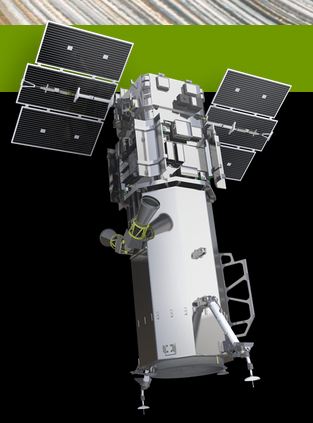 The other important characteristic of these satellites is the revisit time which reflects the frequency with which the satellite passes over the same spot on earth. For Geoeye-1 the average revist time is less than 3 days. For Worldview-2, it is 1.1 days. For Worldview-3 it is less than a day. If you consider all of the Digital Globe satellites, Ikonos, Quickbird, Workdview-1, Worldview-2, and Worldview-3 parts of Earth are passed over several times per day.
Another important characteristic of satellite imagery is that it is not inexpensive. In fact one of the drivers for the explosion of UAVs for earth observation that we are experiencing is the cost of imagery from other sources, satellite and aerial.
But there is a new type of satellite cluster that has the potential to be disruptive. Two startup satellite companies have already started putting satellite constellations in space, that promise to provide more frequent revisits per day than Digital Globe satellites can provide and at a much lower cost.
 In April 2013 Planet Labs launched two demonstration satellites, “Dove 1” and “Dove 2”. In early 2014, Planet Labs plans to launch 28 mini- Earth observing satellites at an altitide of 400 km. The satellites will provide frequent snapshots of the planet at a resolution aof about 5 m, allowing users to track changes—from traffic jams to deforestation—in close to real time. The satellites will send their images to at least three ground stations—two in the U.S. and one in the U.K. The data will be processed and uploaded for use by customers almost immediately.
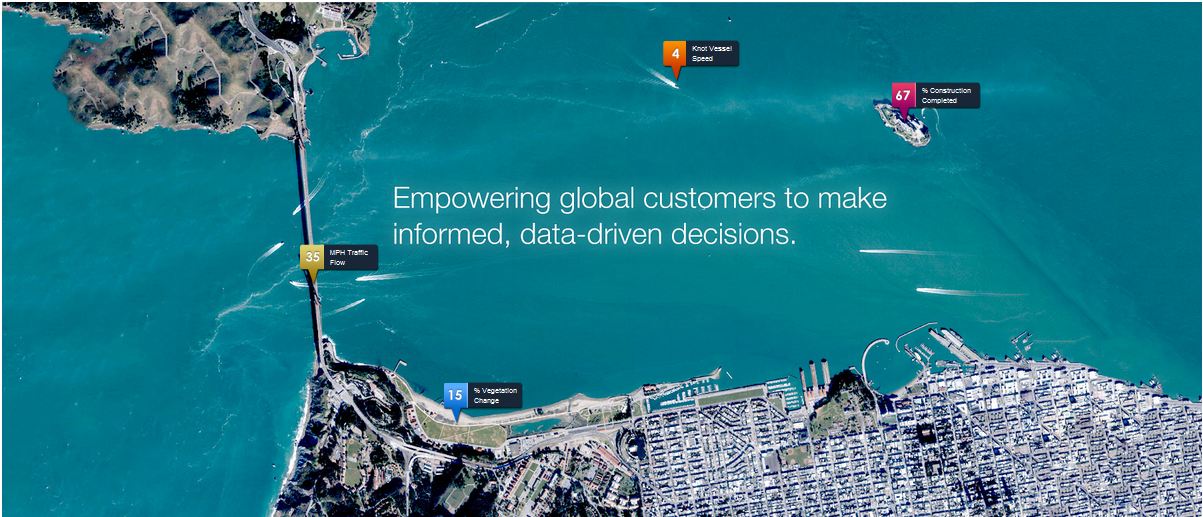 Skybox Imaging plans to launch a constellation of 24+ satellites that will capture high-resolution imagery (sub-meter) and the first ever HD-video of any spot on earth, multiple times per day. Skybox will capture the planet on a near real-time basis to provide a tool for addressing global challenges in areas including security, humanitarian efforts, and environmental monitoring. In both cases it is expected that the cost of the imagery will be signficantly less than current pricing.

Be the first to comment