
The Environmental Protection Agency’s (EPA) Mercury and Air Toxics Standard (MATS) for power plants is scheduled to be issued by Dec 16 2011. Estimates of the impact range from 10 GW to 35 or even 60 GW of the US’s 340 GW of coal-fired power capacity that could be forced to shut down and replaced with alternatives.
The North American Electric Reliability Corporation (NERC) has released its 2011 Long Term Reliability Assessment which warns that “existing and proposed environmental regulations in the U.S. may significantly affect bulk power system reliability depending on the scope and timing of the rule implementation and the mechanisms in place to preserve reliability.”
The EPA regulations that NERC mentions explicitly include
- Cooling water intake structures
- Maxiumum Achievable Control Technology (MACT)
- Cross State Air Pollution Rule (CSAPR)
- Coal combustion residuals (CCR)
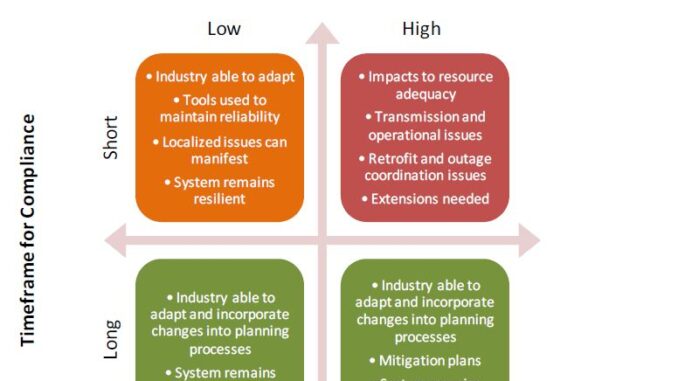
NERC is concerned that as a result of the implementation of new EPA rules between 2012 and 2018, the US power grid will be stressed in ways “never before experienced” which could be a reliability concern. NERC says that If the EPA intends to move forward with the implementation of the MACT (aka MATS) rule as proposed in March 2011, the electric industry will need time to comply. Mechanisms must be in place to ensure grid reliability until new generation and transmission infrastructure can be put in place.
The first issue that NERC identifies is that in a very tight timeframe, between 2012 to 2015, the EPA regulations may result in the loss of a significant amount of generation, either through retirements of entire plants or by reducing power generation capacity as a result of remedial actions. Secondly, scheduling power plan outages for retrofitting in such a tight timeframe will be a challenge. The example given is installation of air scrubbers which have to be custom designed for each plant. An air scubber requires about 18 months from design to installation. Thirdly, there are a limited number of companies available to design, manufacture, and install remedial equipment, which could create a backlog that would extend the time required to install new equipment. Finally, new transmission infrastructure may be required to interconnect new electricity generation or existing transmission may require system reinforcements. These days new transmission facilities can take 12-20 years to build.

Be the first to comment