
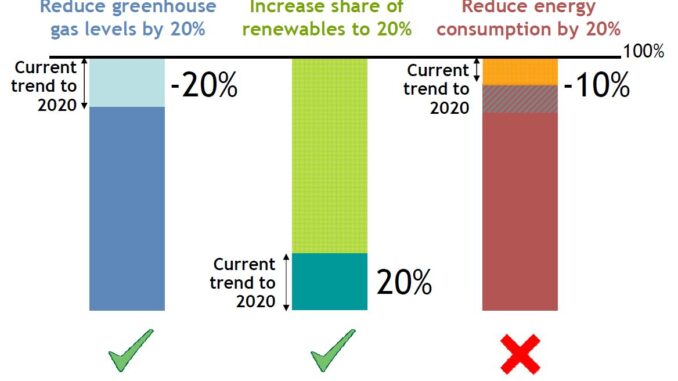
The EU has set three goals for reducing greenhouse gas emissions under the catch phrase 20-20-20 by 2020
- Reduce greenhouse gas emissions by at least 20% from 1990 levels by 2020
- Increase the share of renewable energy sources in energy consumption to 20%
- 20% increase in energy efficiency
The European Commission (EC) believes that it is on track for meeting the first two of these goals. But for the third current projections indicate that the EU is tracking toward 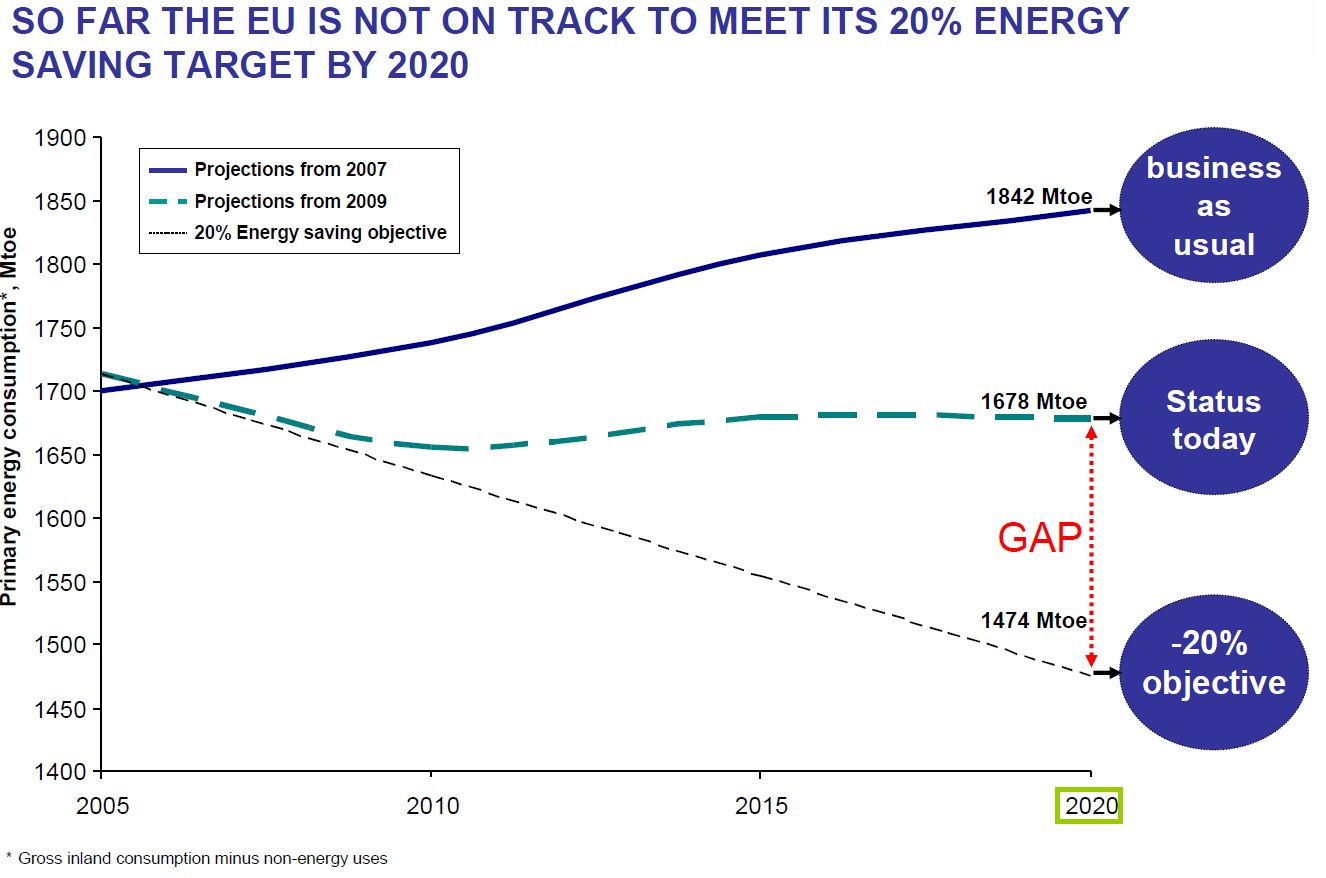 only a 10% reduction in energy consumption, half the target of 20%.
Energy efficiency is not only critical for moving the EU toward reduced energy intensity (energy use per € of GDP) but also for reducing its dependence on imported energy, which currently accounts for half of EU energy usage.
It is especially critical for Germany which needs to find energy sources to replace its nuclear power plants that are scheduled to be closed by 2022. Buildings currently account for 40 percent of power consumption and a third of CO2 emissions. The German 40 year masterplan calls for aggressive energy efficiency policies including
- New insulation standards – the government’s intention is for all buildings in Germany to be refurbished in line with new insulation standards by 2050.
- Reducing energy requirements for heating – by 20 percent by 2020 and by 80 percent by 2050.
- Providing tax relief on energy taxes – beginning in 2013 to companies contributing to energy savings. It is estimated that energy efficiency could save €10 billion per year.
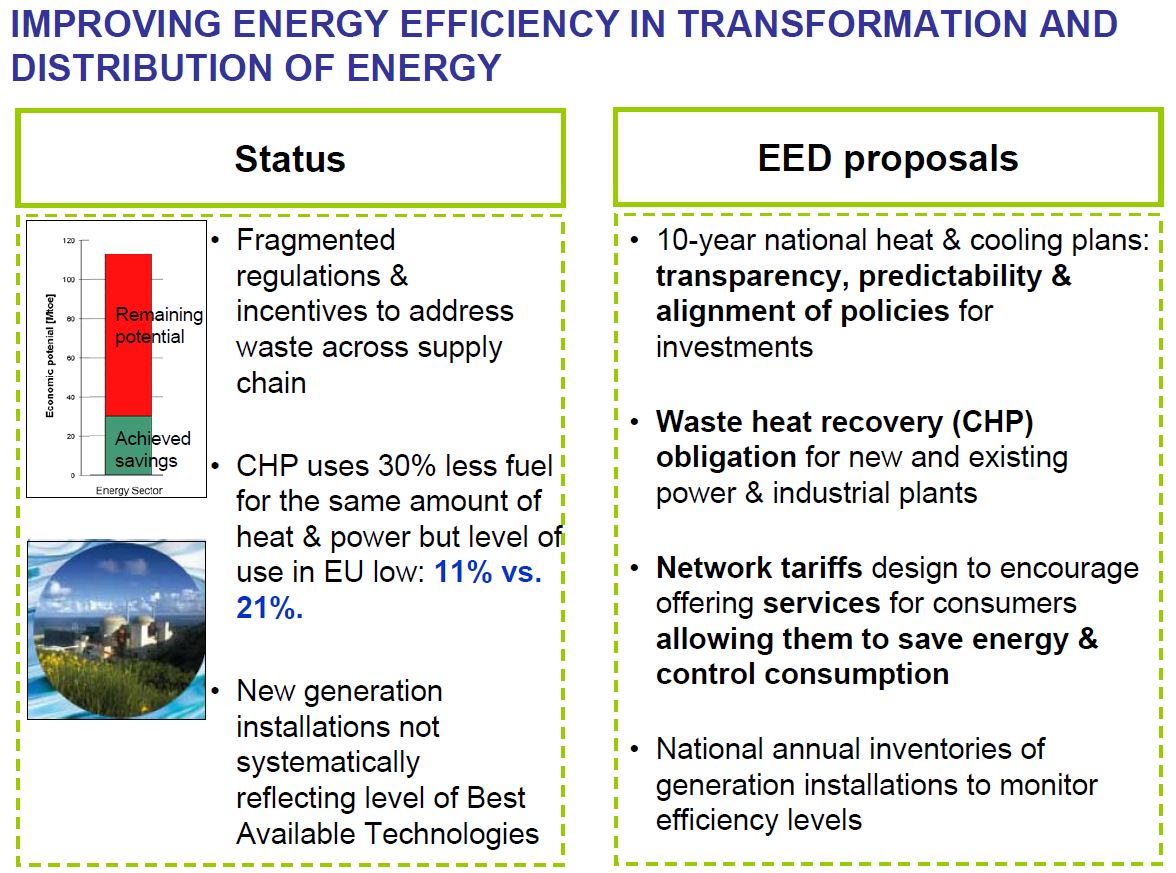 To get the EU back on track for the 20-20-20 energy efficiency goal, the European Commission (EC) about a year ago proposed a new Energy Efficiency Directive (EED); first, a legal obligation for all member states to establish energy saving schemes, secondly, the public sector to lead by example, and thirdly major energy savings for consumers.
The way the EC is proposing to implement this is a combination of mandatory (regulatory) requirements and financial encouragement.
Power generation and distribution efficiency
One goal is improving the efficiency of generation and distribution. Member states would be expected to develop national 10-year plans for heating/cooling. Existing and new power plants and industrial facilities would be required to implement waste heat recovery (CHP). Utilities would have mandatory energy effficiency goals. Member states would be expected to inventory all power plants to monitor generation efficiency.
 Consumer empowerment
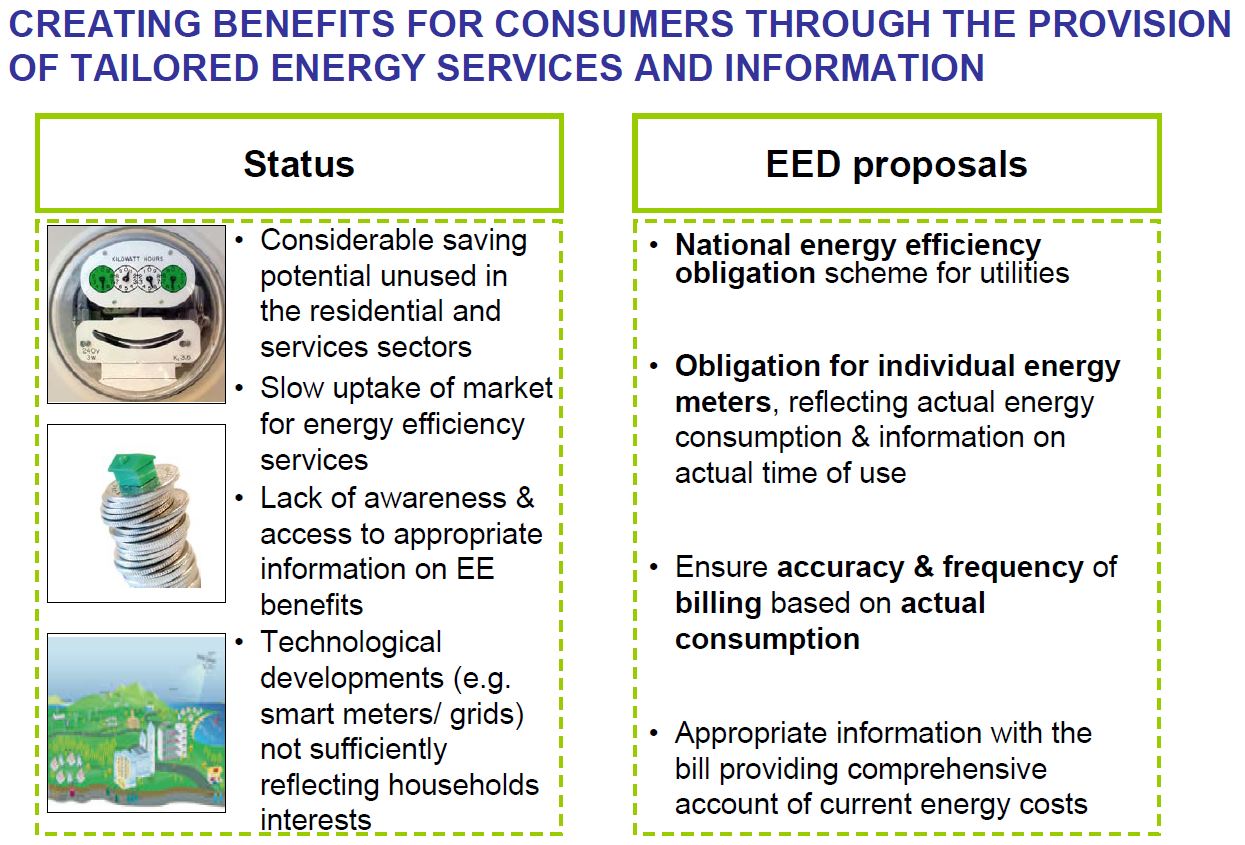
Smart meters recording usage and time of use would be mandatory. Consumption-based billing would be mandatory. Bills would have to include detailed energy usage information. Regulators would be expected to support tariffs that encourage consumers to conserve energy and reduce consumption. Large companies would be required to undergo an energy audit, and there would be incentives for implementing enery saving measures including energy management systems. Information on energy management systems would be made available to SMEs and SMEs would be encouraged to undergo energy audits.
 Public sector
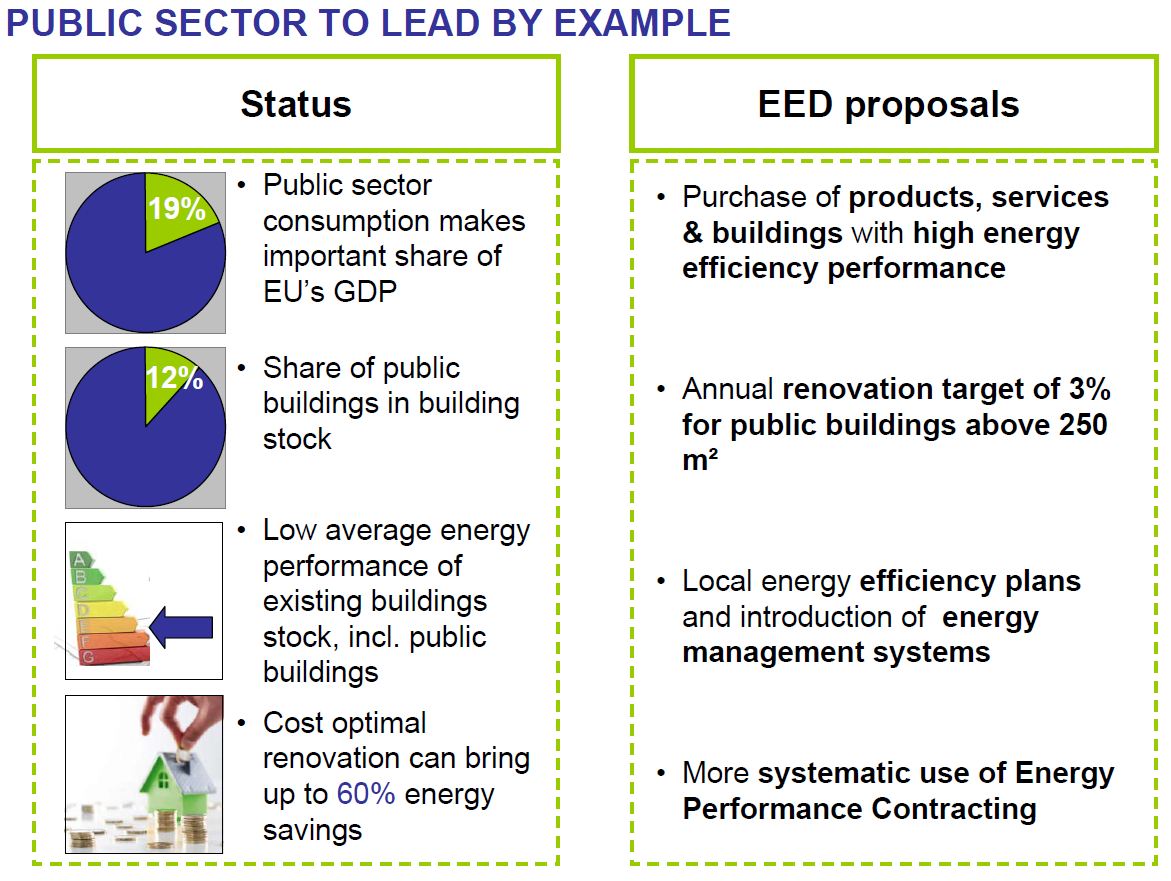
The public sector would be asked to lead the charge by example. Procurement of products, services and buildings by government would prioritize energy efficiency. The Directive includes a mandatory annual target of renovating 3% of all buildings over 250 m2. Local energy efficiency plans and introduction of energy management systems would be mandatory for public buildings, and the Directive would encourage the more systematic use of Energy Performance Contracting (new building systems that pay for the cost of a building renewal project through reduced energy use).
Current status
June 14 it was reported that the EU had reached agreement on the energy efficiency directive that would set binding measures for all of the 27-member states. Since then, the EC has estimated that the agreement would deliver only two-thirds of the total energy savings of the original 20-20-20 goal.
Be the first to comment