
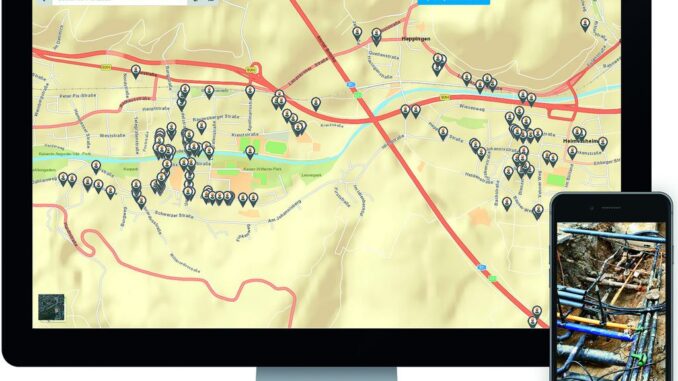
In Germany a new standard for documenting and exchanging information about underground infrastructure exposed during construction has been developed. Referred to as DIN SPEC 91419 it provides a standardized way to capture and share a wide range of information about the underground and has important implications for the continuous improvement in the reliability of location and other information about underground infrastructure.
Despite the documentation (records) about their networks maintained by utility and telecom network owners, what is actually underground and where it is located remains uncertain. A wide range of technical issues can only be identified after exposing underground infrastructure. Information about the underground that is inaccurate, out of date and often missing means that engineering designs often have to be modified on site after construction has begun. This results in inconsistencies between design and what is actually built which are largely undocumented. “As-designeds” are submitted as “as-builts” and the viscous cycle continues.
Providing a mechanism for improving the quality of network documentation and records is being recognized as an essential component of a program for reducing damage to underground utilities. For example, The Colorado Department of Transportation (CDOT) has implemented a cloud and mobile system that incorporates elements of survey and GIS practice and technology. The system provides for recording and sharing the location and other information for underground utilities from SUE surveys, surveyors and other sources among CDOT, large and small construction contractors, network operators, and other stakeholders. Access to this data is provided over the web, enabling staff to access underground utility location maps on a handheld in the field at a construction site. The CDOT system includes an important capability that enables input from handhelds in the field during construction. This increases field staff engagement and enables staff to actively contribute to improving the accuracy of location and other information stored in records.
The prototype system developed for the National Underground Asset Registry pilots in the U.K. for sharing location and other information about underground assets among government roads agencies, network operators and others includes a similar field feedback mechanism. Referred to as “observations”, comments on discrepancies between what is shown by the system and what is actually observed in the field as well as changes made during construction can be reported and are incorporated with their location in the NUAR database. I believe that the latest version of the KLIC system in the Netherlands also implements a similar capability.
The new standard for the documentation and exchange of data about underground infrastructure exposed during construction uses XML encoding. It provides a standardized way to capture and share a wide range of information about the underground including
- Name, role and affiliation of data provider. Roles include surveyor, construction foreman, site manager, excavator, project leader, structural engineer, etc.
- Location of site where data is reported
- Content can include technical reports, observations, notes, photos and videos
- Keywords characterizing the information such as subsoil investigation, BIM model, gas pipeline, cable duct, storm sewer, sanitary sewer, etc.
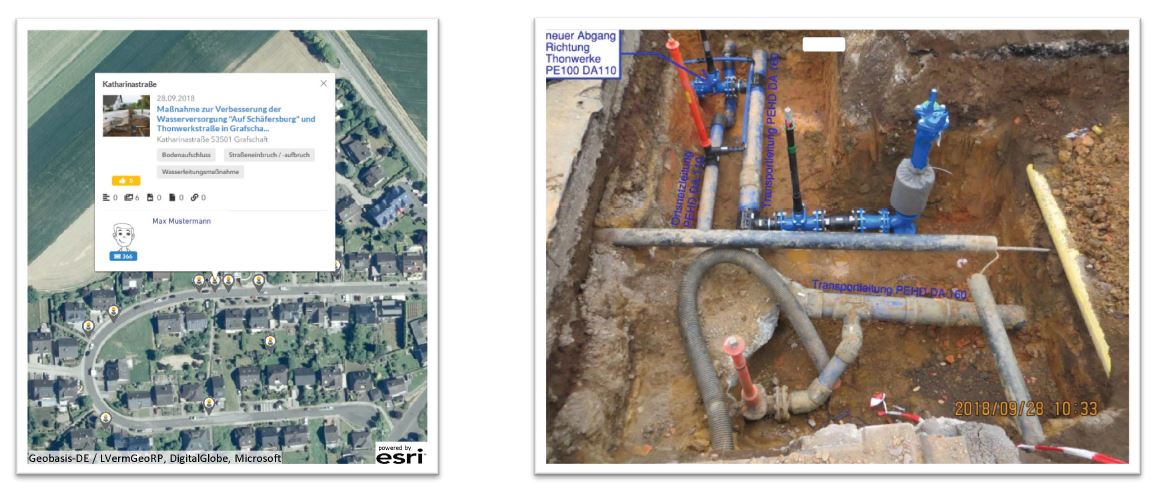
An online system localexpert24 has been developed that allows sharing of information about the underground. This system provides all stakeholders on a project access through a very simple interface to all the information about the underground that a local expert considers to be important – in essence providing a situation assessment for the underground.
To put this in a broader context procedures and technologies for raising the level of accuracy, timeliness and completeness of the location and other information about existing underground infrastructure is one of the most important measures for reducing damage to underground utilities during construction. Enabling direct input from the field, where staff can see what is actually in the ground, and sharing this information are indispensable to a program of continuing quality improvement in information about the underground.
Many thanks to Markus Becker, founder of localexpert24.de and one of the initiators and authors of the DIN SPEC 91419 standard, who brought this remarkable initiative to my attention.

Be the first to comment