
The National Rural Electric Cooperative Association (NRECA) is comprised of more than 900 electric coops in the U.S. This is more than just an organization representing electric coops at the national level. It also supports a very active technology research arm called the Cooperative Research Network (CRN) that supports collaborative research with the Department of Energy, Department of Agriculture, National Labs and others.
At the NRECA TechAdvantage conderence in New Orleans today, Dr Craig Miller, Project Manager at CRN gave a scintillating and inspiring presentation on the future of the U.S. power grid over the next two decades.
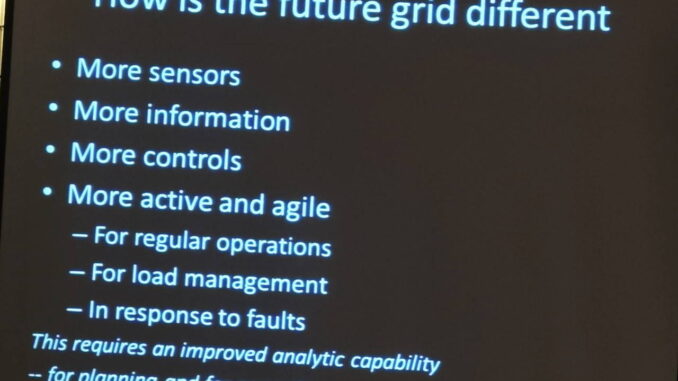
Four years ago when DoE received a large amount of ARRA funding, the focus was on the smart grid and the technology required to support it. Now every utility has done something using smart grid technology. The new focus is on resiliency, how to make the grid agile. This is a lot more complicated today with our full quiver of smart devices.
The foundation of the smart grid are sensors. All electrical devices these days are smart and are able to report their status ranging from several times a microsecond to every 15 minutes. The result is that utilities are faced with 100’000 times as much data as they’ve dealt with in the past. The challenge is the analytics to make sense of all this data.
In the old days, when you had a fault, you dispatched a crew and a few hours or days later, the fault was fixed and people got power again. Now the network can be reconfigured in subseconds. But there are a lot more things to worry about. When you reconfigure the network, you have to worry about whether the new configuration can support the load. If it can’t there a number of options you have that weren’t available with the old grid. You may be able to tap battery storage, autpmatically startup backup generators at industrial customers and take them off the grid, disconnect less critical customers, automatically shut down some devices for customers on demand response programs, reduce voltage, or even isolate some parts of the grid, so-called microgrids. With the new grid, there are tools to manage load, generation, and storage dynamically, and since the grid is a balancing act, all of this has to happen at subsecond speeds.
Modeiing the power grid is the key to the engineering challenge of the 21st Century
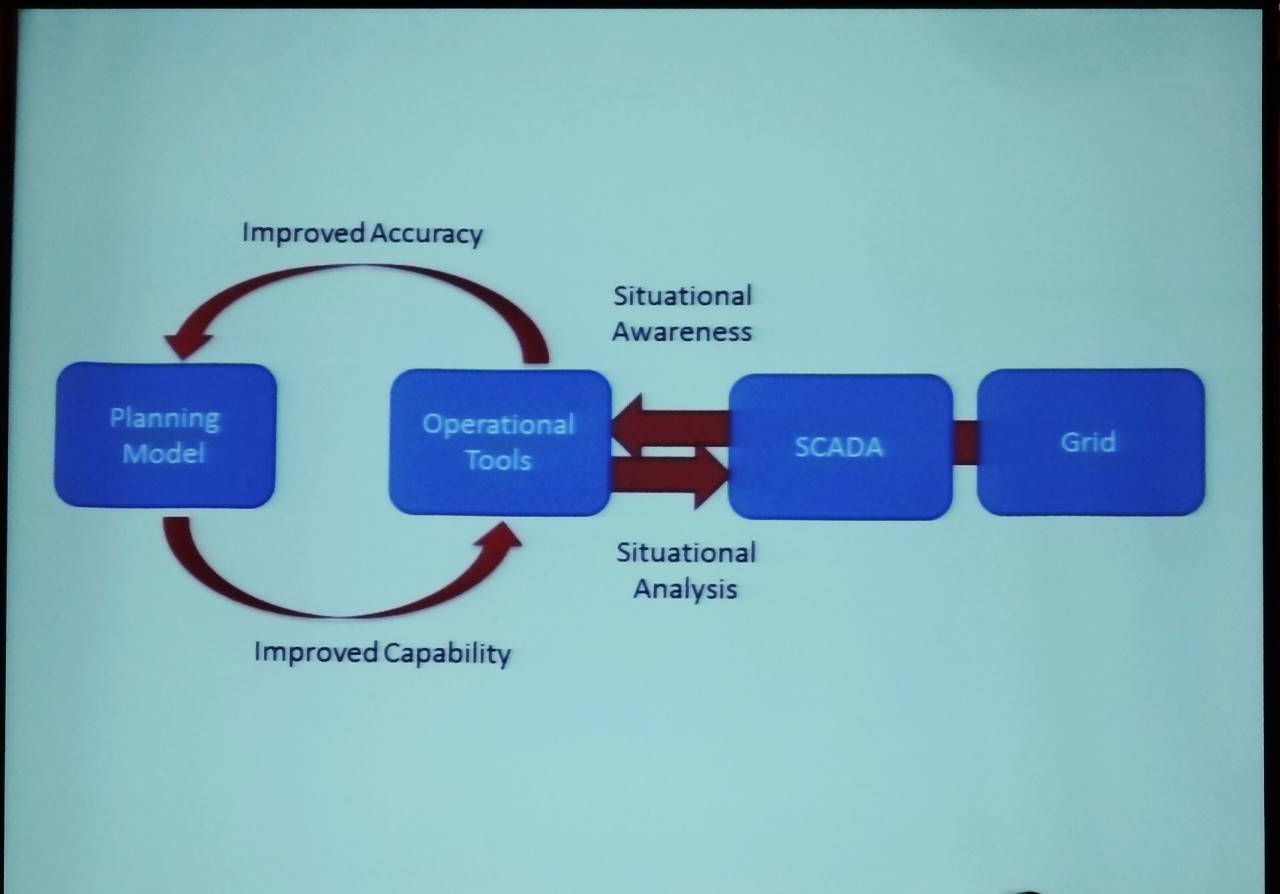 Dr Miller’s most important point is that the key to all of this is models of the power grid. Being able to model the network and predict what it will do faster than the network itself is seen as the key to the next generation “agile” grid, which Dr Miller predicts will be the greatest engineering achievement of the 21st C, much as the old grid was called the greatest engineering achievement of the 20th C. Dr Miller pulled no punches when he said that our current models of the grid are all bad. They are only able to be used for planning purposes, not for operations.
Modeling the grid is a very complex problem. Even our existing “simple” models are incredibly complex. This problem will require the best of our current super computers, and will probably require another decade for this level of computing power to become affordable for utilities. For example, a project that CRN is working on with DoE to improve modeling of the electric grid will use Titan, at 21 petaflops, the fastest super computer in the world today. This is indeed a “challenge to light up our lives”, especially the lives of the next generation of electric power engineers.

Be the first to comment