
In 2010 renewable energy contributed 10% of the total electricity supply in the U.S. This included 6.4% from hydropower, 2.4% from wind energy, 0.7% from biopower, 0.4% from geothermal energy, and 0.05% from solar energy. The advantages associated with renewable energy compared to traditional non-renewable generation not only include reductions in electric sector greenhouse gas emissions, but also much less water water use. One of the major challenges of renewable energy technology is backstopping intermittent energy sources which requires dispatchable capacity such as fly wheels, hydro, batteries, natural gas turbines, and certain types of concentrated solar plants.
 A report, Renewable Electricity Futures Study, published by the National Renewable Energy Laboratory (NREL), investigates whether renewable energy can meet most of the electric power demand of the continental United States over the next forty years. It focusses on what is required to meet most of the power requirements of the continental U.S.
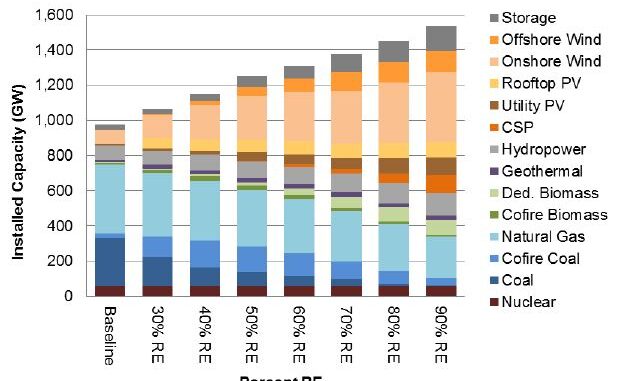
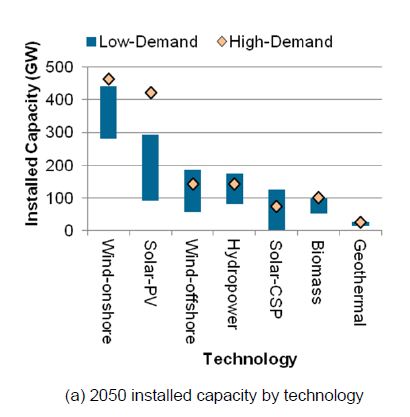
It concludes that electricity generation from renewable technologies that are already commercially available (biopower, geothermal energy, hydropower, ocean energy, solar energy, wind energy and energy storage), when combined with a more flexible grid than we currently have, would be able to supply 80% of total U.S. electricity generation by 2050, not only for the entire country, but also for meeting hourly electricity demand in every region of the continenal U.S.
Smarter grid
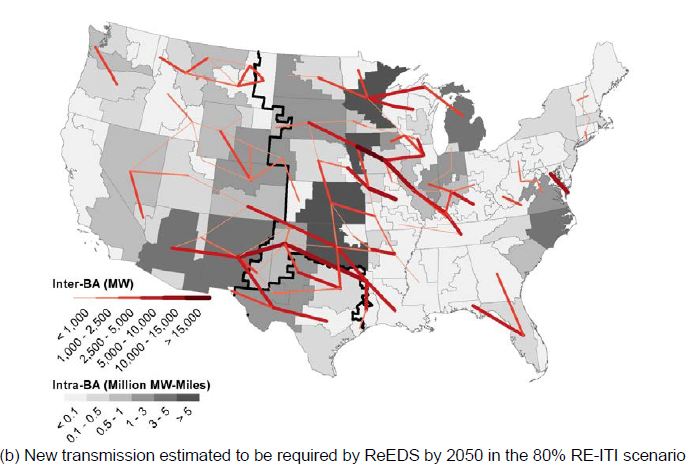 Increased grid flexibility is required to balance demand against generation, in particular intermittent sources such as wind and solar PV. The technologies that would be required to enable A new, more flexble grid include dispatchable capacity, storage including batteries and pumped storage, expansion of the transmission network, load management programs such as demand response, energy efficiency programs, and changes in power system operations.
Policy changes could include increased code adoption and enforcement; financial incentives such as tax credits, energy efficient mortgages, rebates, and coupons; broadening rating and labeling efforts; and encouragement of volume purchase programs. Behavioral changes could include use of sensors and automation, continuous building commissioning, and managing use based on signals from the power company. 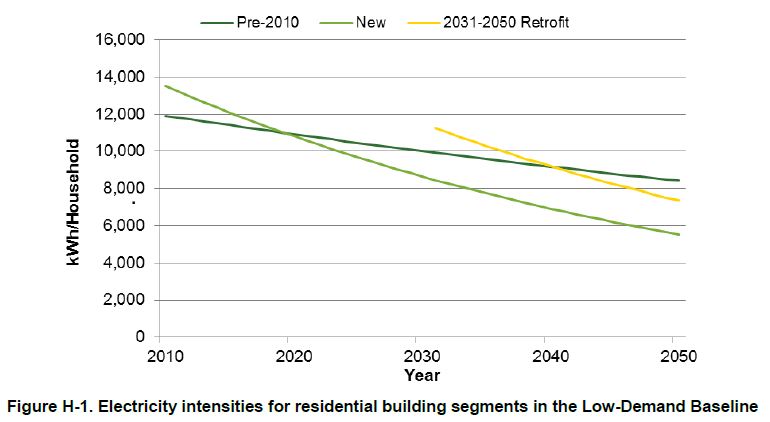 Other changes the report considers includes an increased focus on building commissioning so that buildings are built and commissioned as designed; more integration between the financial, construction, and associated industries to better enable the deployment of highly efficient buildings; and deployment of smart meters to empower users ro better manage their energy consumption.
Energy efficiency
One of the scenarios modeled in the report is a Low-Demand Baseline, which is based on the energy efficiency targeted by the Department of Energy’s (DOE) ultra-efficient building programs for residential and commercial buildings. The electricity demand forecast under the Low-Demand Baseline assumes a larger number of buildings to be capable of ultra-high efficiency. 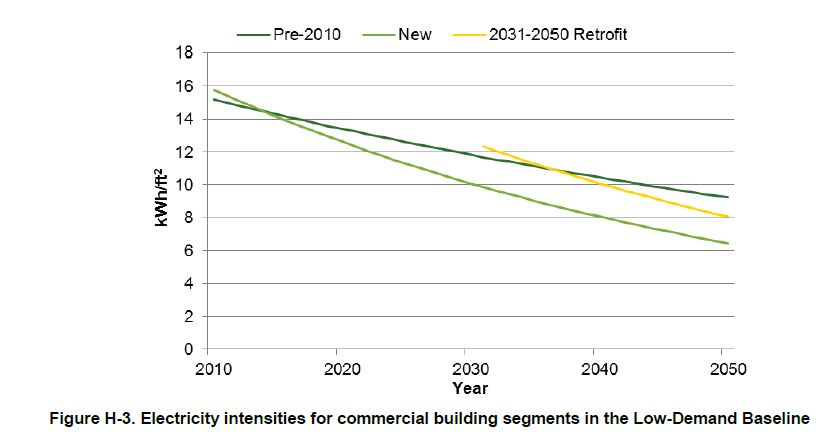 Its basic assumption is that the average energy intensity of new buildings in 2050 will be 60% below that of new buildings being built today. This would be motivated by underlying more stringent energy codes, new federal energy efficiency standards for equipment and appliances, and new technology for buildings and facilities.
Changing operating procedures and transforming the energy market
Operating procedures are already changing to accommodate intermiitent energy sources. Actual operating experience has shown that it is technically feasible to operate an electric power system with wind energy 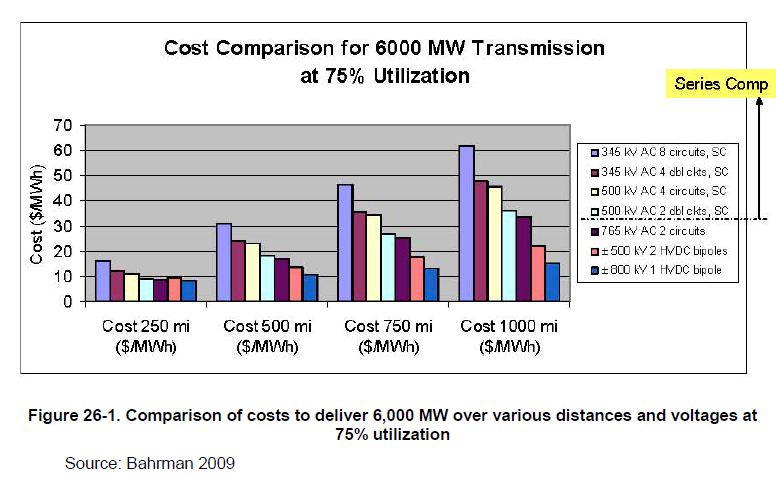 penetrations of 10%–20% of energy generated, but this not only requires changes in current operational procedures, but also a tranformation of the energy market market such as the rule recently issued by FERC relating to transmission and intermittent energy generators.
Grid reliability
This study is based on an hourly simulation of the electric grid. At this level of time granularity it finds that the proposed grid can meet the load scenarios with high levels of intermitttent renewable generation. However, it also says that understanding the impact of a high level of intermittent renewables on grid reliability requires a more detailed analysis at a much more granular time level (on the order of a few minutes to a few seconds). The report also says that it should also include a grid security analysis.

Be the first to comment