
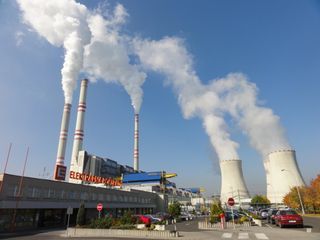
Last October I had the opportunity to the visit the Počerady coal fired power plant that has a capacity of about a GW. At peak production the power plant consumes 1000 tonnes of coal and 2000 to 2500 tonnes of water per hour.
I also saw evidence of the Czech feed-in-tariff (FiT) program for photovoltaic power generation, field after field covered with PV cells, which with government subsidies produces a substantially higher rate of return than growing crops. It is also believed to have contributed to a substantial rise in power rates.
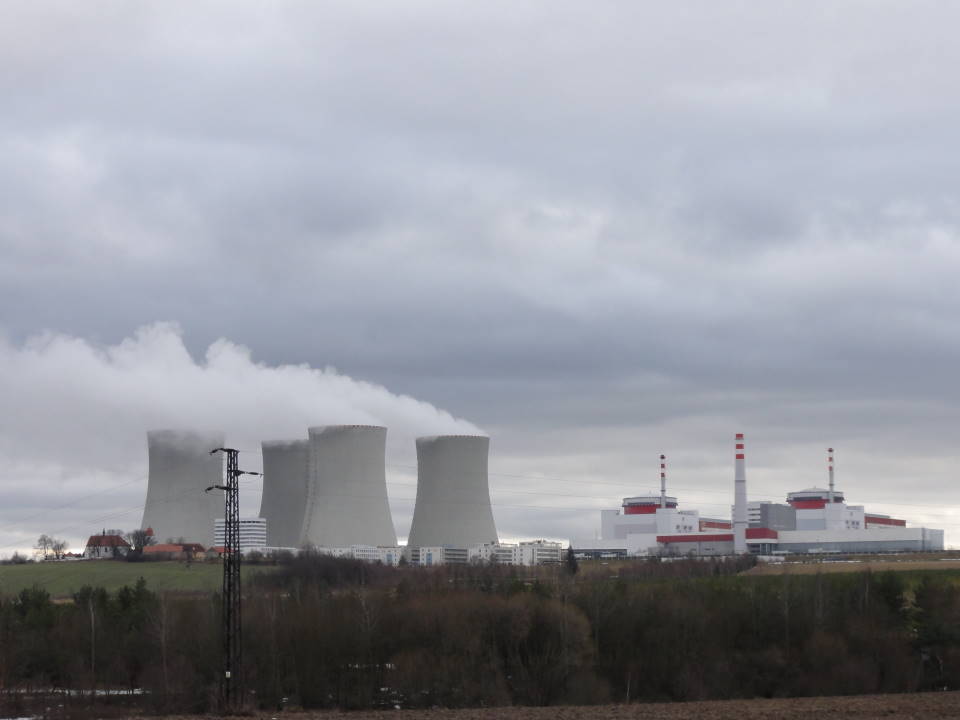
In January I had the opportunity to visit the Temelin nuclear power plant. Temelin is comprised of two pressurized water reactors each with the capacity to produce one GW of electric power. The plant also supplies heat for all of its own facilities and to the nearby town of Tyn nad Vltavou. Planning for two new reactors units is underway. Bids to build the two units were submitted in October 2009 and are being evaluated.
 The Czech Republic has two operational nuclear power plants, Dukovany and Temelin, which in 2009 provided 33% of the electric power generated in the Republic. Together their total capacity is nearly 4 GW, which is about 21% of the total generating capacity in the Czech Republic. The two nuclear power plants are the most heavily exploited plants because of their lower variable costs and low emissions compared to other, mostly brown coal, generating plants in the Czech Republic. In the future, the share of nuclear power in the Czech power generation portfolio is set to increase steadily.
According to the World Nuclear Association (WNA) worldwide there are currently
- 442 operating nuclear reactors, with an aggregate capacity of 377 GW
- 104 of these are operating in the US
- 63 reactors are under construction including the first new power reactor in the US in the last 30 years
- 156 are on order or planned
- 322 are proposed
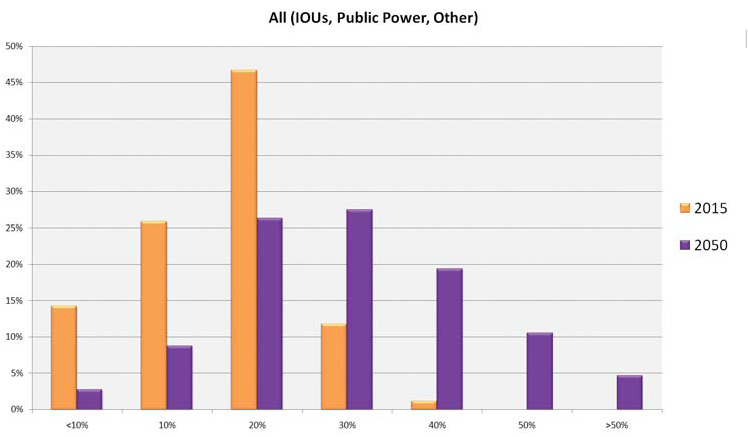 Currently nuclear power supplies about 14% of the world’s electric power. Many people in the electric power industry expect this proportion to increase for several reasons; because nuclear technology is proven technology now in its 2nd or 3rd generation, passive safety design, lower variable costs, negligible emissions compared to coal-fired plants, and because of the challenges of adapting the existing electric grid for distributed intermittent energy sources. The most recent Black and Veatch survey of electric power executives in North America found that most of the respondents expected nuclear power will form a much greater proportion of North America’s power generation capacity by 2050.
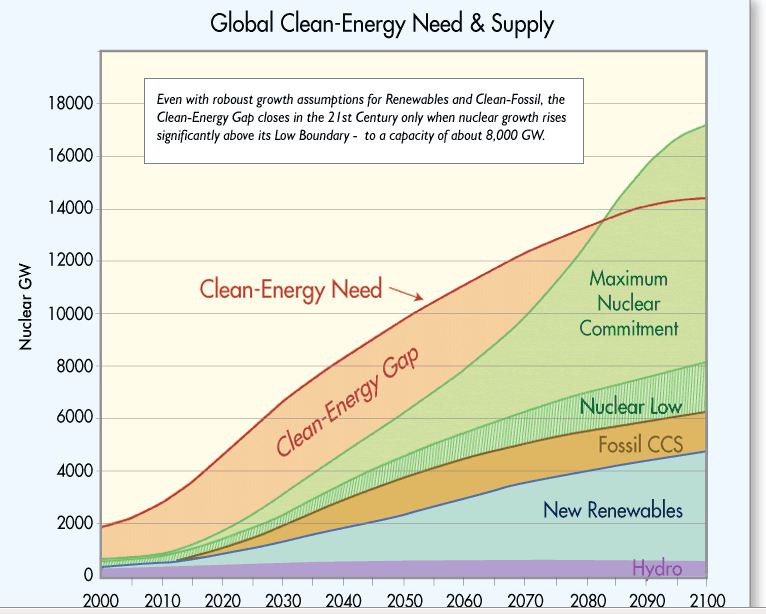 The World Nuclear Association has developed a forecast of clean energy requirements for the 21st Century. It makes some assumptions
- Today’s global population of 6.6 billion will reach 9 billion by 2050.
- Global energy use will double between 2000 and 2050, while electricity consumption triples or quadruples.
- Greenhouse gas (GHG) emissions must, by 2050, be cut by 70% to avert catastrophic change in our planet’s climate system.
- Hydropower growth stops at mid-century.
- New renewable energy sources grow steadily and robustly.
- Fossil Carbon Capture and Storage (CCS) makes a substantial contribution.
The WNA says that these assumptions are highly favourable to the prospects for new renewable energy sources, which today contribute only marginally to world power geenration, and to CCS technologies, which today are still unproven.
The WNA concludes that even with these assumptions there is a significant gap between clean energy demand and supply, which nuclear energy potentially could fill.
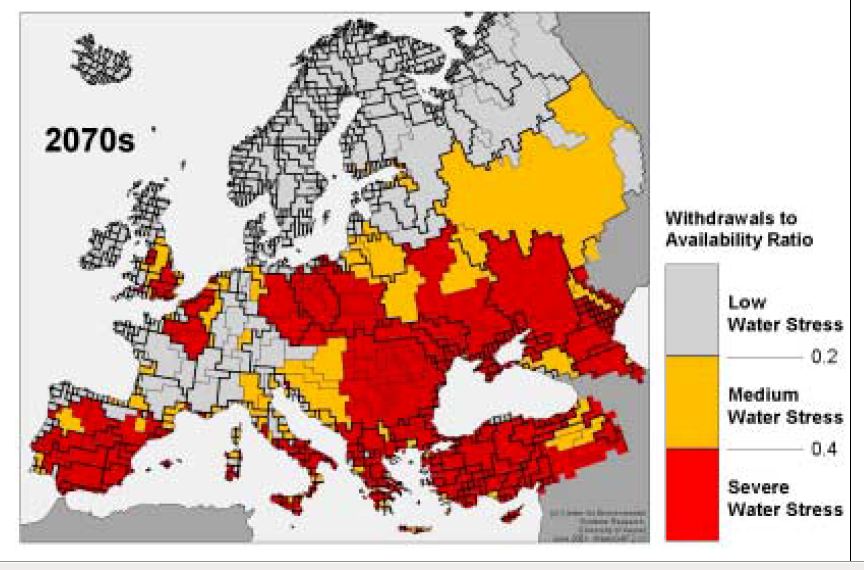
But there is another issue. Nuclear power plants require just as much water as coal fired plants. And conventional thermal power generation requires a lot of water. For example in the US 50% of all water withdrawals are for power plants. Both Pocerady and Temelin were built near rivers because of the volume of water that is required for the cooling towers you can see in the photographs.
Projections of water demand and supply over the next century suggest that water stress could be more widespread in the US, Europe, and other places than currently so that in some parts of the world water may become the limiting factor in deploying more conventional thermal (coal or nuclear) power plants.

Be the first to comment