

I have blogged several times about combined sewer overflows (CSOs), sanitary sewer overflows (SSOs), the cost of correcting these problems, and the variety of financial instruments that cities are using to finance these projects. By law in the Province of Ontario, city water and sewer systems are required to pay for themselves, which means that water users fund the water system and the water and sewer budget is separate from the city budget.
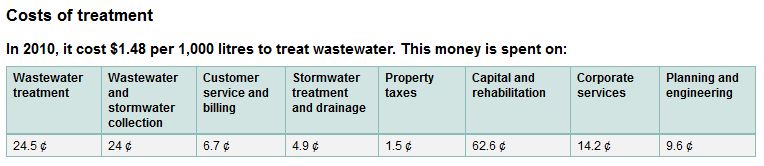 A part of Ottawa’s wastewater system is a combined storm and sanitary system and it is planned to build holding tanks like those under construction in Chicago to store overflows in times of wet weather. Ottawa’s water rates are set to rise a combined 74 per cent over the next 10 years. The city needs to double its spending on maintaining and expanding the water and wastewater system, whose assets are estimated at $18 billion. The plan proposes spending $376.5 million this year on upgrades and maintenance, and $8.8 million on projects to expand the system for new growth in the city.
Over the next decade the average household water and sewer bill will rise from $636 a year now to $1,045. The rate increases and borrowing of additional $460 million will raise $2.1 billion for maintaining the system. But this is short of the estimated $2.7 billion that is required, leaving a $600-million gap.
The projected costs assume that water use remains constant and that the city continues to charge users by the volume of water they consume using the current rate structure. Many cities have adopted increasing block rates which means that the rate per unit volume of water goes up the more water you use and is intended to encourage reduced water usage. There are also proposals to decouple revenue and water usage.
Be the first to comment