
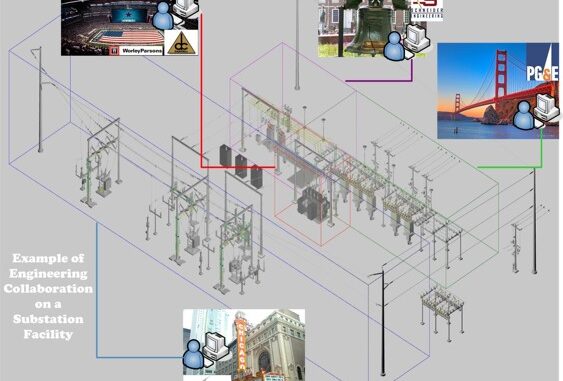
Smart substations are an essential component of the next generation of the electric power grid. But for many utilities they have become a severe bottleneck because of limited substation design resources. Enabling external contractors to participate efficiently in substation design is becoming an important strategy for alleviating this problem. After a year in which Pacific Gas and Electric Company (PG&E) had failed to complete 60% of its substation design projects, PG&E embarked on an innovative project to enable external contractors to participate efficiently in the substation design process. This achievement won this year’s Be Inspired Award for Innovation in Utilities at the Year in Infrastructure 2015 conference in London.
PG&Es Substation Engineering Services had deployed a new substation design system that integrated electric and physical design to approximately 80 internal design employees. The new system halved the average time required per drawing from 24 to 12 hours. This resulted in efficiency gains of about $ 5 million in savings per year on contracted projects.
But PG&E found that it still had a substation design backlog. PG&E’s strategy for accelerating substation design relied on the expanded use of external contractors to augment its stretched internal resources. However, as its use of external contractors grew, PG&E found that efficiency decreased because the overhead associated with external resources was very high compared to internal resources. PG&E’s solution was to develop a distributed engineering design system that allowed engineers anywhere in the world to collaborate efficiently on substation design. PG&E’s distributed substation design environment reduced the average time required per drawing for external contractors by a third, making external contractors nearly as efficient as internal designers. Altogether the distributed engineering design system saved $7.3 million in costs annually. Also since less travel was required, a side effect of the project was a reduced carbon footprint.

Be the first to comment