
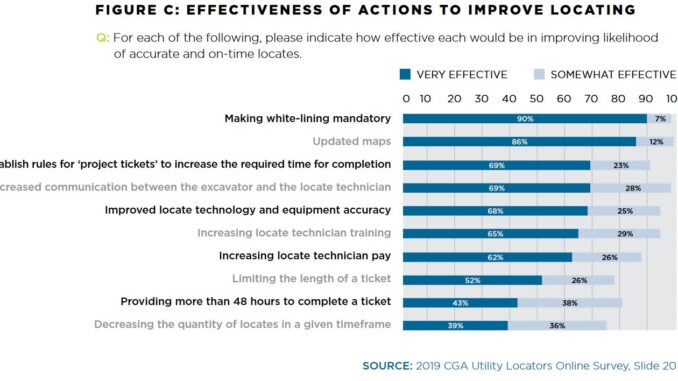
According to statistics compiled by the Common Ground Alliance (CGA) the process by which underground utilities are located (detected and marked) are responsible for 28% of incidents of damage to underground infrastructure during excavation. To better understand locate issues the CGA conducted a survey of 402 locate professionals and the results have been released in a CGA White Paper. Respondents were asked to identify the top challenges facing the locate industry and the most effective measures to improve the timeliness and accuracy of underground utility locates. White-lining (marking the ground to delineate the location of proposed excavations) and better facility maps received nearly unanimous agreement as top strategies for improving efficiency and quality of locates.
According to the latest CGA DIRT Report, damages to buried infrastructure continue to increase for the fifth consecutive year. Last year the proportion of damages attributed to locate issues rose to its highest level, accounting for 28% of all damages. The survey of the locate industry conducted by the CGA included contract locate technicians, utility company locate technicians, private locate technicians and others. The objective was to to measure awareness and adherence to safe digging practices, factors motivating accurate and timely locates, and challenges facing the industry. The results have been released in a CGA White paper: Insights into Improving the Delivery of Accurate, On-Time Locates.
Top measures to improve locates: White-lining and improved facility maps
The survey found overwhelming agreement among all locating stakeholders that white-lining and updated facility maps would be effective measures to improve the accuracy and timeliness of underground utility locates. Uncertainty about precise area of a proposed excavation was reported by respondents as the top barrier to accurate and on-time locates. Making white-lining mandatory prior to contacting one call was identified as an effective measure to address this issue. Furthermore respondents identified increased communication between themselves and excavators at the job site level as another key measure to reduce damages;
With respect to the reliability of utility records, respondents reported that they are often out of date, incomplete and inaccurate and are an important contributing factor in making utility locates difficult and slow. This is a well known problem and improving the reliability of maps of underground utilities has become a priority in several jurisdictions including Colorado and Montana.
Maintaining a trained workforce
Another area of locating that was identified as an important challenge by respondents were workforce issues, especially retention and training. Heavy workloads, low wages, and low appreciation for the profession were identified as contributing factors making it difficult to retain technicians. It was suggested that raising the profile of locating as a career would help improve perceptions of the profession. It was suggested that if community colleges, trade schools and high school technical programs offered locating certifications, this would could help attract and build a committed workforce.
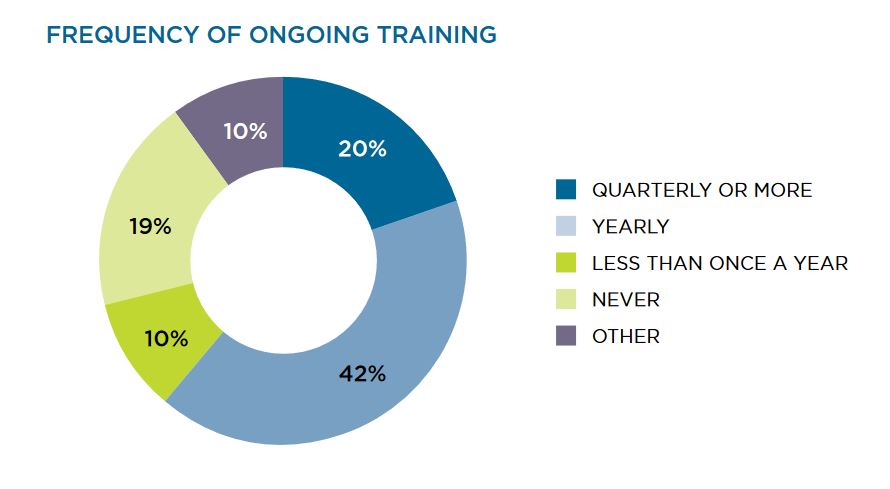 Respondents suggested that improving the frequency of ongoing technician training would give technicians more experience and raise their commitment to the profession. The survey asked respondents how often in their organization they were provided ongoing training in locate technologies and business processes. While 93% of technicians reported receiving training prior to going in the field, 94% said that more training would improve the accuracy and timeliness of locates. 62% reported ongoing training sessions at least once a year, but nearly a third reported no ongoing training sessions at all or occurring less than once a year.

Be the first to comment