
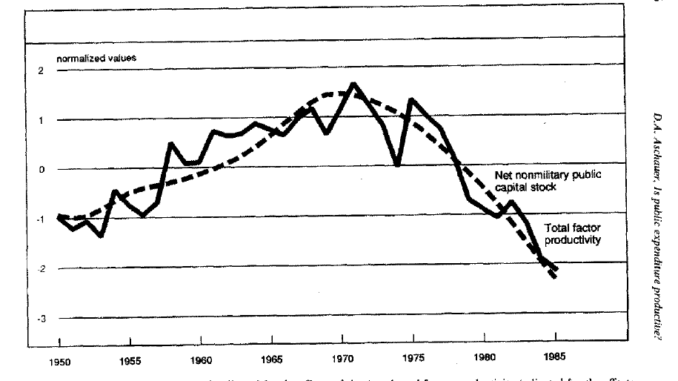
In 1989 David Aschauer, an economist at the Federal Reserve Bank in Chicago, published a paper that proposed a link between government spending on non-military infrastructure including roads, bridges, and airports and economic productivity. It showed that as infrastructure spending increased during the 1950s and 1960s, economic productivity increased and conversely as public investment decreased in the 1980s so did productivity. The paper found that public capital stock, specifically the core infrastructure of streets, highways, airports, mass transit, sewers, water systems, etc., is the most important factor determining productivity, and that when asessing the role of government in stimulating the economy (economic growth and productivity improvment), it is essential to consider the impact of additions to the stock of highways, streets, water systems, and sewers financed by public spending.
Later Aschauer proposed that there is a nonlinear relationship between public capital and economic growth. Too few roads, sewers, schools, fire and police stations hinders economic development, but too much public capital means high taxes, which dampens economic development. Somewhere in between, there is an optimum of public capital to private capital that maximizes economic development.
There have been a number of studies that attempt to quantify the effects of public infrastructure on the US economy. These studies have looked at particular types of infrastructure such as transportation and particular geographic regions. Recently studies have started to use spatial econometrics to look at the effect of infrastructure investment outside the local region where the investment is made.
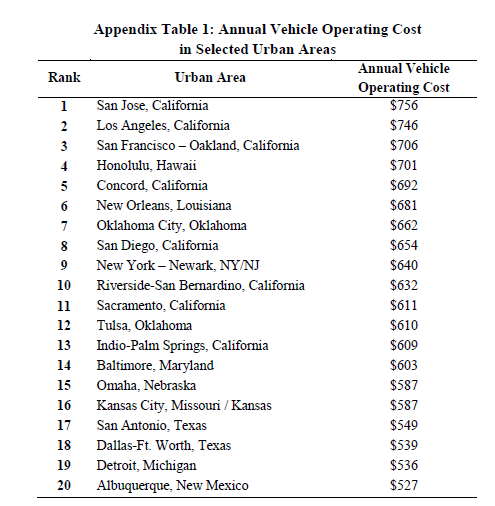 In September, President Obama announced a plan to renew and expand infrastructure in the US which includes a $50 billion up-front investment in a highway renewal program and a National Infrastructrure Bank. One of the motivations for this plan are the studies I mentioned that show productivity gains from public infrastructure investment. To make this concrete, a recent analysis found that the average urban motorist in the U.S. is paying $402 annually in additional vehicle operating costs as a result of driving on roads in need of repair.
 Recently the Conference Board of Canada has attempted to quantify the impact that infrastructure capital has had on Ontario’s productivity and economic growth between 1980 and 2008. It concluded that growth in the stock of infrastructure in Ontario contributes an eighth of the gain in labour productivity over the past 30 years and that each dollar of real public infrastructure spending generates $1.11 in real GDP.

Be the first to comment