
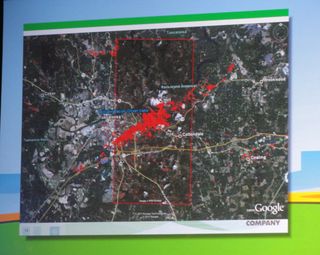
In September 2011, I blogged about one of the most amazing applications of smart meters and AMI that I had come across.
Alabama Power had deployed about 1.4 million smart meters in its
operating territory. One of the initiatives they have undertaken to take
advantage of their smart meters was to integrate their automated meter
infrastructure (AMI) system with their outage management system (OMS).
The smart meters give them immediate information about an outage, helping identify without sending a crew out whether it was a network or customer problem The integrated AMI/OMS system helps in reducing
unnecessary truck rolls.
Disaster management
But the smart meters and AMI also helped in another, perhaps from a business planning perspective, unforseen way. In April 2011 thirty tornados hit Alabama Power’s
operating area completely destroying two substations, flattening
transmission pylons, breaking 7500 poles, and leaving 400,000 cutomers
without power.
By looking for smart meters that could be read the day before and
comparing them with the meters that could not be read after the
tornados, Alabama Power was able to put together a detailed picture using Google Maps of where power has been lost – all
without making telephone calls. The application could also provide
emergency response officials with infrmation about whether the power was on or off in specific
buildings – critical information that first responders require before
entering a damaged building. In addition, Alabama Power was able to track power
restoration trends as customers started coming back on-line.
Integration of AMI with geospatial and other enterprise systems
There is an interesting recent interview with Arshad Mansoor of EPRI, who makes the case that to gain the full advantage of smart grid-related systems such as AMI, geographic information systems (GIS), outage management systems (OMS), data analytics and workforce management systems, they must all be well integrated. The Alabama Power case is a very good example of the benefits of integration of AMI and geospatial technology specificially. Mansoor sees integrating AMI with a geographic information system (GIS) as the first step in integrating AMI with enterprise systems..
He says that one of the most important benefiys of inegrating AMI and geospatial technology is the ability to link the utility’s service point and metered account with a customer’s phyical address. Mansoor says that getting 100 % of customers correctly linked without integrating AMI with GIS is almost impossible. He estimates that most utilities maybe have 5 percent incorrectly linked. This could be even as high as ten % in some cases.
Once you can link service points to customers physical addresses and geolocation, then a whole range of other systems can be integrated with the AMI and GIS, including the outage management system (OMS), data analytics and the work management system. Together these will all contribute to reducing the restoration time after an outage.
For example, if the outage management system is integrated with the AMI and GIS, then an upstream trace from multiple failed service points to identify the common point of failure is feasible. The reverse is also feasible, identifying customers to contact when a piece of equipment or a substation fails.
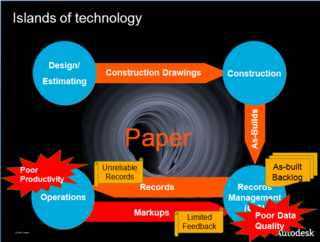 With the workforce management system also integrated with AMI, GIS and other sytems, it is possible to send the crews to the exact point of failure.
But there is the data quality issue here, about which I have blogged about on multiple occasions especially relating to the quality of location information, which is a major challenge for many utilities. Poor quality location information about outdoor faciltiies can leave crews struggling to find failed equipment, especially at night or in snow, and can lead to severe delays in service restoration.

Be the first to comment