
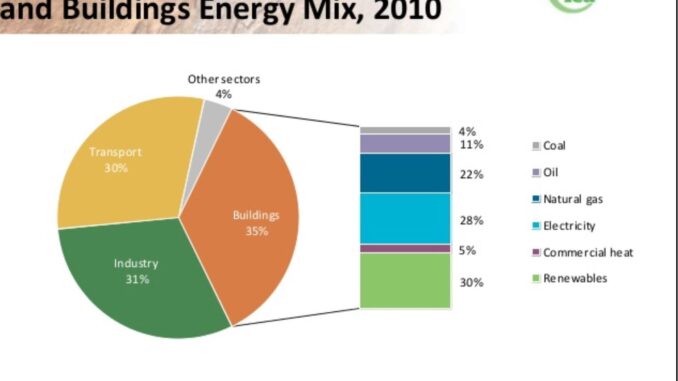
According to the IEA’s Energy Technology Perspectives 2014, global growth in electricity demand exceeds all other final energy carriers. Since the 1970s, electricity’s share of total energy demand has grown from 9% to over 17%. It is expected to increase to 25% by 2050. Over this period demand is expected to remain flat in OECD countries with an average 16% demand growth, while in non-OECD countries growth is projected to reach 300%.
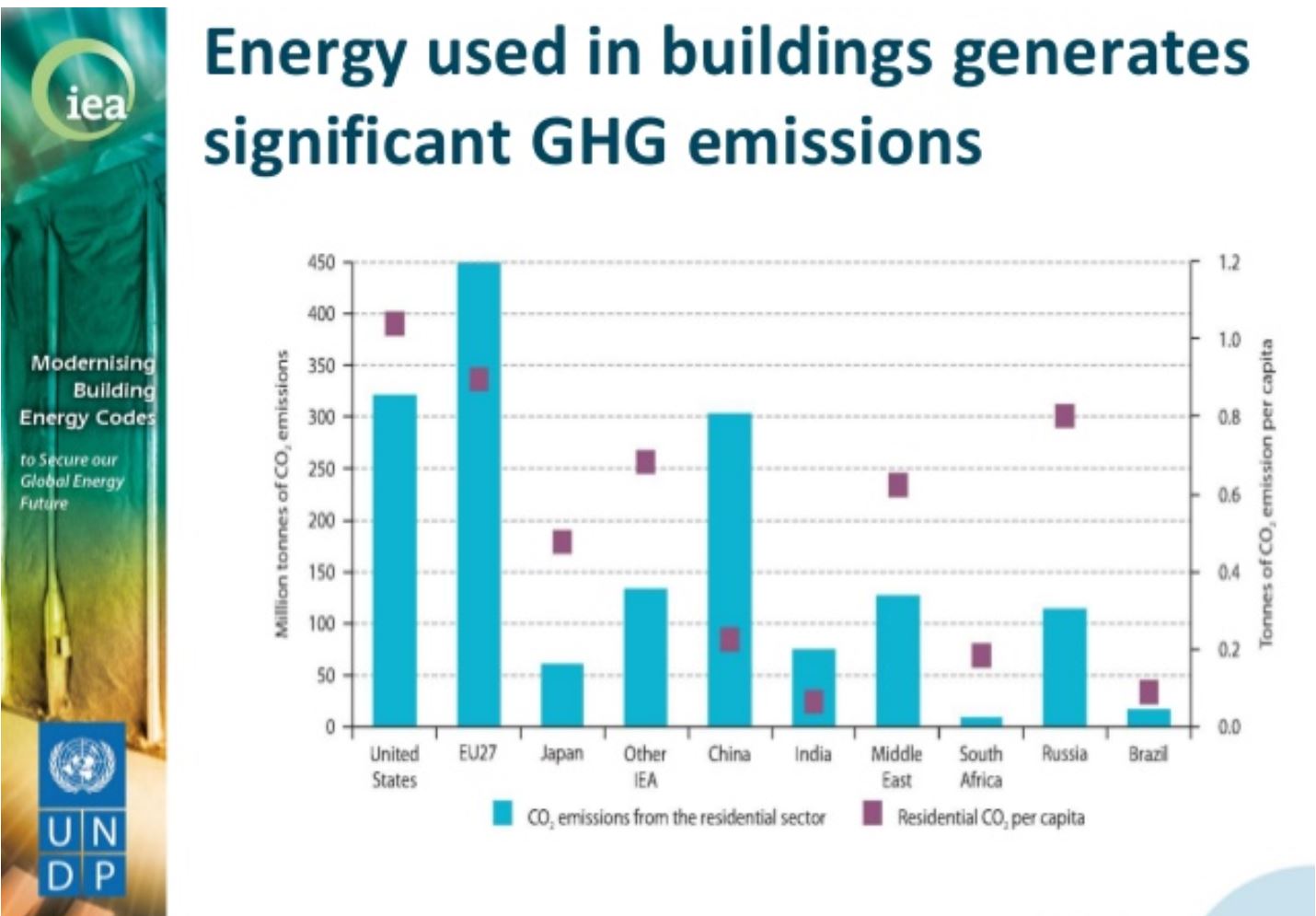 Between 1990 and 2011 overall electricity emissions increased by 75%. This reflected rising demand but little change in emissions intensity. In the future emissions intensity is expected to drop as a result of more renewable power generation and increasing efficiency of power generation technology.
In 2011, two-thirds of primary fuel in the global electricity mix was accounted for by fossil fuels. But double-digit growth rates for wind and solar PV electricity generation over the last several years have helped push the global share of renewables to 20% in 2011. Asia deployed more than half of global solar PV additions in 2013.
According to the IEA’s projection through 2050, energy efficiency will account for 38% of cumulative emissions reductions, renewables will account for 30%, and carbon capture and sequestration (CCS) will account for 14%.
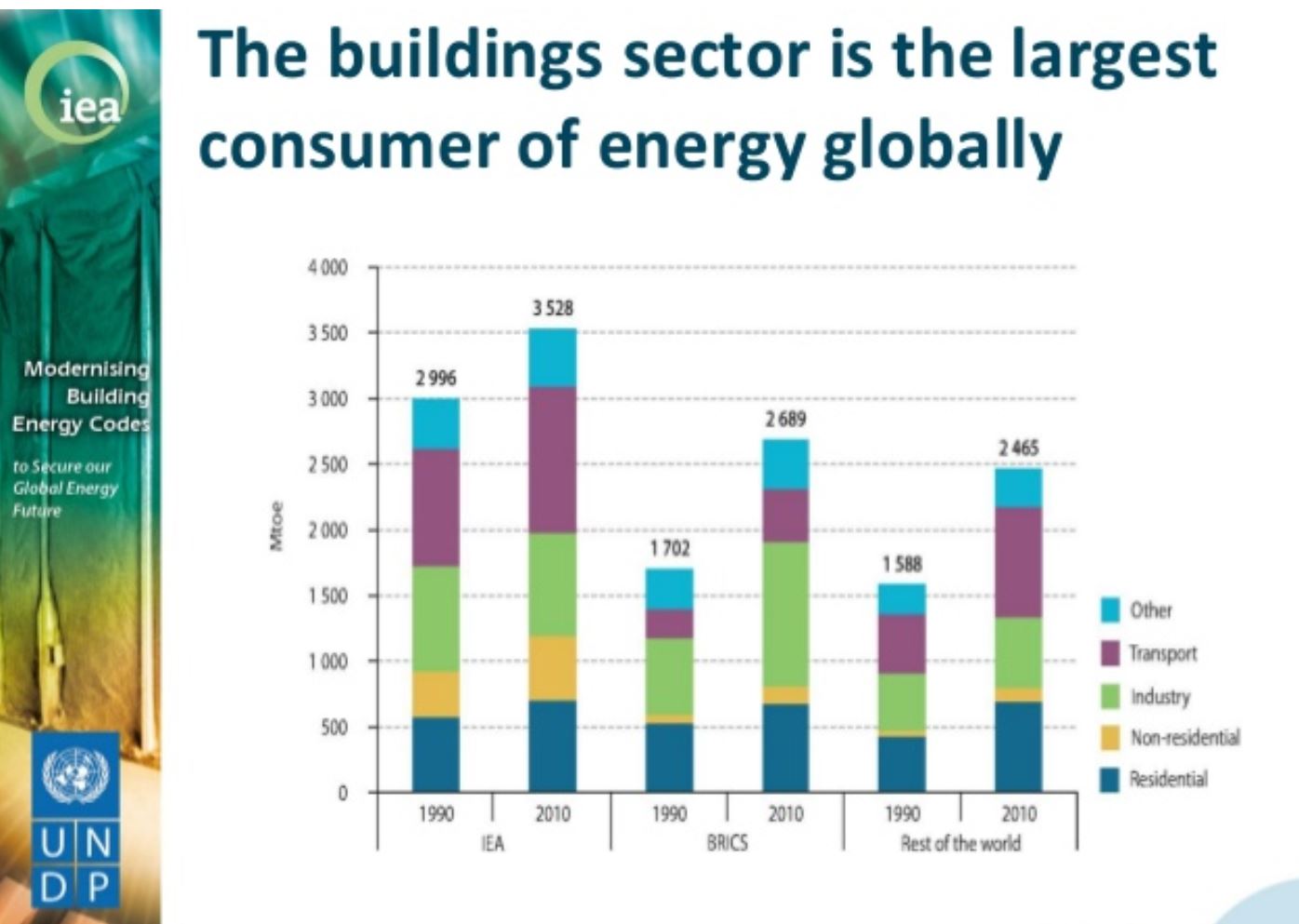 Buildings are the largest consumers of energy worldwide and will continue to be a source of increasing energy demand in the future. Globally, the sector’s final energy consumption doubled between 1971 and 2010 reaching 2,794 million tonnes of oil equivalent (Mtoe). The main drivers are projected to be population increase and economic growth. Under current policies, the global energy demand of buildings is projected by the IEA to grow by an additional 838 Mtoe by 2035 over 2010.
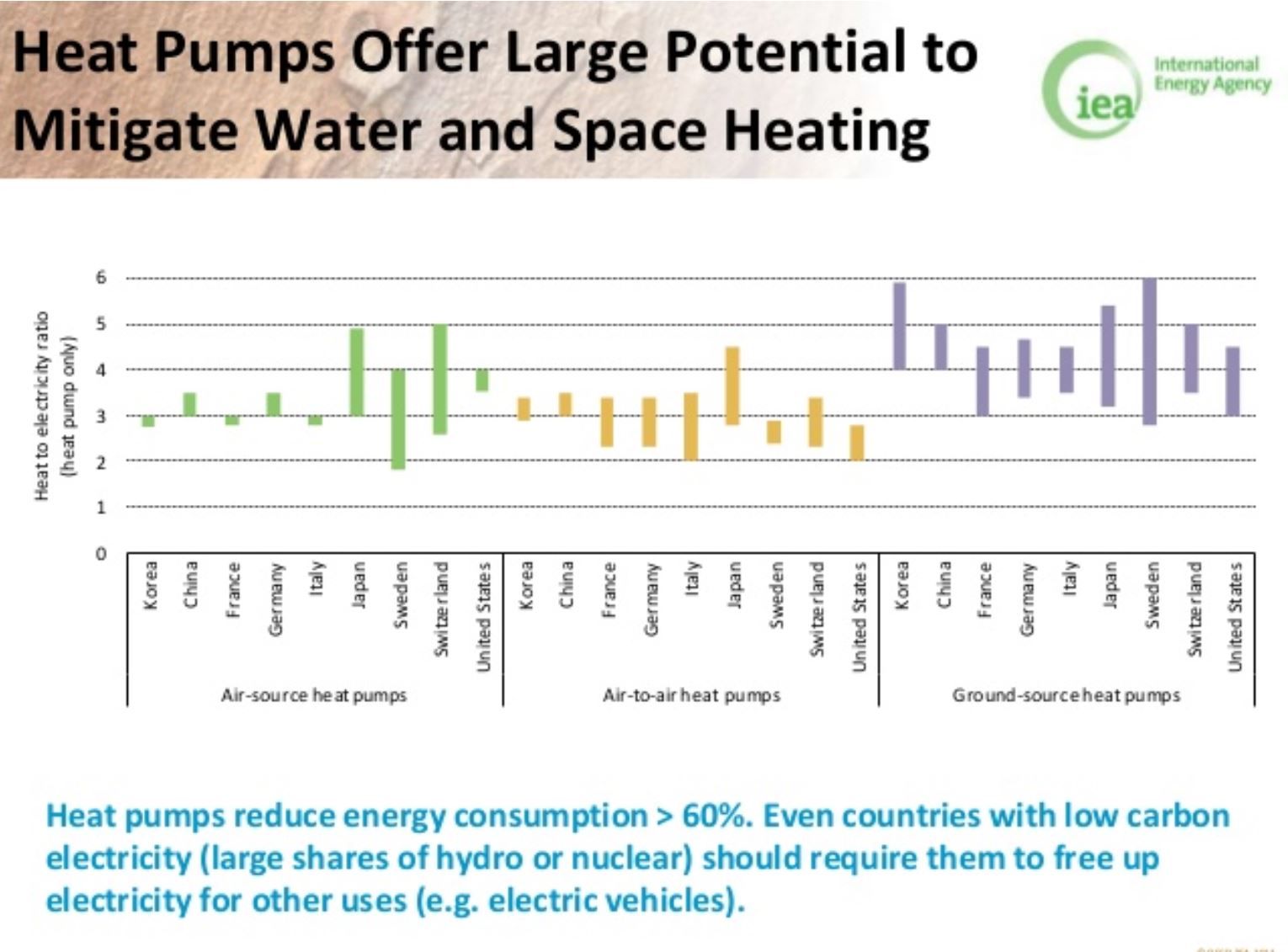 However, increased electrification of buildings through the deployment of heat pumps is projected to significantly displace natural gas demand as well as to moderate electricity demand by buildings. According to the IEA projections, increased deployment of heat pump technology could avoid most of the growth in natural gas demand. It could also moderate the overall change in electricity demand for buildings since heat pumps can reduce electricity consumption by 30 to 40% according to the US Department of Energy. According to the IEA projections, in spite of global floor area increasing by more than 70%, energy demand in buildings could grow by just 11%, without changing the comfort levels of buildings or requiring households and businesses to reduce their purchases of appliances and electronics equipment.

Be the first to comment