
Bangladesh is one of the most densely populated countries in the world. In 2005 79% of the population lived in rural areas where the main energy source is biomass. Biomass fuels (firewood, cow dung and agricultural residues) are estimated to account for about 73% of the country’s primary energy supply. In 2005 only around 30% of the population had access to electricity. Excessive use of firewoods threatens the remaining forest cover which is only 10% of the total land area.
The Government of Bangladesh has adopted a goal of generating 5 percent of the country’s energy demand through green energy by 2015 and 10 per cent by 2020. For buildings with grid access, the government requires that newly built buildings have to meet a portion of their electricity requirements through solar energy in order to get an electricity connection. The requirement for producing green energy is 3 percent and 7 percent of the total electricity demand in the residential and commercial buildings respectively.
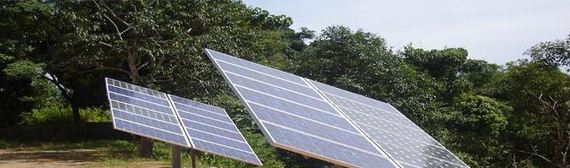
Renewable energy, primarily solar, is providing access to electricity solution for rural villagers, who are not likely to have access to the conventional grid in the near future. The Globle Environment Facility (GEF) is helping to speed the rural electrification process by working with the Government of Bangladesh, the World Bank, and Bangladesh’s Infrastructure Development Company Limited (IDCOL) to increase the spread of off-grid, renewable energy technologies, such as solar home systems (SHS) in rural areas where people live too far from the main electrical grids. Without access, these families are forced to rely on more expensive and nonrenewable energy options such as kerosene or batteries. The Renewable Energy and Rural Electrification project seeks to reduce barriers to the use of these climate friendly energy systems and grow the market for renewables. The project is building capacity through access to financing, business skills, training and technical skills, institutional capacity, and consumer awareness. Currently it is estimated that some 80,000 SHSs are installed each month and in the last seven years, over 1 million rural homes in off-grid areas have got lights through solar home systems. The GEF project also has emissions reduction benefits. It has been estimated that the project is expected to displace nearly 260,000 tons of carbon dioxide over the next 15 years, primarily by reducing kerosene use.
The government’s renewable energy golas and the GEF project have attracted a large number of new entrants into the business, particularly for solar panel installations. In the last two years, nearly 100 firms and NGOs have appeared on the scene to sell technologies including solar home systems, irrigation pumps, water heaters, street lights and their accessories and batteries.

Be the first to comment