
A report released last week released by the US Treasury Department and the Council of Economic Advisers supports the development of a National Infrastructure Bank as proposed by President Obama last month.
Its first conclusion is that Americans want more infrastructure investment and cites statistics to support this assertion.
- In 2008, over 80 percent of the 59 transportation infrastructure projects proposed in local referenda were approved by the voting public
- 98 percent of the funds requested for these projects was approved by the voting public
- Americans’ satisfaction with their public transit system ranks 25th out of 32 OECD nations.
- Americans’ satisfaction with their roads and highways system ranks only 17th out of 32 OECD countries
- 19 out of 20 Americans are concerned about America’s infrastructure
- 84 percent of Americans support greater investment to address infrastructure problems
- Poor conditions of roads cost the average motorist who drives in cities on a regular basis over $400 a year
- A two adult household using public transportation could save an estimated $6,250 a year compared to a similar family that is unable to use public transportation
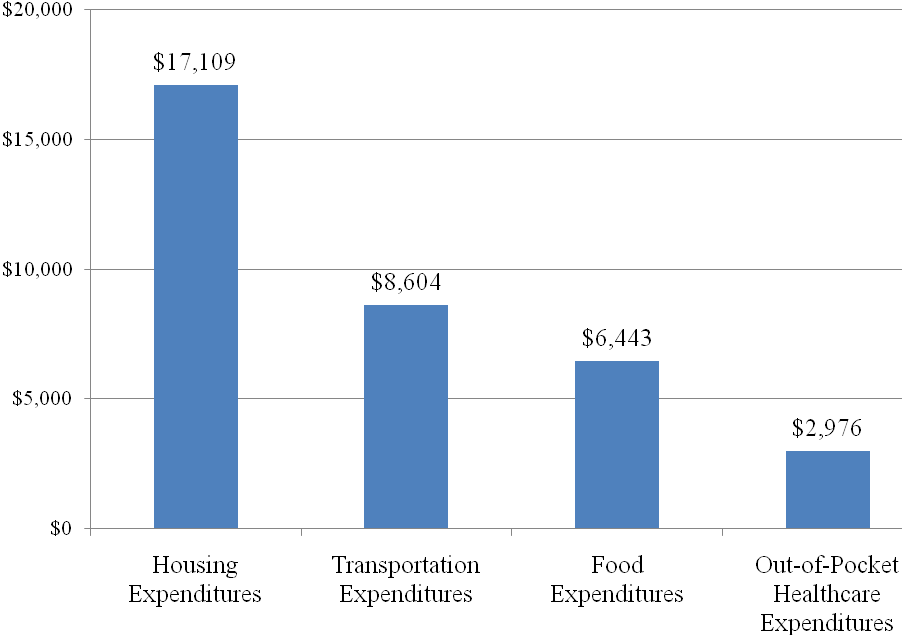 The report says that the average American annually spends $8,600 a year on transportation, one-third more than on food, and concludes that public investments which lower the cost of transportation would reduce transportation-related costs including car maintenance and fuel consumption.
Compared to other major economies the US underinvests in infrastructure and this affects its international competiveness.
- US 2 % of GDP
- China 9% of GDP
- Europe 5% of GDP
President Obama first proposed a National Infrastructure Reinvestment Bank in his presidential campaign that would invest $60 billion over ten years in “a world-class transit system, green energy technology, ports, roads, and high-speed rail.”
The President’s current proposal for renewing the transportation network includes
- $50 billion up-front investment connected to a six-year reauthorization of the surface transportation program
- National Infrastructure Bank
- Rebuilding 150,000 miles of roads,
- Constructing and maintaining 4,000 miles of passenger rail
- Rehabilitating/reconstructing 150 miles of runways
- Upgrading the air traffic control system
The objectives of the National Infrastructure Bank is to increase investment in infrastructure by attracting private capital, secondly, to implement a merit-based selection process for infrastructure projects, and thirdly to encourage investments in multi-modal and multi-jurisdictional infrastructure projects.
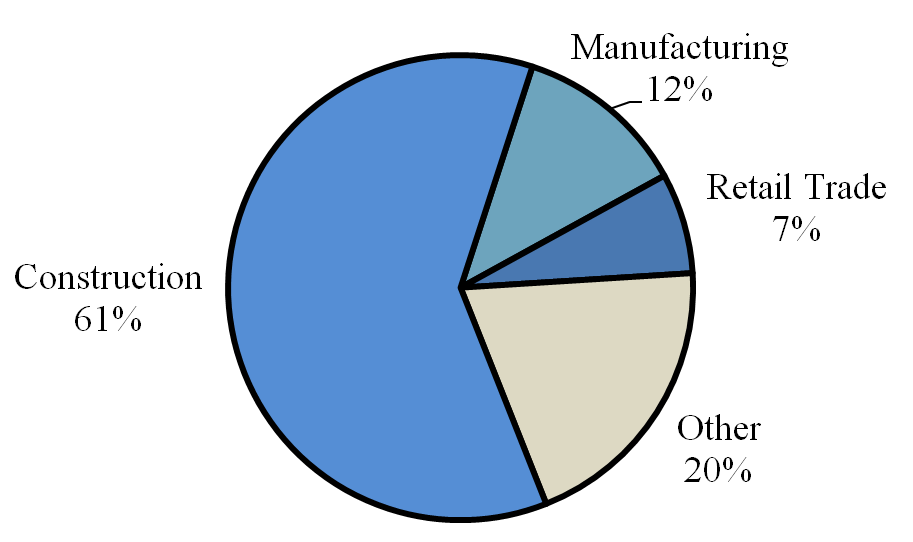 The report suggest that investing in transportation infrastructure creates middle class jobs. The distribution of jobs among the various sectors of the economy most affected is estimated to be
- 61 % of the jobs in the construction sector
- 12 % in the manufacturing sector
- 7 % in retail trade
The report estimates that 90 percent of the jobs in the three sectors most affected by infrastructure spending would be middle class jobs.
Be the first to comment