
What is BIM Level 2 and how do I know I am compliant ?
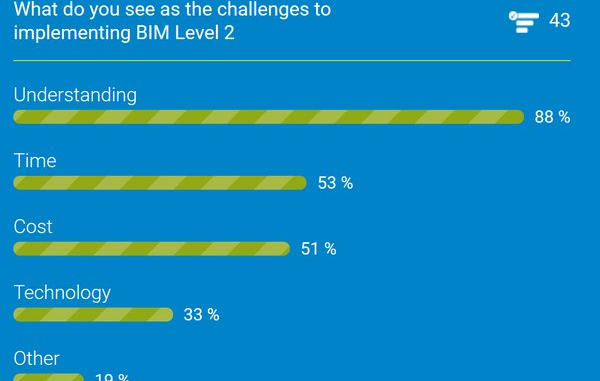
What if you are a small company with no more experience with BIM than discovering what the acronym stands for ? It turns out that one of the biggest challenges, especially for smaller firms, is just what does BIM Level 2 means in practice. What do I have to do to be compliant ?
At RICS BIM 2016 there was a sequence of presentations by a group of mostly quantity surveyors (people who do quantity takeoff), all BIM novices, who came together to try to understand and share openly what BIM Level 2 means practically. This project brought together seven knowledge transfer initiatives funded by InnovateUK. They called it KT4BIM (which you can find on Twitter at #KT4BIM and on LinkedIn). The objective of the project is to answer the questions
-
how do we do BIM Level 2 ?
-
how do we demonstrate compliance ?
The target audience is BIM novices in both the residential and commercial sectors of the construction industry. KT4BIM intends to share all the material used and developed as part of this project with the rest of the industry.
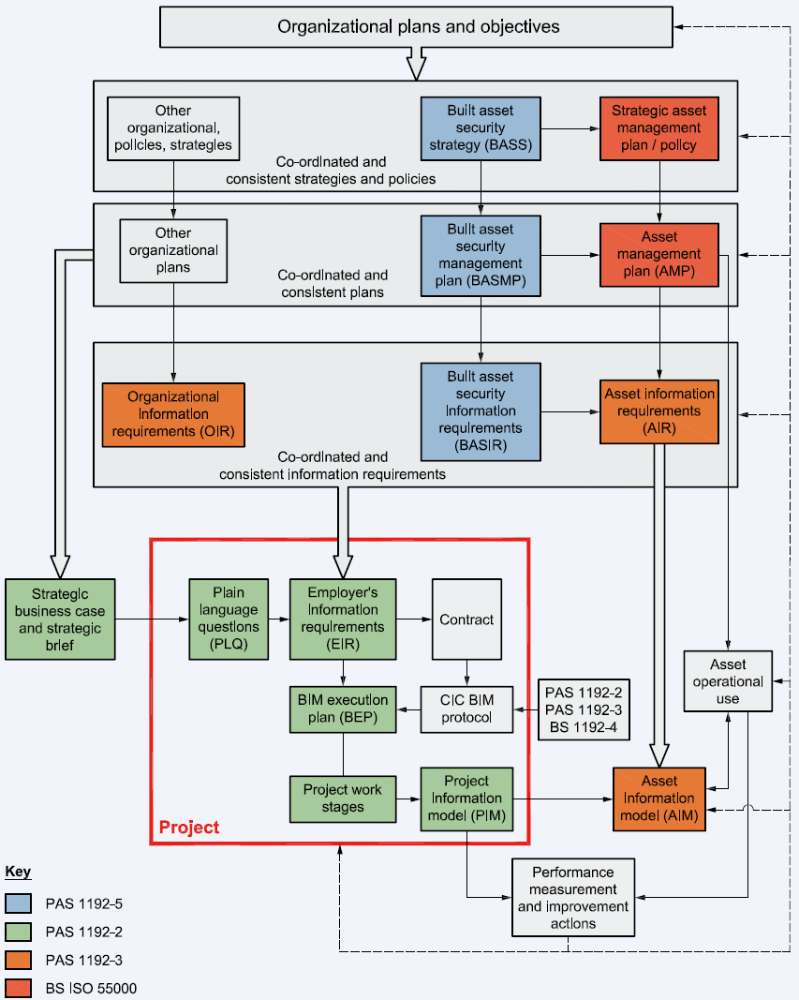 They setup a mock project so that they can work through five stages, from stage 0 through 4, of an actual construction project. The project started with Stage 0 & 1 of the RIBA Plan of Work, the definitive UK model for the building design and construction process. From there the plan is to work through Stages 2 to 4 to create a design and various outputs to test the Level 2 process. The roles included in the mock construction project are the Client (owner), Information Manager, Architect, Structural Engineer, HVAC, Fit Out Contractor, Cladding Contractor, and Virtual & Augment Reality, with professional representatives from industry and academia responsible for each role. BIM4SME is playing the role of client.
Initially it was expected that Stages 0 and 1 would require two and a half months. But Stage 0 has taken much longer than expected because right at the start they encountered a major challenge in the form of many very complex standards, which at that time were to be found on different web sites.
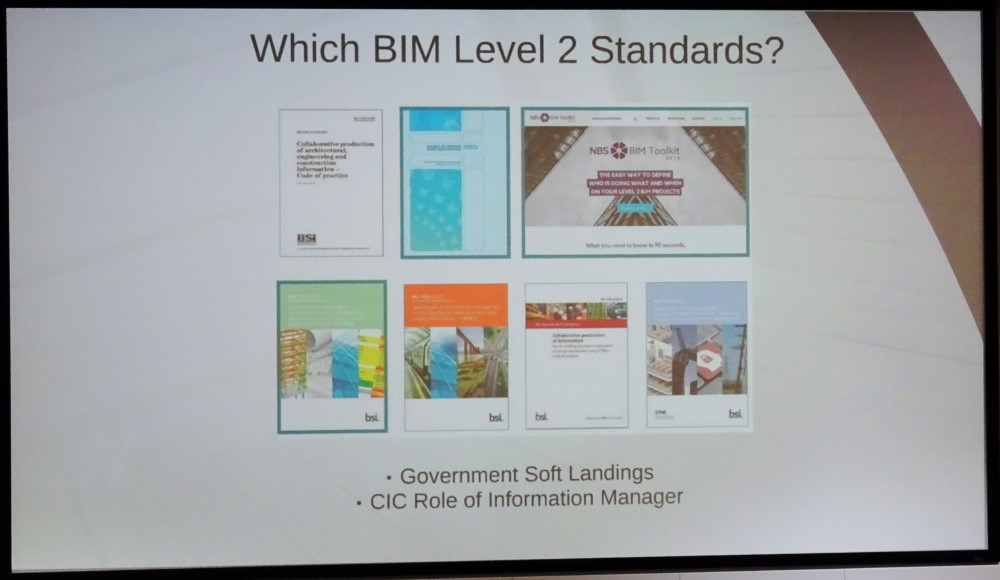 Question 1: What are the BIM Level 2 standards and which are required ?
There are a many BIM Level 2-related standards, BS 2007, PAS 1192-2, PAS1192-3, PAS1192-4, PAS1192-5, Government Soft Landings, … and on several different sites, BIM Task Group website, B1M, and others.
The good news is that there is now a single web site (BIMLevel2.org) where all the documents can be accessed. But it is quite a list and it is hard to know where to start.
 Question 2: With so many documents where do you start ?
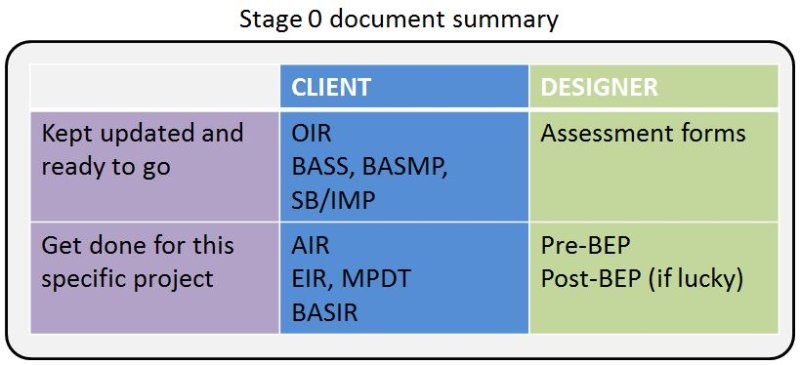
There are several alternatives. PAS1192-2 is the most read, but PAS1192-3 and PAS1192-5 provide a broader perspective on the whole life cycle process. The KT4BIM team recommends starting with PAS1192-5. If you are an employer (client), it is recommended that you begin with the Built Asset Security Strategy (BASS) and Organizational Information Requirements (OIR) sections. If you are a consultant, then you should begin with the BIM Execution Plan (BEP) section.
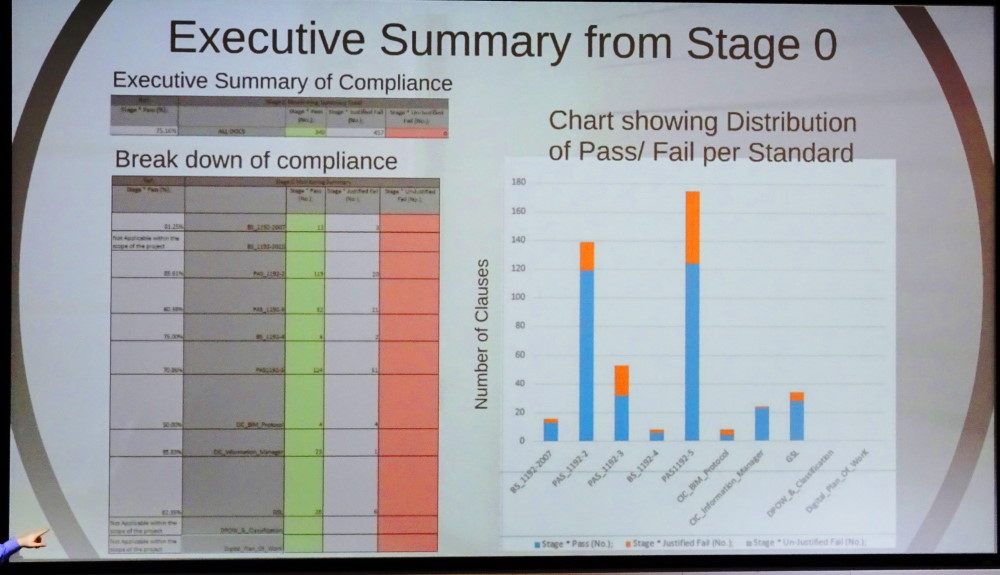 Presumably, since BIM Level 2 is mandated by the UK Government for public projects, a company could risk legal action for noncompliance (although one speaker mentioned that there is no legal definition of BIM Level 2 compliance). The question KT4BIM intends to answer is
Question 3: How do we as contractors know when we are BIM Level 2 compliant ?
KT4BIM came up with the concept of a Success Matrix, an Excel spreadsheet that signals degree of compliance. The tool is intended to be accessible to the entire team from client through to contractors and it is designed to provide an interactive learning experience for all project managers. The Information Manager can utilize the tool to effectively police the project. It is designed so that a client (owner) with a low level of training can use the tool to make sure they are getting a fully compliant BIM maturity level 2 project. It is also expected that the Government Soft Landings Champion (see Government Soft Landings) will also benefit from the tool.
A very good and readable (for BIM novices) overview of Stage 0 of the KT4BIM project can be found here. It is intended that the project will continue through to Stage 4 and I expect that many, especially folks for whom BIM is new, will be following the progress of KT4BIM with a lot of interest.

Be the first to comment