
Nick Nisbet, Director at AEC3 UK Ltd and buildingSMART, gave an overview of the role of COBie UK 2012 and its relationship to BIM. In the UK BIM has been mandated for central government buiding construction projects in the UK starting in 2016. COBie-UK-2012 defines the UK use of COBie 2.4, which was developed
initially in the United States by the Army Corps of Engineers.
COBie-UK-2012 is intended for buildings, infrastructure and landscape;
new, reburbished and existing structures; and for both small and large projects. Unlike BIM it is not a
legal requirement, but contractual. Standard UK government construction
contracts will have a built-in requirement for COBIe starting in 2016.
COBie, which stands for Construction and Operation information exchange, is a means of sharing structured information, especially with clients (customers). It is simple enough to be represented as a spreadsheet, but detailed enough for many client (customer) purposes. It is not inte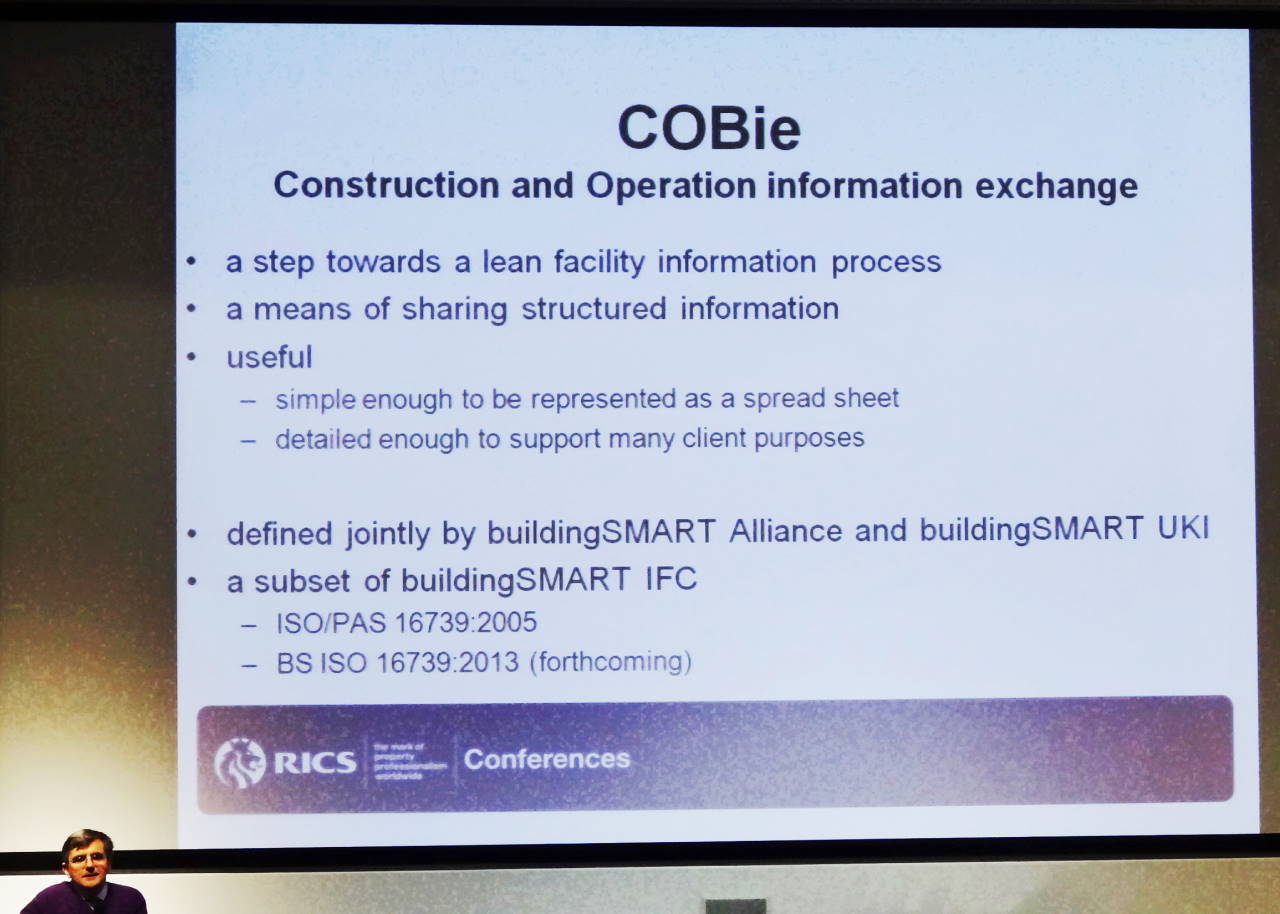 nded to be used as a way of sharing detailed design information among architects and engineers, however. it was defined jointly by the buildingSMART Alliance and buildingSMART UK and is a subset of Industry Foundation Classes (IFC) standard.
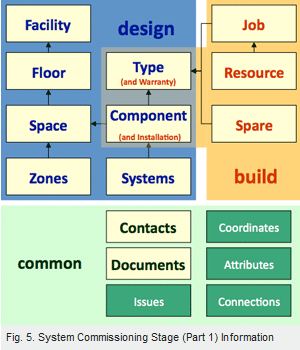
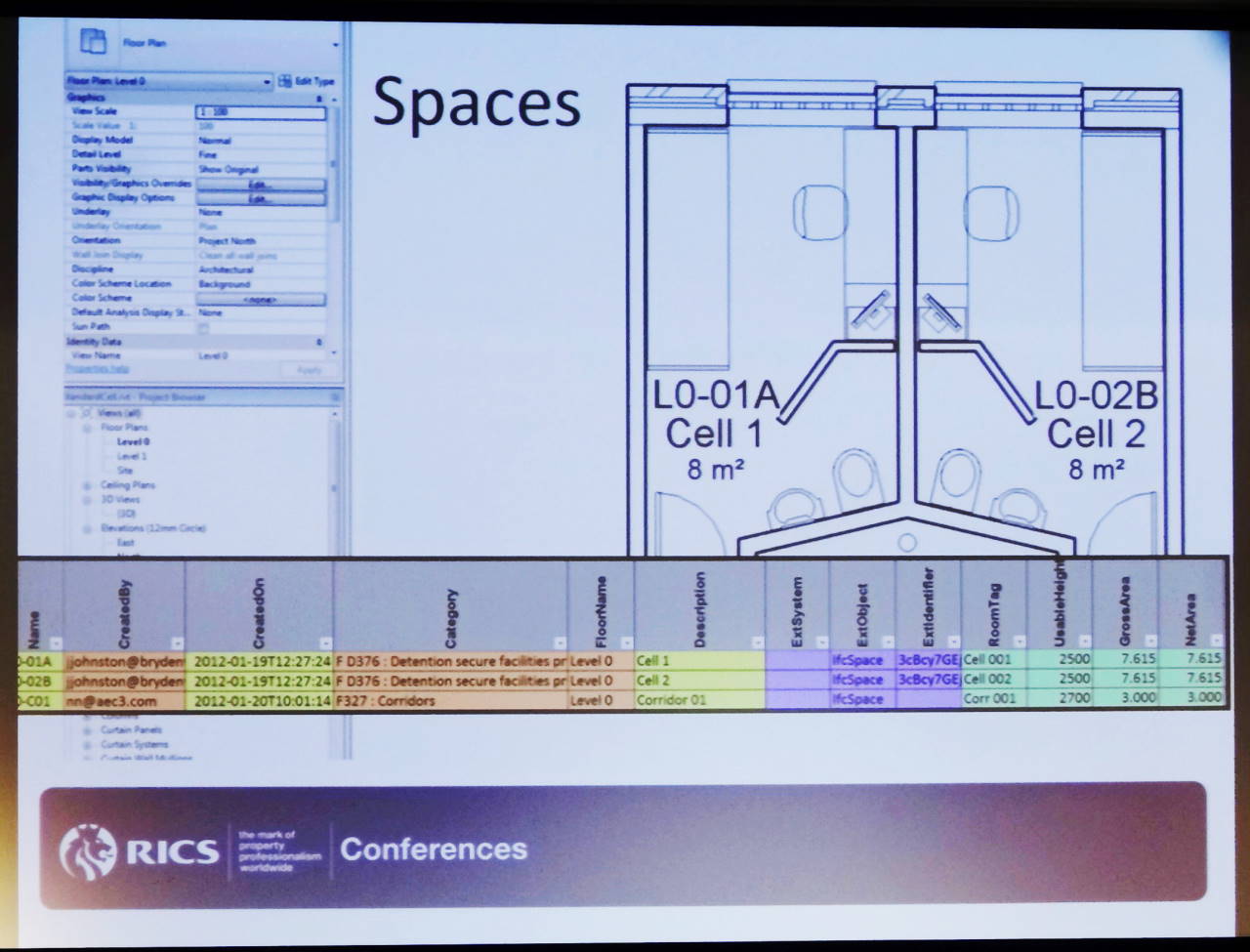 COBie is a standard way of classifying the spaces and components of a building. In general a COBie facility is comprised of zones, floors/sectors, types (of equipment), and systems. For equipment, it includes such information as replacement cost, expected life, warranty details, manufacturer and and model. It also includes impact information which includes cost; energy, water and other resources requirements; emissions, pollution and other environmental impacts. The COBIe specification even includes options for coordinates (location) and connections. The latter allows connectivtity or associations between pieces of equipment to be recorded. To facilitate maintenance COBie includes fields for summary instructions for use of equipment, contact information (email addresses and telephone numbers), and issue tracking. Since the classifications are standardized, they enable comparison of different buildings to enable better building practices to be indentified and benefits quantified.
COBIe and BIM
COBie is designed to be used at all stages of the design, build, and operate and maintain lifecycle, but is especially useful at the handover stage, on completion of construction when the building is handed over to the client, and the operate and maintain (O&M) stage of the building’s lifecycle begins.
 When a building is comissioned and the client takes over responsibility from the architects, engineers,and contractors who designed and built the structure, the people responsible for operating and maintaining the building require information about the building; its facilities, spaces, HVAC, plumbing, fire and systems, and its equipment in order to be able to operate and maintain it. Compiling this information has been a challenge and COBIe is intended as a vehicle for conveying structured information about the facility and its equpment captured during the design and build stages to the client as part of the handover. Since BIM models will be mandatory for all buildings from 2016 on, the idea is that all of the data relevant to O&M would be collected in the BIM model(s) during the design and build stage. COBie is seen as a way of conveying the structured data stored in BIM model(s) to the computerized facilities management (CAFM) systems used for operating and maintaining the building and is intended to provide all the information that is required by facilities management (FM) for operate and maintain the building.
Automation
Furthermore the process of creating COBie data is designed tobe automated. COBie data is intended to be machine generated and machine checked.

Be the first to comment