
In January 2010, Canada formally notified the United Nations that in line with the Copenhagen Accord Canada committed to reducing its carbon emissions by 17 per cent by 2020 from 2005 levels. At that time the Canadian Energy Minister said that although this goal was challenging, he believed it was attainable.
The Federal government strategy for reducing emissions by 17% by 2020 is what it calls a “sector by sector” approach.
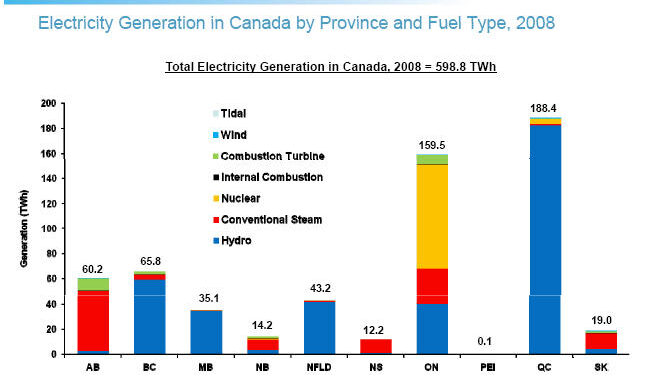
Last Friday the Federal Environment Minister announced the first step in the program to achieve this goal of 17% emissions reduction by 2020. New proposed regulations will require any new coal-fired units that begin producing power after July 1, 2015 to match the lower greenhouse gas emissions of natural gas generation. For existing coal-fired units when they reach the end of their economic lifespan at about 45 years, they will have to be upgraded to meet the new performance standards if they are to continue operating. The proposed rules will be published on Aug. 27, followed by a 60-day public comment period. Three Canadian provinces generate a significant proportion of power from coal-fired plants, Alberta, Saskatchewan and Nova Scotia. About 18% of Ontario’s power generation is derived from coal (Nanticoke is North America’s largest coal-fired power plant), but the province has annnounced its intent to end all coal-fired generation by 2014.
According to Environment Canada the proposed regulations, when combined with other federal and provincial measures such as Ontario’s phase out of coal-fired generation, are forecasted to result in a reduction of 65 megatonnes of greenhouse gas (GHG) emissions between 2005 and 2020, though only 6 megatonnes of the reduction are attributable to the measures the Federal Energy Minister has just announced..
Industry perspective
 The Canadian Electricity Association (CEA), which represents electric utilities in Canada said the new regulation is a step forward, but that additional regulations, for example, covering natural gas generation are also required.
The CEA has said it is in favour of clear, long term policies including carbon pricing.
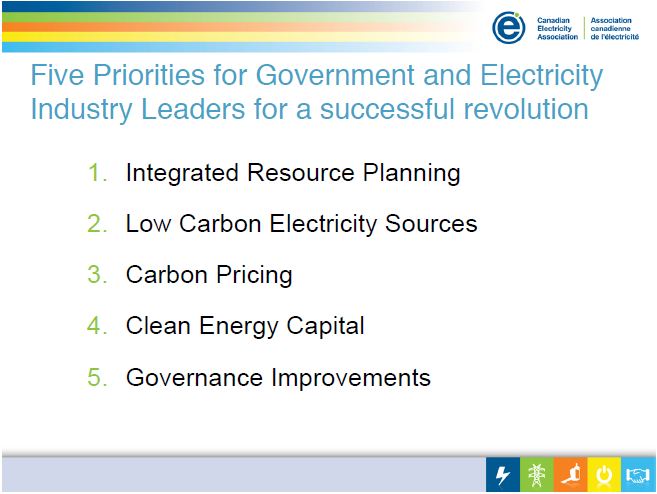
Integrated resource planning
Integration of energy efficiency, energy storage, and energy security; information technology, renewable energy and smart-grid; and improving planning coordination across neighboring jurisdictions
Low carbon electricity sources
Coal with CCS, natural gas, large hydro, and nuclear
Carbon pricing
Determining the carbon price or signal it will it take to drive the electricity sector transition to low carbon. A clear set of regulations will do.
Clean energy capital
The industry will need capital for electricity projects, both for replacement infrastructure and to meet new demand.
Governance improvements
The world will need better regional, national and international governance. For Canada, we need to look at our needs and systems as well as those of our US neighbors.

Be the first to comment