
The Asia Pacific region is a primary driver of global urban development trends and is where some of the world’s the most ambitious attempts to direct those trends to national development goals. Increasingly, smart city technologies are seen as means to keep metropolitan and national economies competitive, and Asia Pacific companies are among the leaders in smart city solutions.
According to BSRIA, there are many smart city initiatives underway in Asia.
 Some examples are Songdo IDB in Korea and Fujisawa in Japan – two smart cities already under development. China has 36 smart cities in development and a low carbon model city in Tianjin as well as 104 nationally selected smart city demonstration projects. Singapore plans to become a smart nation by 2015. Iskandar is Malaysia’s first smart city. After a devastating earthquake, Christchurch, New Zealand is being redeveloped as a smart city.
Two of these I am acquainted with because I visited the planning office for the DMIC the last time I was in India and I met with several people involved with the Songdo project quite a few years ago in Korea.
Delhi Mumbai Industrial Corridor
In India the Delhi Mumbai Industrial Corridor (DMIC)is intended to be a smart city. The Delhi-Mumbai Industrial Corridor is a huge US$ 90 billion project 1,483 km in length between Delhi and Mumbai. The objective of the DMIC is to create a base for economic development by providing access to the best state-of-the-art infrastructure.
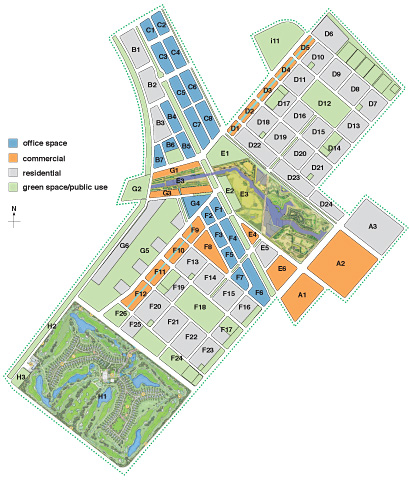 Songdo IDB
Songdo IBD is much smaller scale and has very different objectives. It is a completely new city, being built from scratch on 1,500 acres of reclaimed land along Incheon’s waterfront. Songdo represents a serious attempt to create a sustainable, liveable city. The city will be the first LEED certified district in Korea and the largest project outside North America to be included in the LEED ND (Neighborhood Development) Pilot Program.
Asian smart city market sizing
Navigant Research has released a report that provides an assessment of smart city initiatives in Asia Pacific and profiles the key industry players in the region. The report attempts to size the smart city market through 2023 by region (Australia/New Zealand, Greater China, India, Japan, Southeast Asia, and South Korea) and sector (smart energy, smart transportation, smart water, smart buildings, and smart government).
Navigant points out that the smart city market is a loose collection of several markets that are concerned with addressing urban problems in some way. Navigant considers the smart city market to be comprized of five industry sectors: smart energy (and the smart grid), smart transportation, smart water, smart buildings, and smart government (including social services such as health, education, and security).
The Navigant report examines smart city drivers, policies, and development prospects in six distinct Asia Pacific regions: Australia/New Zealand, Greater China, including Hong Kong and Taiwan, India, Japan, Southeast Asia, including Indonesia, Malaysia, the Philippines, Thailand, Vietnam, and Singapore; and South Korea. Navigant estimated that these regions make up most of the addressable Asia Pacific market for smart city technology and include most of the cities that have active smart city development initiatives.
The uderlying trends driving the smart city market in Asia Pacific include continuing economic growth in China, India, and Southeast Asia; a focus on upgrading infrastructure in China, India, Australia, and South Korea; and high expected levels of smart city technology adoption in Japan, Australia/New Zealand, and South Korea. Navigant estimates that the annual smart city technology investment will almost quadruple to $11.3 billion by 2023. This just represents the smart part of much larger smart city projects: smart sensors and meters, dedicated networks, cloud computing platforms, data analytics, and integrated systems and applications across different industries and sectors.
The smart energy and smart transportation sectors are the largest and most developed. The smart government sector which includes security, health, and education applications is the fastest growing. Smart water systems are currently a small part of the overall market, but will experience substantial growth to meet the needs of expanding cities in water-scarce areas such as India, Northern China, and Australia. Smart buildings will become an appreciable part of the overall $ 7 trillion construction market as the benefits of smart city technology become apparent and increasingly stringent energy intensity requirements are mandated throughout the region.
Be the first to comment