
In 2005 the European Commission set up the SmartGrids European Technology Platform for Electricity Networks of the Future with the aim of creating a vision for the development of Europe’s electricity networks for 2020 and beyond. The drivers for the new European grid included renewal of the aging European grid, security of supply, market liberalization, interoperability of European electricity networks, distributed generation and renewable energy, environmental issues, demand response and demand side management, harmonisation of policies and regulatory frameworks across the European Union (EU) context, and the changing demand of an ageing society.
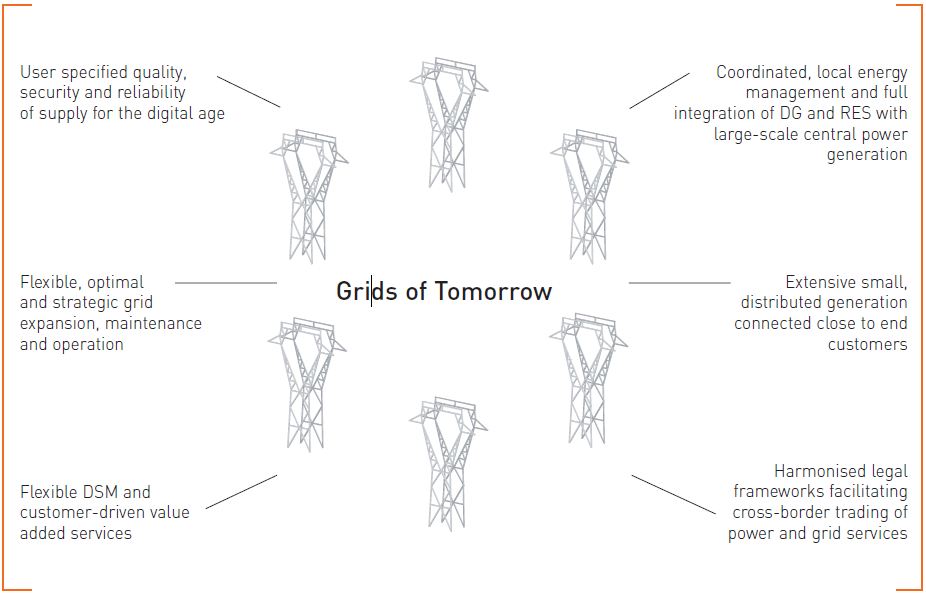 In 2010 the European Commission launched its smart grid initiative. The European Electricity Grid Initiative (EEGI) proposed a nine year European research, development and demonstration program to be initiated by electricity transmission and distribution network operators to develop a next generation smart grid electricity network for Europe to be deployed between 2010 to 2030. Its objectives are
- Integration of renewable and distributed sources of electricity
- Integration of national networks into a single European electricity market
- Improved reliability of electricity supply
- Customer participation
- Support for electric vehicles
- Efficiency
- Business opportunities
In April 2011 the European Commission adopted Smart Grids: from innovation to deployment, which sets policy directions for the deployment of future European electricity networks. Smart grids will empower consumers, integrate renewable energy, reduce CO2 emissions in the EU by 9% and annual household energy consumption by 10%, enable the EU-wide electricity market, and ensure the security and reliability of the EU electric power grid.
Masterplan for Energy Supply in Germany
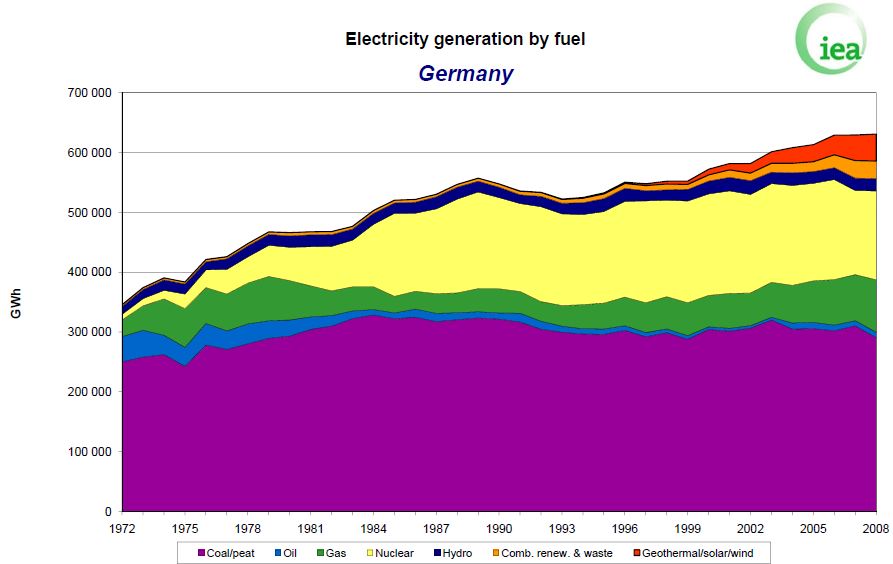 German electricity generation has been about one half coal and one fifth nuclear. In 2010 17% of Germany’s electricity was produced from renewable energy sources (mostly wind and biomass). In September 2010 the German Government released a 40 year masterplan for revolutionizing the German energy supply. It outlines a plan for increasing renewable energy, expanding the electric power grid geographically and functionally, rapidly developing energy storage and aggressive energy conservation.
Increase renewable energy
- increase offshore wind power generation to 25 gigawatts by 2030 costing about €75 billion
- expand biomass production including importing bio fuels
- increase solar power capacity to 51 gigawatts by 2020
- continue to use coal for power generation
- test carbon capture and storage (CCS) technology by building two test plants with long-term CO2 storage in Germany by 2020
Expand the power grid (to be defined by “Target Grid 2050” in 2011)
- construct north-south transmission lines bringing power from wind farms in the north to the main conurbations in the west and south of the country
- integrate with a European supergrid to allow surplus German power to be stored in hydroelectric plants in Norway or in the Alps, and draw on solar power from Spain and elsewhere
- develop a smart grid to enable distributed generation
Expand electricity storage technologies
- exploit German capacity for pumped storage hydroelectric plants
- increase the usage of foreign pumped storage plants, mainly in Norway and the Alps.
- use biomass to offset fluctuations in wind and sun.
- develop storage technologies such as compressed air energy storage, hydrogen storage and batteries for electric vehicles.
Energy conservation
- introduce new insulation standards. The government’s intention is for all buildings in Germany to be refurbished in line with new insulation standards by 2050.
- cut the national heating requirement by 20 percent by 2020 and by 80 percent by 2050. Buildings currently account for 40 percent of power consumption and a third of CO2 emissions.
- provide allow tax relief on energy taxes beginning in 2013 to companies contributing to energy savings. It is estimated that energy efficiency could save €10 billion per year.
Electrification of transportation and heating
- Targets 1 million electric vehicles on German roads by 2020, 5 million by 2030, and 80% market share for electric and hybrid by 2040
- Introduce new vehicle registration rules in 2011 to encourage people who drive electric cars
- Reduce CO2 emissions from 160 grams per kilometer to 35 grams by 2040
- Increase the share of renewable energies for heating
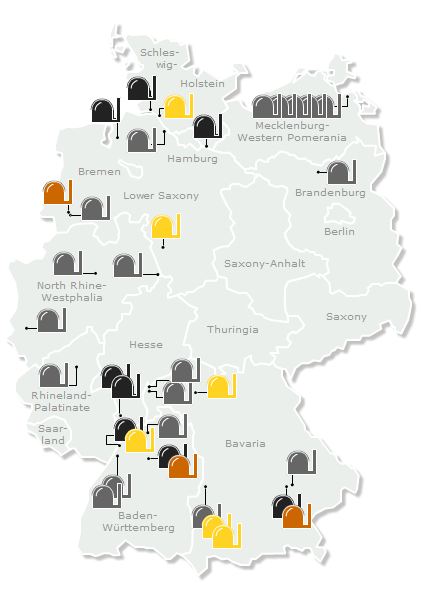 Since the energy master plan was released, the Fukushima disaster has happened. At the end of May of this year the German Government announced that all German nuclear power plants will be required to go off-line by 2022. The implications of this announcement are being assessed, but it clearly means the accelerated development of renewable and non-emitting energy and the accelerated development of a smart grid that is able to integrate distributed generation on a massive scale.

Be the first to comment