
All of the world’s major economies have committed to transitioning their electric power grids to smart grids. I have blogged about smart grid programs in the US, Canada, Korea, Japan, China, India, Australia, and the European Union. In each country, and in reality in each utility, the motivation for moving to a smart grid and the priorities of the different elements that make up a smart grid are rarely the same.
At the end of 2009 the UK Department of Energy and Climate Change (DECC) prepared a vision document called Smarter Grids: The Opportunity which outlined the motivation for and the important elements of the smart grid from a UK perspective.
Low Carbon Economy
The UK has a legally binding committment (Low Carbon Transition Plan 2009) to reducing carbon emissions by 80% by 2050. Since about 80% of electric power generation in the UK is derived from fossil fuels, mostly coal but increasingly natural gas, this requires a major investment in renewables and other non-emitting fuel types. It means transitioning from a small number of large electricity generating plants to many small, local generating facilities. It also means increasing the usage of electric power for heating and transportation which will increase the demand for electricity. In the short term the UK Government has signed up to the EU Renewable Energy Directive, which includes a UK target of 15 percent of energy from renewables by 2020.
 Smarter Grid
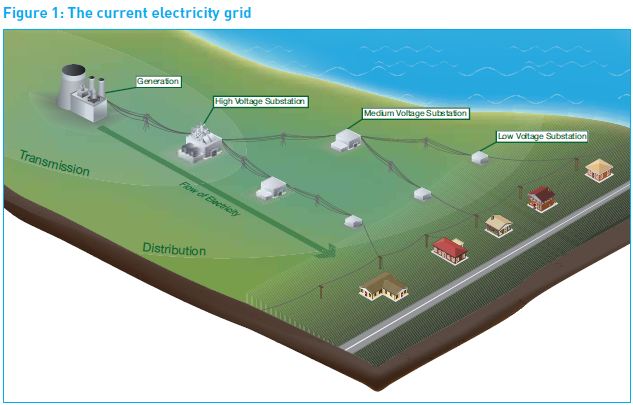
The current grid in the UK is relatively simple. A small number of large carbon intensive power plants generate electricity that is carried over high voltage transmission lines to electric distribution networks where through a series of substations the voltage is reduced and delivered at 230 V to consumers. Balancing demand, which fluctuates through out the day as well as seasonally, and generation is done manually.
Balancing increasing electric power demand with many small intermittent energy sources requires a smarter grid which automates many of the functions that are done manually with the current electric power grid. The advantages of a smart grid from DECC’s perspective are more reliability, lower operating and maintenance costs, lower investment in capital infrastructure per kilowatt, and less environmental impact.
The key elements of a UK smart grid that have been identified by DECC include
- Applying information and communications technologies (ICTs) to the grid – making the grid inetlligent by automating the grid with bidirectional communications networks, automated substations, smart devices, and software for managing it all
- Smart metering – to provide new services to consumers and allowing greater flexibility in managing load. The Government has committed to the roll out of smart meters for both electricity and gas in all homes and most small businesses by the end of 2020.
- Time-of-use pricing – to reduce costs and carbon emissions by reducing peak demand
- Clean energy – wind, wave, tidal, nuclear power and fossil fuel with carbon capture and storage (CCS)
- Undersea transmission lines – to interconnect with other countries’ grids
- Expansion and refurbishment of the UK transmission grid – estimated to require an investment of £4.7 billion by 2020
- Electrical energy storage – to balance out intermittent power generation
- Distributed generation – consumers are becoming producers, power flows bidirectional
- Electrification of transportation and heating – to reduce carbon emissions in these two sectors
- Creating a UK smart grid industry – to contribute to Britain’s wider productivity and competitiveness in the international smart grid industry, estimated at €30 billion over the next five years
 Smartgrid Routemap
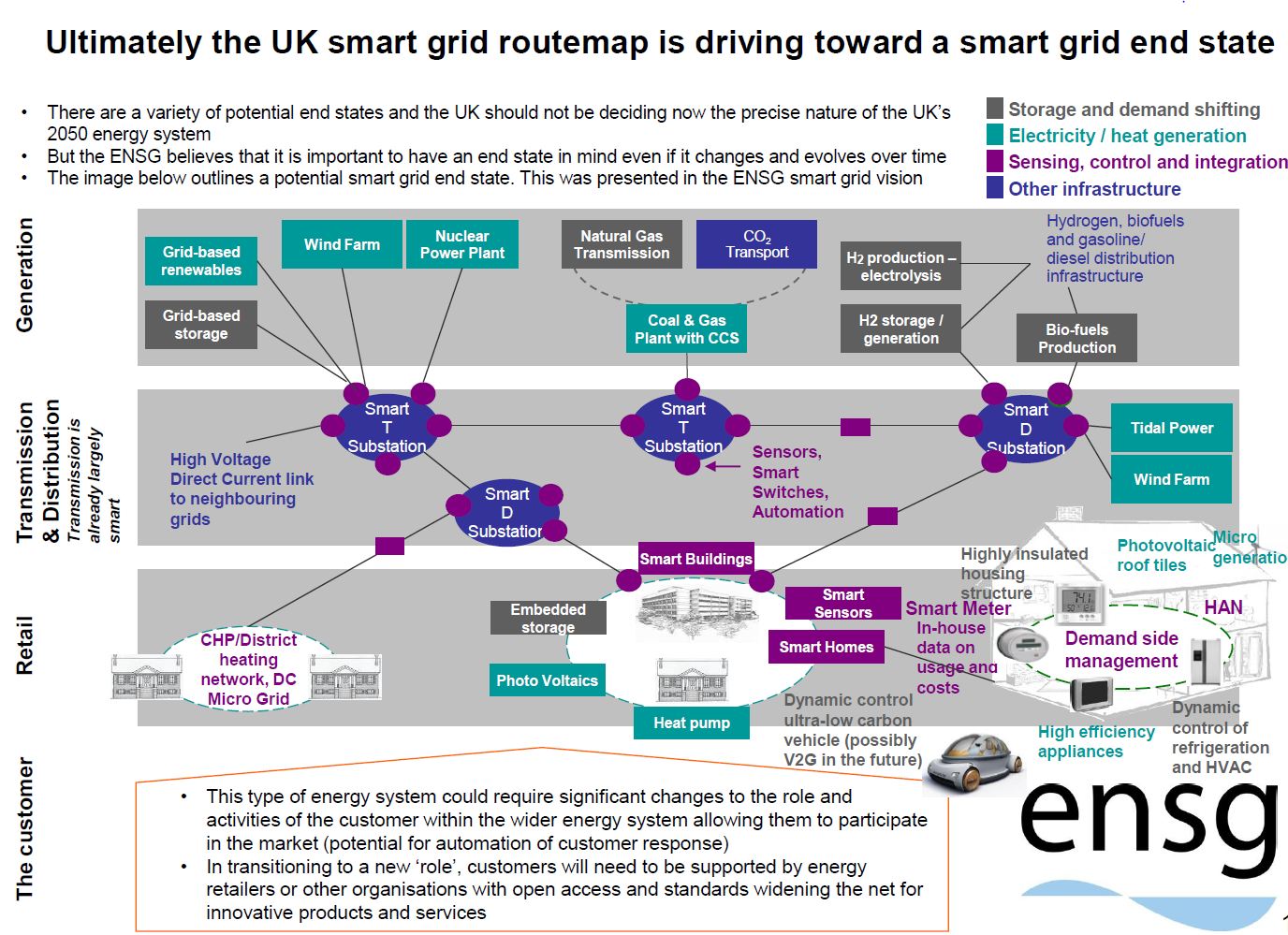
Based on the vision statement the Electricity Networks Strategy Group (ENSG) was tasked with developing a roadmap for the transition of the UK electricity grid to a low carbon economy. ENSG has outlined the key elements of the desired smart grid end state.
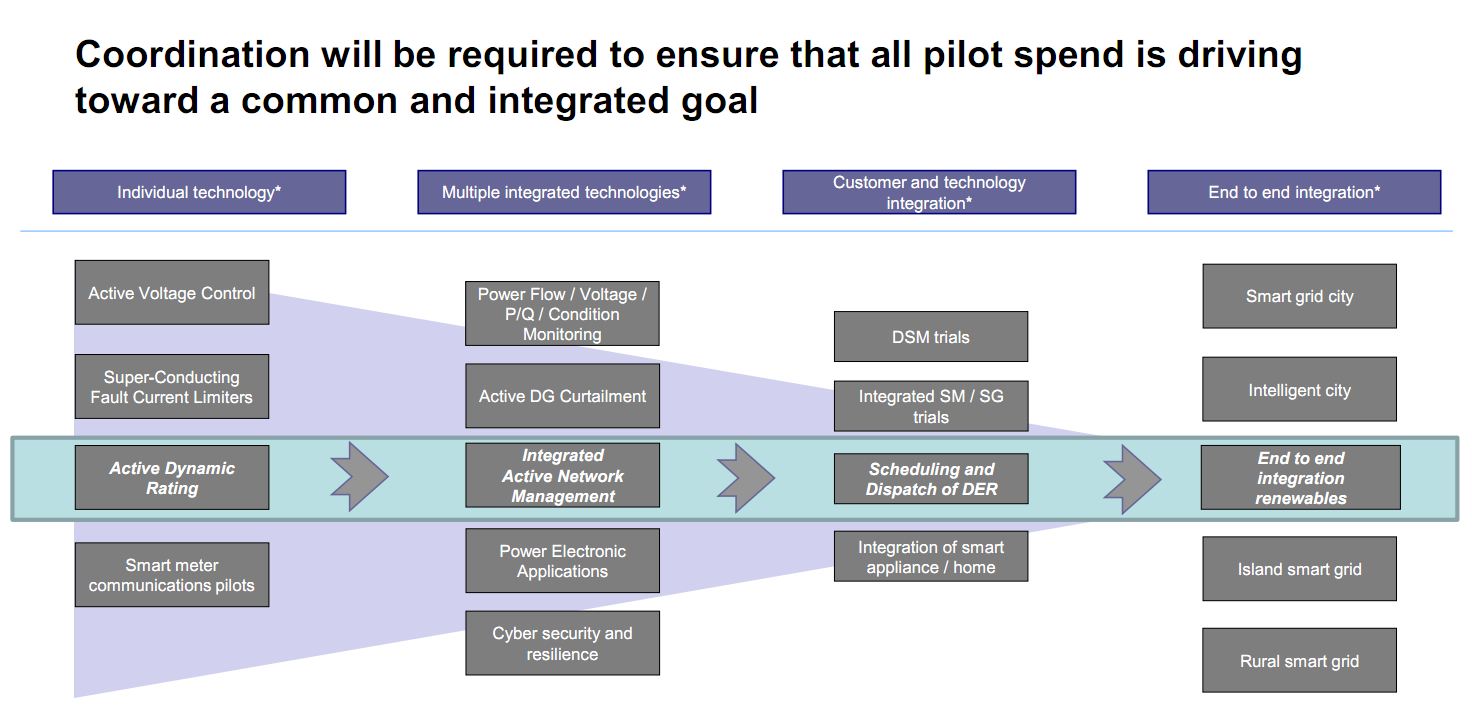
To illustrate the type of projects required to achieve this end state, ENSG has outlined a process involving trial projects at different levels from individual technologies through to island wide end to end integration.
 Individual technology
- Dynamic line ratings (allow assets to be used at greater loads by continuously sensing and rating their capacities)
- Smart grid communications
Multiple integrated technologies
- Network benefit realization from domestic and SME smart meters
- Network monitoring, control and optimization
Customer and technology integration
- Demand response and network optimization
- Distributed generation and electric vehicles
End to end integration
- Intelligent conurbation (smart grid city, intelligent city, rural smart grid, island smart grid)
- End to end optimized integration of multiple renewable technologies
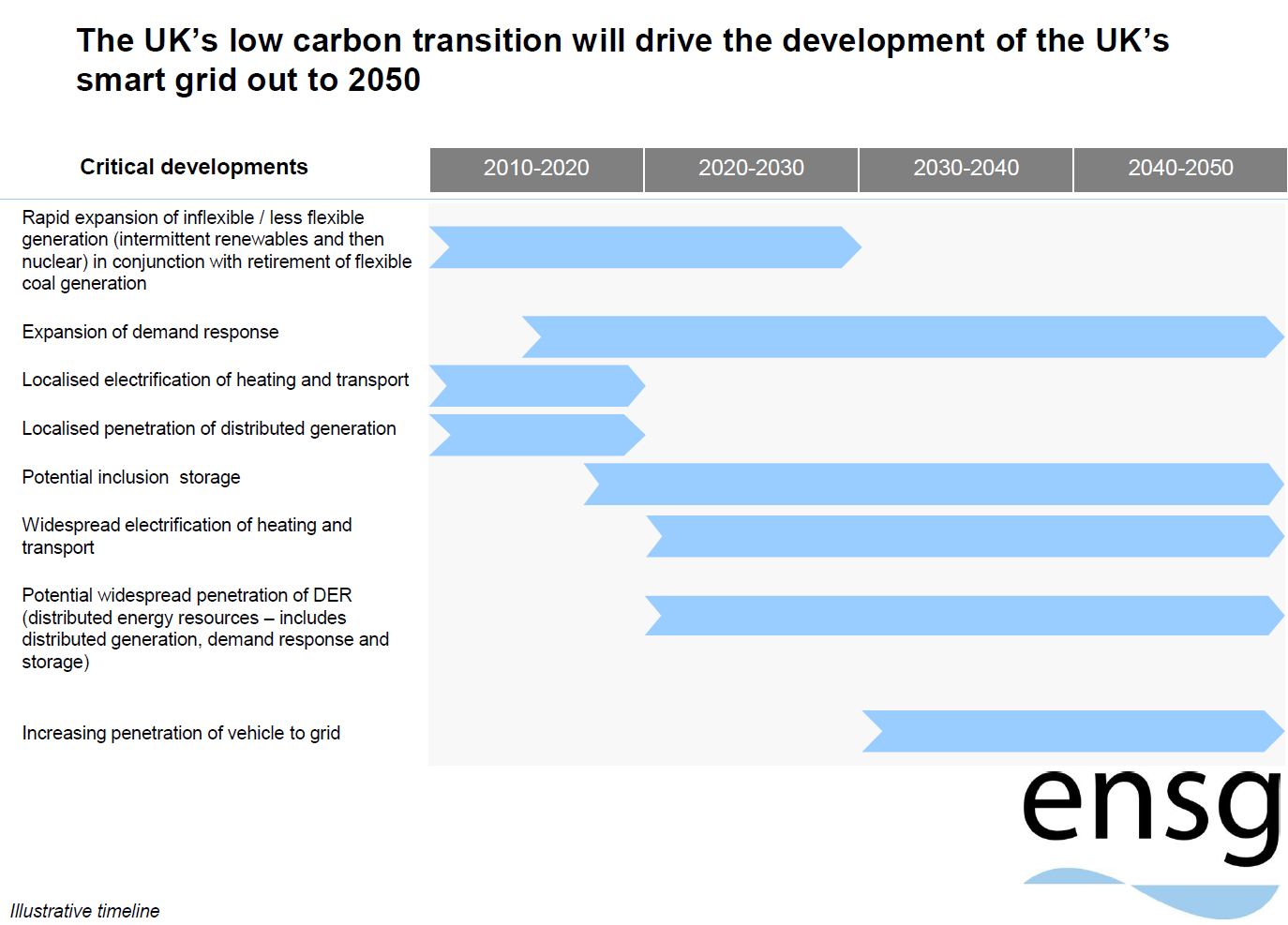 ENSG says that the Smart Grid Routemap outlines an evolutionary process to make the smart grid vision a reality, given the uncertainty about how to design and build a smart grid – no country has yet built a smart grid.
Be the first to comment