
At the recent GITA conference I heard a presentation by Steven Collier of Milsoft on the smart-grid. He illutstrated the distinction between the grid as we know it and the smart-grid by drawing an analogy between the grid and mass transit networks.
Our current power grid
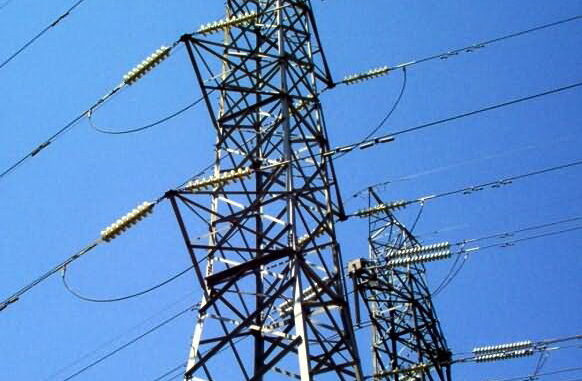
What is amazing about the power grid is that, unless it is used to pump water to reservoirs like at Niagara, the power grid is designed to provide just-in-time delivery. The large batteries that are required to store electricity are too expensive, so electricity has to be used exactly when it is generated. In this light the power grid is an amazing engineering achievement, because it balances demand and generation.
The grid is 99.97% reliable according to DoE (The Smart-Grid, An Introduction, Department of Energy), but it is not nearly as reliable as the telephone network. Outages and interruptions cost Americans at least $150 billion annually.
In the US there are 9,200 electric generating units with more than 1,000,000 megawatts of generating capacity, but most of them were built in the 1960s or earlier. There are over 12 000 sub-stations in the US, and the average age of a substation transformer is over 40 years, beyond their expected life span. There are more than 300,000 miles of transmission lines in the US and since 1982, peak demand for electricity has exceeded transmission growth by almost 25% every year. but incredibly since 2000 only 668 miles of new interstate transmission lines have been built. Also incredibly, the power industry spends less on research and development than most other industries, so power technology really hasn’t changed much from Tesla’s day. Many people believe that the reliability of the grid is decreasing while our dependence on it is increasing, so that the risks associated with the current grid require us to invest in a new, smarter grid.
Smart-grid
A smart-grid is a much more complicated animal than our current grid. It involves price signals to consumers, distributed generation, automated load management, a new bidirectional communications network, storage, redundancy, and self-healing. And this is where I think Steven Collier captured the essence of it. We have to run the grid like an airplane, rather than like a railway. An airplane is an automated feedback loop. If a gust starts to raise a wing on one side, the navigation system automatically counteracts by adjusting the ailerons. With the current grid the only way a power company knows there is an outage is when a customer calls. You can imagine what flyng would be like if the pilot had to wait for passengers to complain before adjusting the ailerons and righting the airplane. With a smart grid, outages would be automatically detected, isolated, and power restored to most if not all users by automated reconfiguration of the network, all within minutes, rather than hours as now.

Be the first to comment