
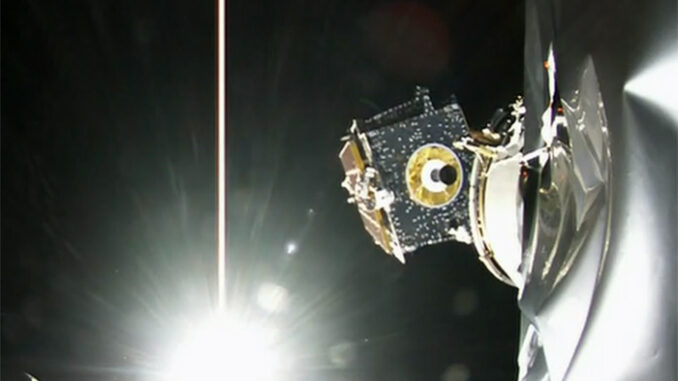
A Falcon 9 rocket delivered a Japanese satellite into Geosynchronous Transfer Orbit (GTO) and successfully returned its first stage to SpaceX’s “Of Course I Still Love You” drone ship in the Atlantic Ocean. JCSAT-14 is a communications satellite owned by SKY Perfect JSAT Corporation.
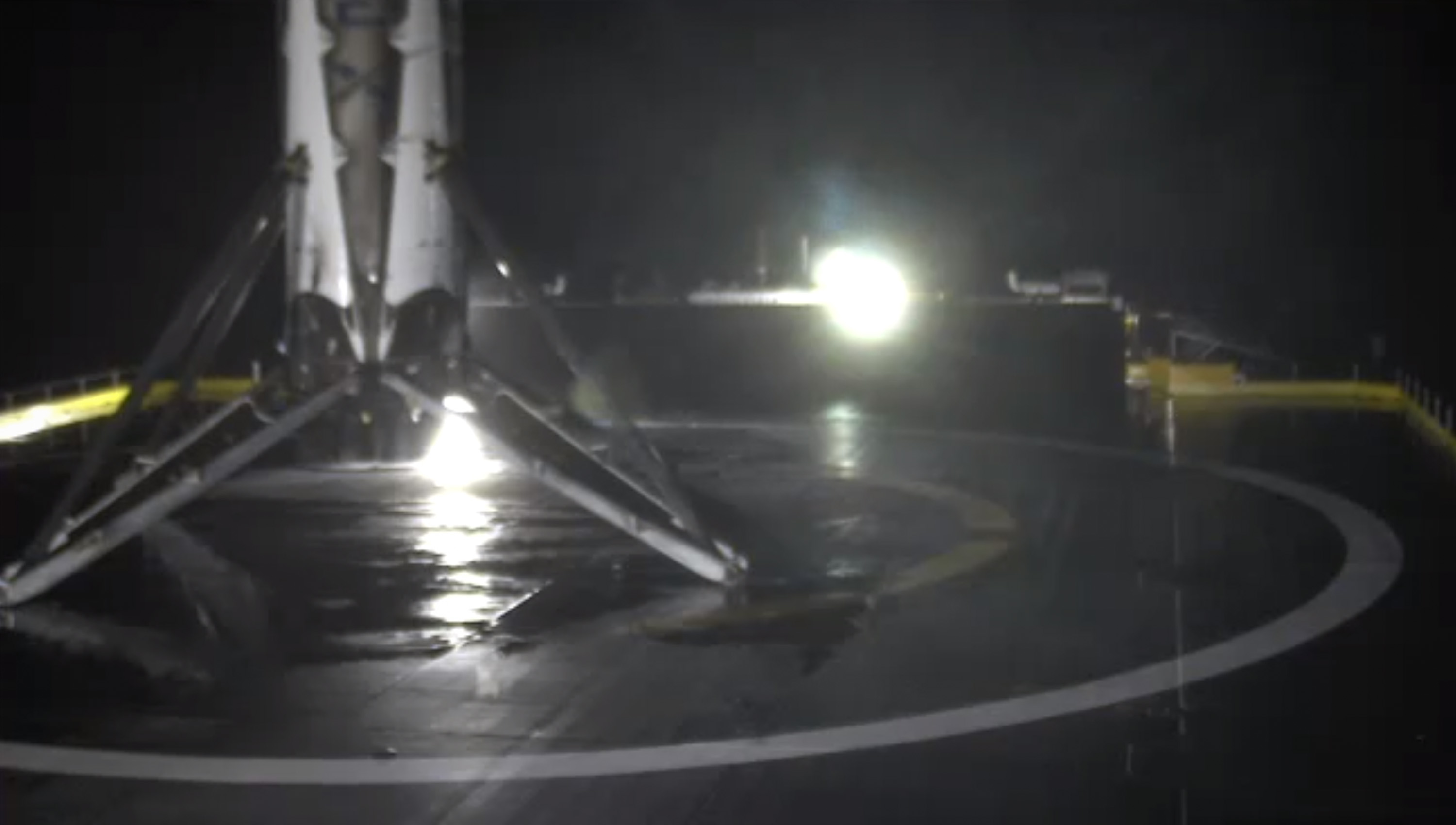 Screen shot of the Falcon 9 first stage landing on the Of Course I Still Love You drone ship in the Atlantic Ocean.
This is the third successful return of a Falcon 9 first stage. One was returned to hard ground, and two have returned successfully to an ocean barge. This launch inserted its payload into a geosynchronous orbit which requires higher velocities than lower Earth orbits.
Falcon 9 is a two-stage rocket designed and manufactured by SpaceX for the transport of satellites and the Dragon spacecraft into orbit. Falcon 9’s first stage has nine Merlin (named after the Rolls Royce engines used most famously in Spitfires ?) engines and can sustain the shutdown of up to two of these engines and still complete its mission. 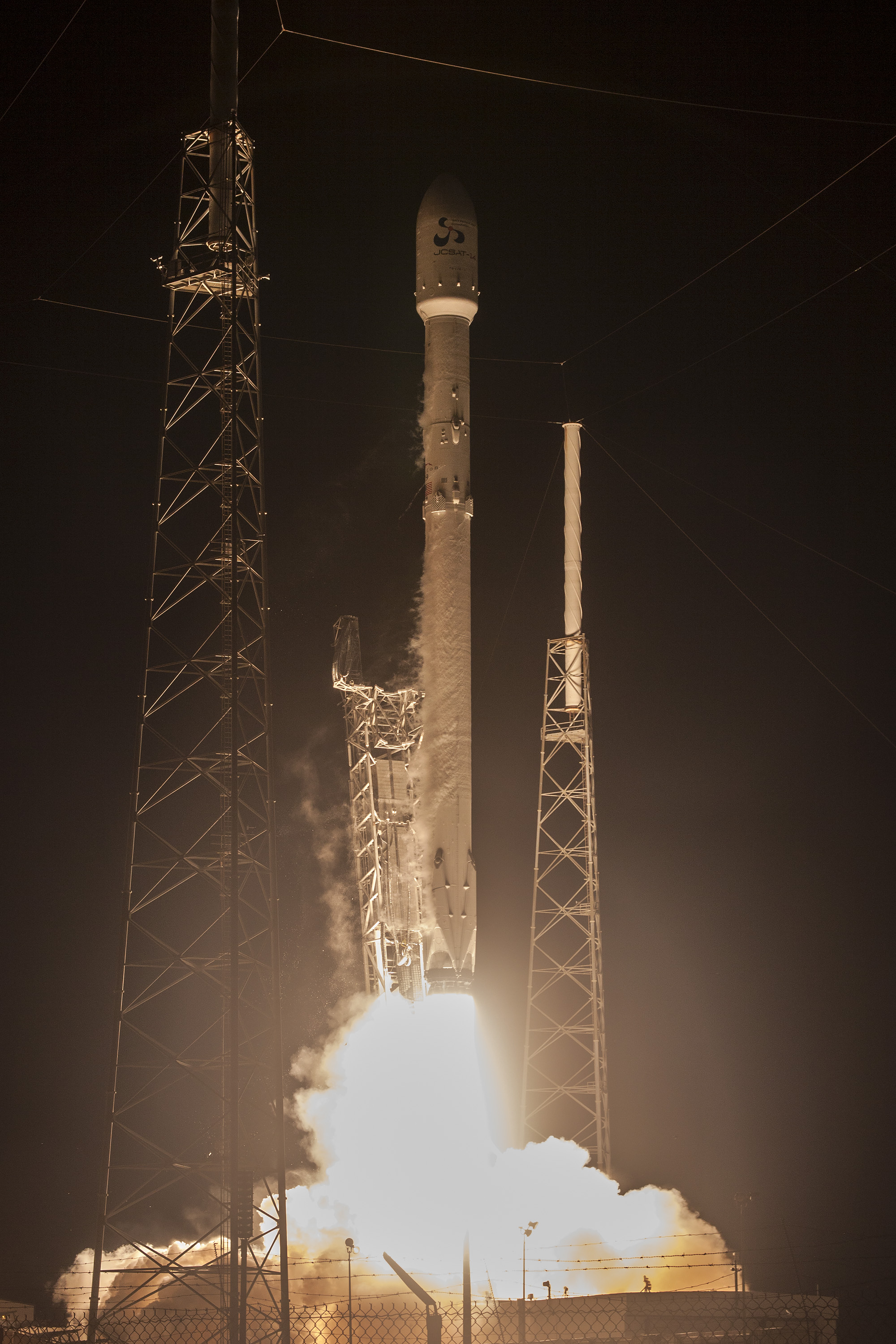 The Falcon 9 first stage generates more than 7.6 million N (1.7 million pounds) of thrust at sea level. It can deliver a payload of 22.8 tonnes to low Earth orbit (LEO), 8.3 tonnes to GTO, and an estimated 4 tonnes to Mars. A key feature of the first stage is that it is designed to be able to fly itself back to Earth to a safe landing, so it is reusable.
Another distinguishing feature of the Falcon 9 is that it uses a pneumatic stage separation system unlike the pyrotechnic systems used on most launch vehicles. A major advantage of pneumatics is that it can be tested non-destructively.

Be the first to comment