
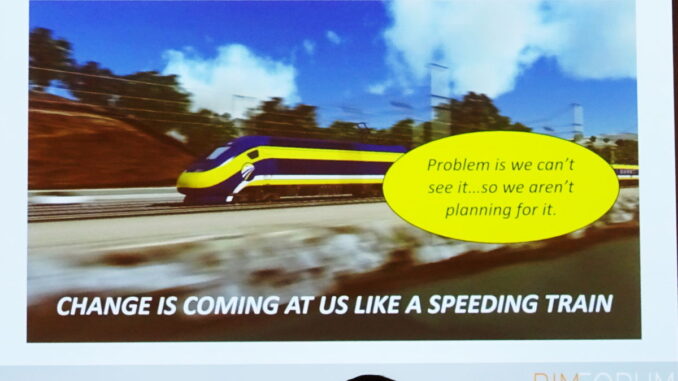
At this year’s BIMForum conference in Las Vegas Dr. Barbara Jackson of the University of Denver offered what I would categorize as a hurricane warning to the construction industry; change is coming like a very fast train and either the industry has to change itself or someone from outside will do it as Uber and Airbnb have done to the taxi and accomodation businesses and as Amazon is doing to the grocery business. Because in construction resistance to change is much greater than the motivation to innovate and change, under 30 year olds are saying that the construction companies they want to work for don’t exist, so they leave. One of the ways she hopes to help the industry to transform from within is by effecting a culture change by encouraging the under 30s folks not to leave but to stay and transform the industry.
Barb Jackson spent 25 years running her own construction company where she experienced the problems that were facing the industry as a whole. Seriously concerned for the future of the industry, she decided to go into academia to try to do something about them. In her view the key factors that make construction ripe for disruption are
- high segmentation and fragmentation
- low productivity gains – labour-productivity growth in construction has averaged only 1 percent a year over the past two decades, compared with growth of 2.8 percent for the total world economy.
- low adoption of digital technologies – McKinsey Global Institute places construction second to last just ahead of hunting and agriculture
- high level of waste – estimates of 30 % waste and rework are typical
- lack of leadership – construction is good at management (the mantra is plan to work, work to plan) but lacking in leadership
- a culture that discourages change and innovation.
Some have argued that the $10 trillion/year construction industry is not like other businesses, but Barbara’s frank response to this is “this is bull, it is.” It is difficult to place all the blame on owners, who the designers and contractors say discourage them from doing anything innovative that raises the risk or the industry folks who the owners say resist any change. She offered that perhaps the real culprit is lowest bid procurement which resulted such low margins that the only way to make money on projects was through change orders.
The construction business model is outdated and the collaborative economy as exemplified by Airbnb, Uber, Facebook, and Alibaba and what happened to the accomodation, taxi, media, and retail industries is a real threat for construction and an opportunity for an outside entrepreneur. Companies like Artiman who look for industries that are ripe for disruption view the construction industry as low tech, archaic, wasteful, characterized by low productivity, with an out-dated business model, in a word ripe for disruption.
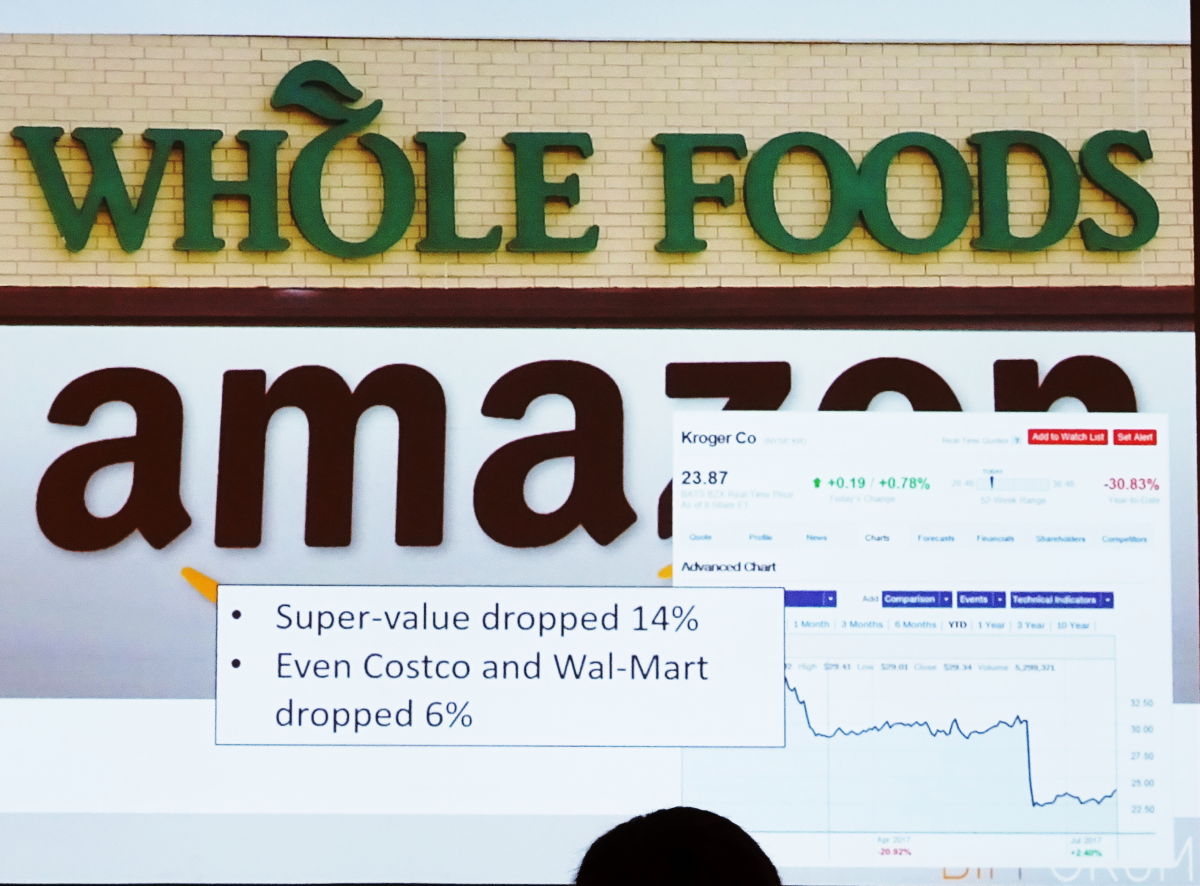 She cited the example of what is happening to the grocery business as another example of someone from outside effecting change to an industry that has been resistant to change. When Amazon acquired Whole Foods, the stock of Kroger, Super-value, and others lost 14% of its value overnight. Even Costco and Wal-Mart dropped 6%. Massive change had come to the grocery industry, and it was coming from outside-in. It was happening to the industry, not by the industry and investors were placing their bets on the outsiders.
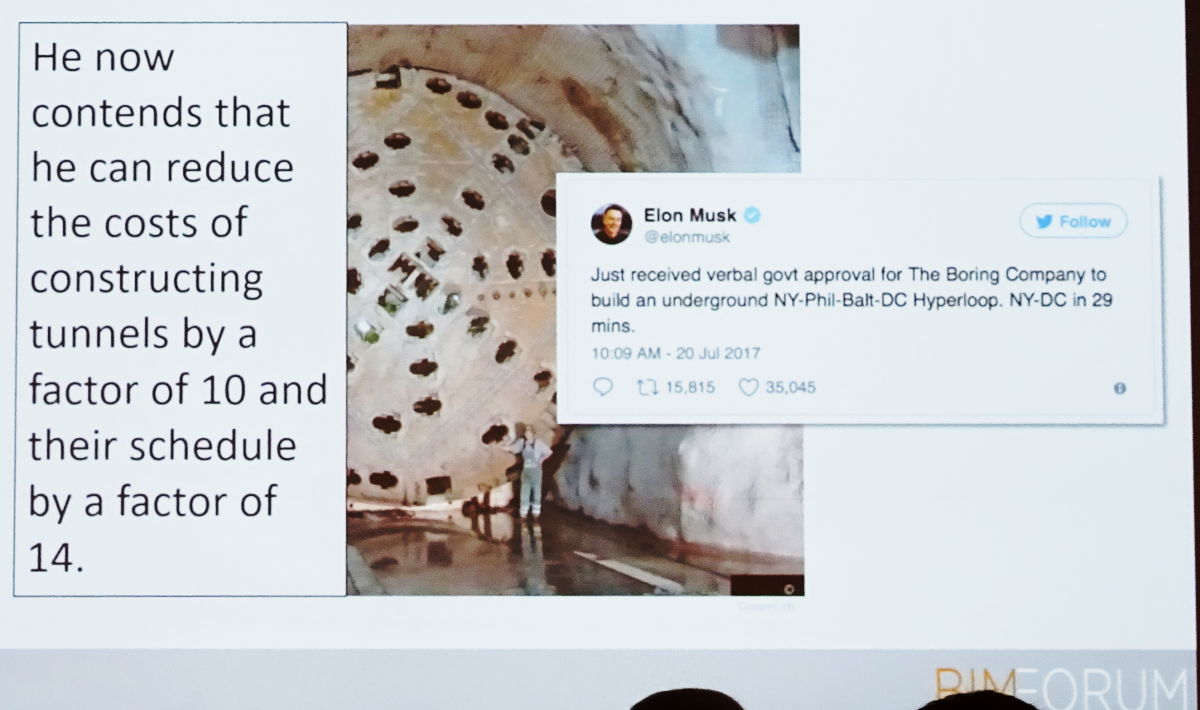 There are already some examples of new business models impinging on the construction industry. The most notable example is Elon Musk’s Boring Company that estimates that it can reduce the cost of tunneling by a factor of 10X and the time it takes to bore a tunnel by a factor of 14X. It is already working on a hyper-loop project from New York to Washington DC that would enable travel between the cities in 29 minutes.
Because of her real world experience, Barb’s perspective is not a voice from academia crying in the wilderness, but is a serious warning from an industry insider. Echoes of what Barb is warning about could be found in the opening address at the conference from Eddie Stewart, President of the Associated General Contractors of America (AGC). The AGC represents 26,000 firms in the construction industry including general contractors, specialty-contracting firms, and service providers, but predominantly small contractors. He also noted that the construction industry lags most industries in adopting digital technology. He added that the industry as a whole is facing a labour shortage and the duration of projects is getting shorter. He also warned that disruption is coming or maybe is already here.
At a BIM conference in Toronto several years ago, Patrick MacLeamy’s, Chairman of buildingSMART and CEO of HOK, message was very simple. In the U.S. buildings are too expensive, too inefficient to operate and maintain, and don’t last long. The problem is that the construction industry is too fragmented. The process of orchestrating many disciplines in an adversarial, litigation-prone environment is too complex and leads to frequent budget and schedule overruns, evidence of a seriously broken business model.
Young people in the industry are asking why things are still done in the traditional way, which they find stupid. The resistance to change is so-inbuilt that under 30 year olds are saying that the construction companies they want to work for don’t exist, so they leave the industry. One of the ways she hopes to help the industry to change from within is by effecting a culture change by encouraging the under 30s folks to remain and change the industry. Barb is working on putting together education programs to keep young people in the industry hoping that the next generation will help construction disrupt itself before it is disrupted by somebody from outside.
Be the first to comment