

At the American Public Power Association (APPA) annual conference in Denver, Michael Howard, President and CEO at EPRI, gave an overview of the major challenged facing the electric power grid and a way forward based on what EPRI calls the integrated grid.
First of all we are going to see a lot of new devices. Michael analyzed the rate of adoption of technologies such as electricity, refrigerators, telephone, radio, TV, the Internet, and mobile phones before and after 1977. He found that the rate of adoption since 1977 is about 2x the rate prior to 1977. (1977 is about 36 years ago about the same as 2050 is ahead of us.)
He also looked at the annual number of new patents a proxy for innovation. He found that the rate of new patents in the US since 1977 is about 3.5 the rate prior to 1977. Internationally it is even more dramatic, about 5x since 1977.
All of these devices will require electricity, and they are going to change electric power usage patterns just as air conditioning did in the past. Digital devices require high quality power. And as we depend on these devices more and more, we will require much higher level of reliability in our electric power system.
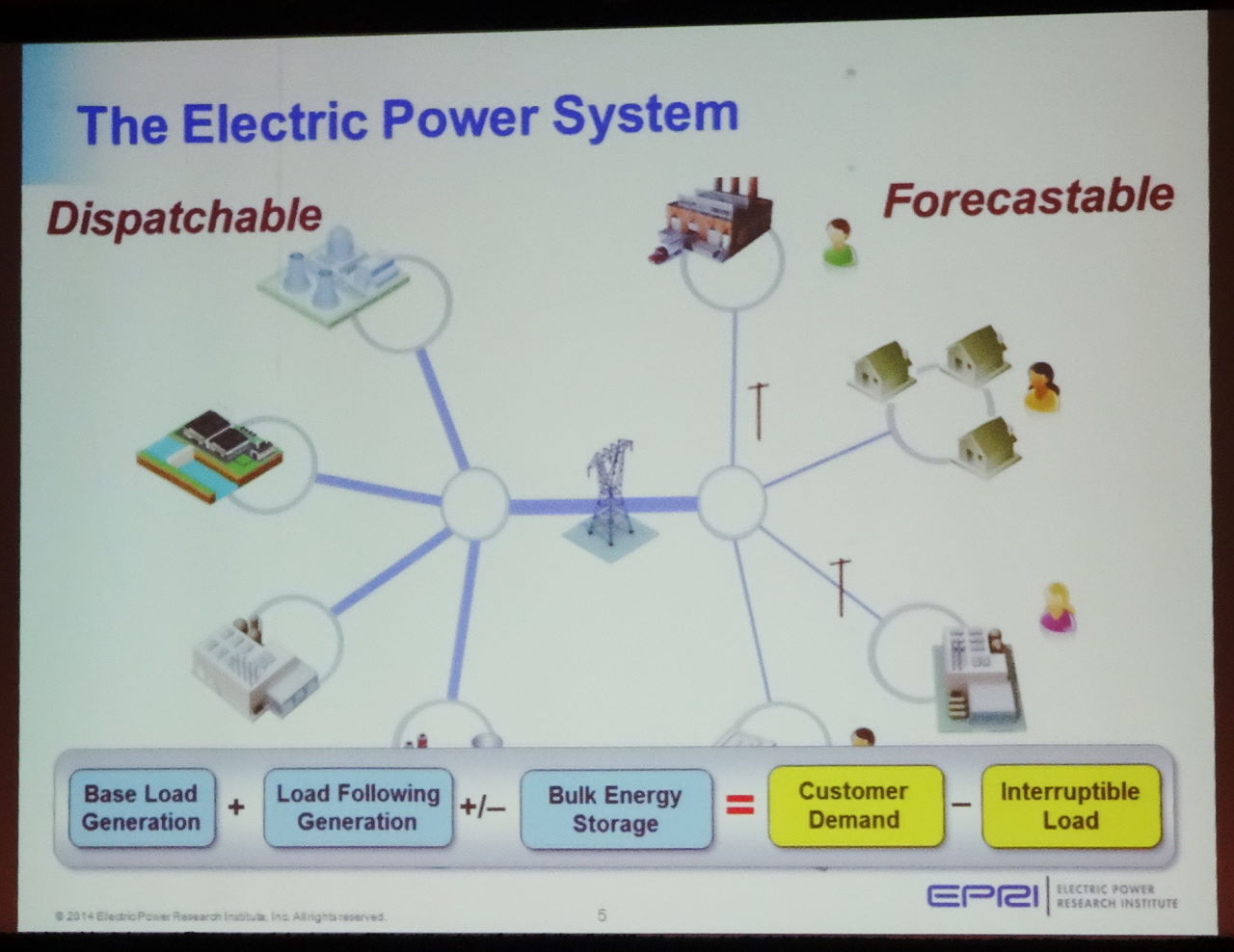 But things are going to change on the generation side too. Currently the grid is comprised of large, central power plants interconnected via grids of transmission lines and distribution networks that feed power to customers.
But this is beginning to change with the rise of distributed energy resources (DER) such as small natural gas-fueled generators, combined heat and power plants, electricity storage, and solar photovoltaics (PV) on rooftops and in larger arrays connected to the distribution system. DER already has had an impact on the operation of the electric power grid and its role is likely to become more important in the future.
Together the new consumer devices and increasing penetration of DER mean that in the future the grid is going to be less dispatchable, less forecastable, and more variable.
Looking forward, each new device will have its own demand profile. For example, in the U.S. average household demand is about 5 kW, but after 6 pm it typically rises to 7 kW. But the details are important. When you turn on the air conditioning (AC), demand can rise to 25 kW for a part of a second. How is the grid going to handle that kind of peak in the future ? This means that we have to look not only at energy consumption (kWh), but also at demand (kW). Some utilities are already looking at rate structures that are based on demand not just energy consumption.
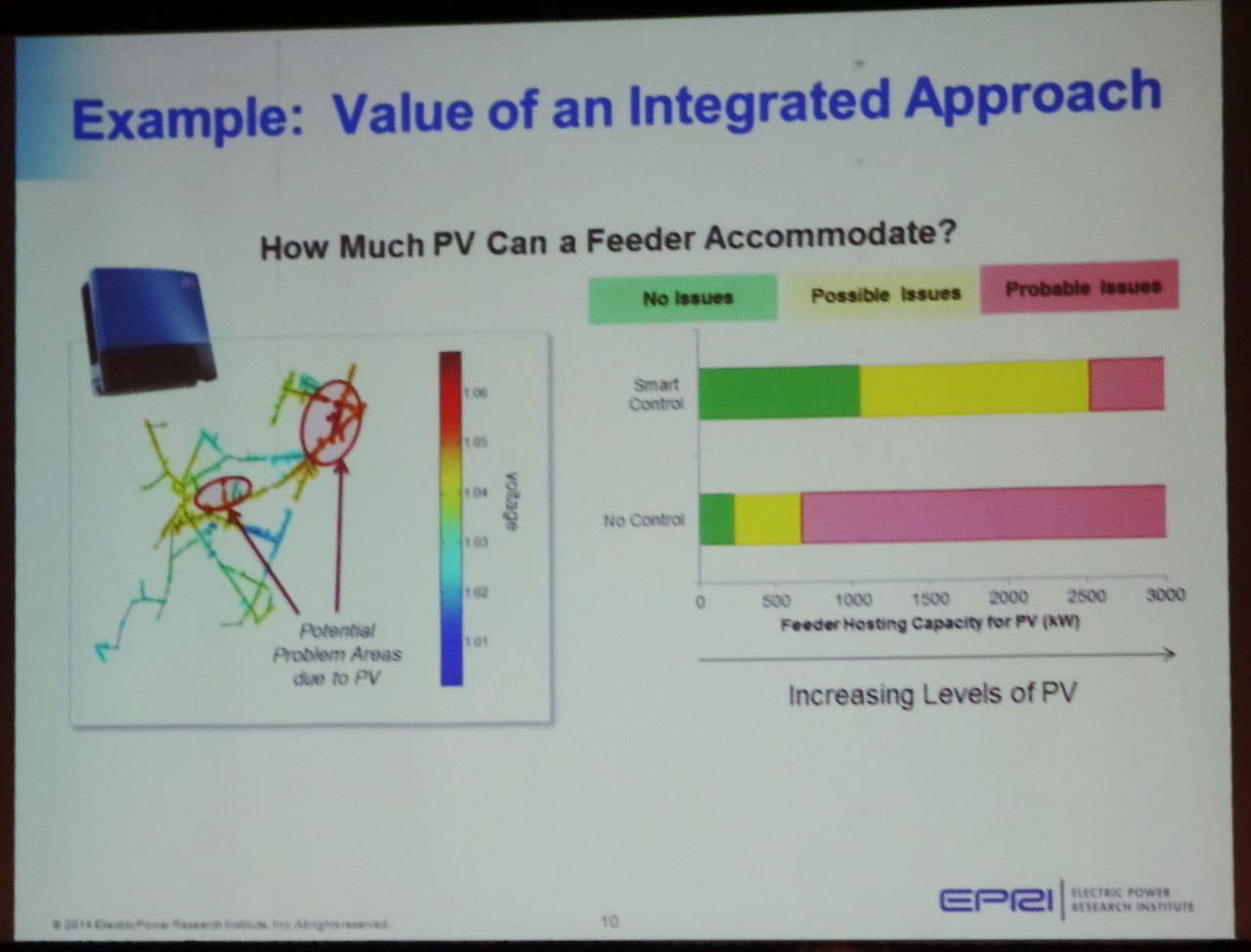 Another issue is “hosting capacity” which refers to how much PV a feeder is able to accommodate without issues like overvoltage on the distribution system. Last year something like 25% of power in Germany came from intermittent sources. Smart inverters extend the hosting capacity. Germany is currently replacing all of its inverters with advanced inverters for this reason.
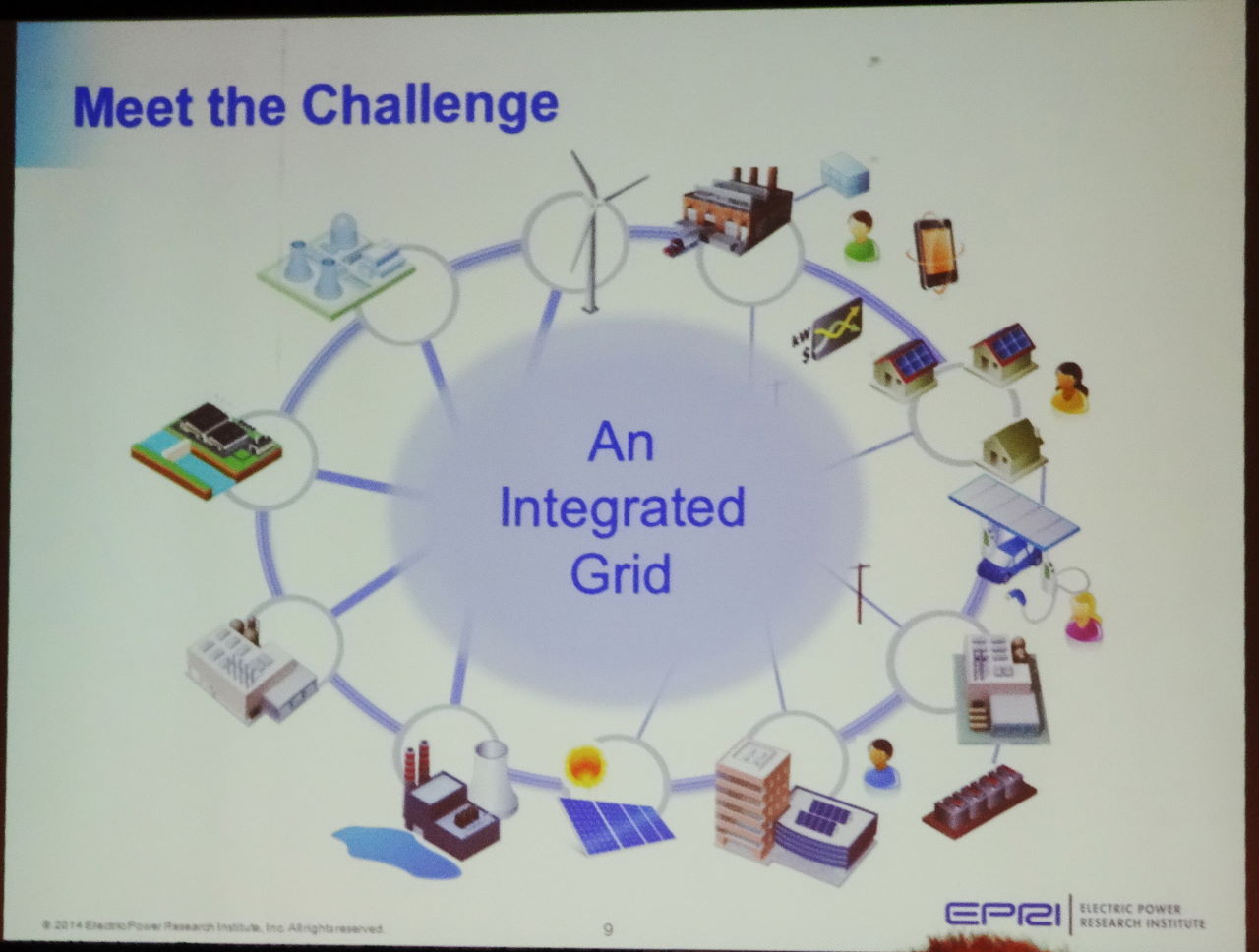 The successful integration of DER depends on the existing electric power grid. The current grid, especially its distribution systems, was not designed to accommodate a high penetration of DER while sustaining high levels of electric quality and reliability. The technical characteristics of certain types of DER, such as variability and intermittency, are quite different from central power stations. To realize fully the value of distributed resources and to maintain standards of quality and reliability, is going to require that we think more holistically about the grid. EPRI calls this the integrated grid. Basically EPRI foresees a future grid architecture that will combine large central generation plants with distributed generation.
In EPRI’s view to achieve this vision of the future of the grid will require
- Grid modernization – intelligent devices and bidirectional communications
- Communications standards and interconnection rules – interoperability, basically support for plug and play
- Integrated planning and operations – we can’t separate transmission and distribution, power consumer and power generator
- Informed policies and regulations – we need to help legislators and regulators understand the issues and put in place reasonable legislation and regulations.
More details of EPRI’s vision of the future grid can be found in the report The Integrated Grid: Realizing the Full Value of Central and Distributed Energy Resources.

Be the first to comment