
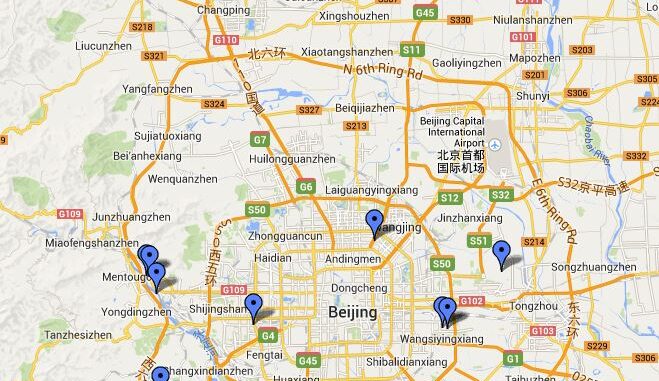
Nov 28 Beijing launched a carbon trading scheme to regulate CO2 emissions from 490 of its largest power generators and manufacturers. Two other cities Shenzhen and Shanghai have already started their own carbon trading markets. Guangdong province is scheduled to open a fourth one in December.
China’s has committed to reducing its carbon intensity (greenhouse gas emissions per unit of GDP) to 40-45 percent below 2005 levels by 2020. China is the world’s biggest carbon emitter and its emissions continue to increase. On a per capita basis its emissions are much less than the Unites States, the world’s second biggest emitter.
The China Beijing Environment Exchange (CBEEX) hosts trading in allowances (for one tonne of CO2 emissions) for the Beijing market. Carbon prices were 50 yuan in Beijing, 80 yuan in Shenzen, and 28 yuan in Shanghai. Coal-fired power plants (Beijing power plants are shown on the map) will receive free permits for 2013 equal to 99.9 percent of their average emissions for 2009 to 2012. By 2015, free allowances will drop to 99.5 percent. Manufacturers will receive permits equal to 98 percent of their historical emissions. This will drop to 94 percent in 2015.

Be the first to comment