
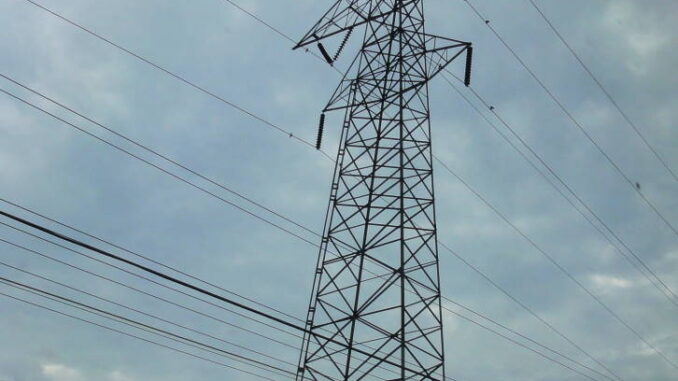
Estimates of the transmission buildout required in the US to bring renewable electric power to market have ranged from 19,000 to 50,000 miles of new transmission lines. The Brattle Group has estimated the total investment in transmission required between 2010 and 2030 to be on the order of $300 billion. But unlike the EU, there is no federally mandated carbon or emissions objective in the US. However, 36 states have some form of renewable energy portfolio standards (RPS or RES).
The length of time it takes to develop a new transmission line is clearly a deterrent to rapid transmission build-out. At a recent transmission conference a speaker estimated the time required to develop a new transmission line is 10-20 years, or broken down
- Planning 1-2 years
- Cost allocation 6-12 months
- Federal approval 3-5 years
- State approval and siting 3-5 years
- Construction including access roads 2-7 years
Section 216 of the Energy Policy Act of 2005, passed during Bush/Cheney administration, was intended to address the problem of accelerating the expansion of a national transmission network by giving the federal Department of Energy (DoE) the power to designate National Interest Electric Transmission Corridors (NIETCs) where there are significant transmission limitations adversely affecting the public and giving the Federal Energy Regulatory Commission (FERC) the power to authorize federal permits for transmission projects in these regions. These permits included giving the transmission providers the power of expropriation. But there have been two successful court challenges against Section 216. It had become hard to see how a national transmission grid was going to be built in the US.
Two persistent transmission construction issues have held things back, planning and cost allocation.
- Who should plan for new transmission ?
- Who should pay for new transmission?
In June, 2010 the Federal Energy Regulatory Commission (FERC) issued a Notice of Proposed Rulemaking (NOPR) on Transmission Planning and Cost Allocation by Transmission Owning and Operating Public Utilities, which began the process of addressing these issues from a regulatory perspective.
Order No. 1000
FERC has approved a rule, Order No. 1000, for transmission that indirectly makes renewable energy allocation an important component in planning and cost allocation. The rule establishes requirements for transmission planning and cost allocation and takes effect within 60 days of publication.
Planning
- Each public utility transmission provider must participate in a regional transmission planning process
- Local and regional transmission planning processes must consider transmission needs driven by federal or state public policy requirements [which includes state renewable energy portfolio standards (RPS or RES)]
- Public transmission providers in neighboring transmission planning regions must coordinate to determine if there are more efficient solutions to their mutual transmission needs.
Cost allocation
- Each public transmission provider must participate in a regional transmission planning process that has a regional cost allocation method for new transmission facilities
- Public transmission providers in neighboring planning regions must have a common interregional cost allocation method
- Participant-funding of new transmission facilities is permitted, but is not allowed as the regional or interregional cost allocation method
The renewable energy industry, such as the American Wind Energy Association (AWEA), are very supportive of FERC’s new rule. Some transmission developors such as ITC believe that the new rule will help create a framework which will allow large scale transmission proposals to receive a fair evaluation that accounts for all of the benefits they generate for an entire region.

Be the first to comment