
I had the opportunity to catch up on current trends in analytics in the utility indusrty at the Data Analytics for Utilities conference in Toronto today.
Jane Allen and Tom Peters from Deloitte gave a high level overview of what utilities are experiencing as they move toward the smart grid and decarbonizing energy generation through intermittent renewable energy sources.
Big data
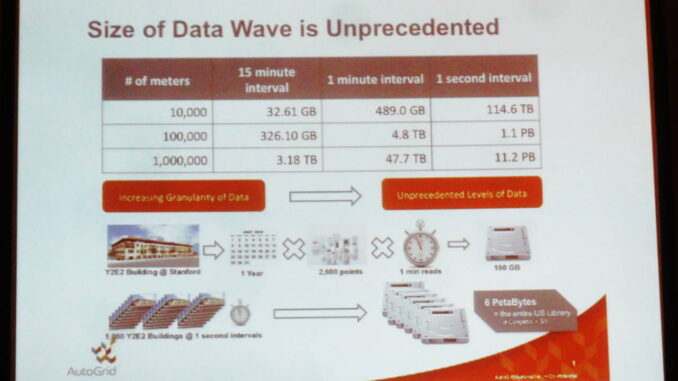
The smart grid means intelligent devices that can report their status sometimes as frequently as many times per second. Smart meters, which are many utilties’ first experience with intelligent devices, typically capture electricity usage in 15 minute intervals, which for a utility wih a million meters translates into 3.2 terabytes of data. They may be required by law or by the regulator to maintain historical usage data on-line for a significant period of time. The result is that the data volumes that utilities need to manage are going up exponentially. For example, Oncor, the largest distribution and transmission utility in Texas said that their operational database which used to be 30 terabytes is now 300 terabytes.
Analytics
To make sense of the huge volumes of data that utilities are collecting requires specialized analytical tools that are able to handle large data volumes. The first wave of analytical tools were not designed to do this in real time or even near real-time, but the next wave will be able to.
Apparently Germany was the first country to use analytics to help sculpt electric power demand to the supply of intermittent energy from wind and solar. This is critical in Germnay because renewables contribute a greater proportion of the electric power in Germany than any other major country.
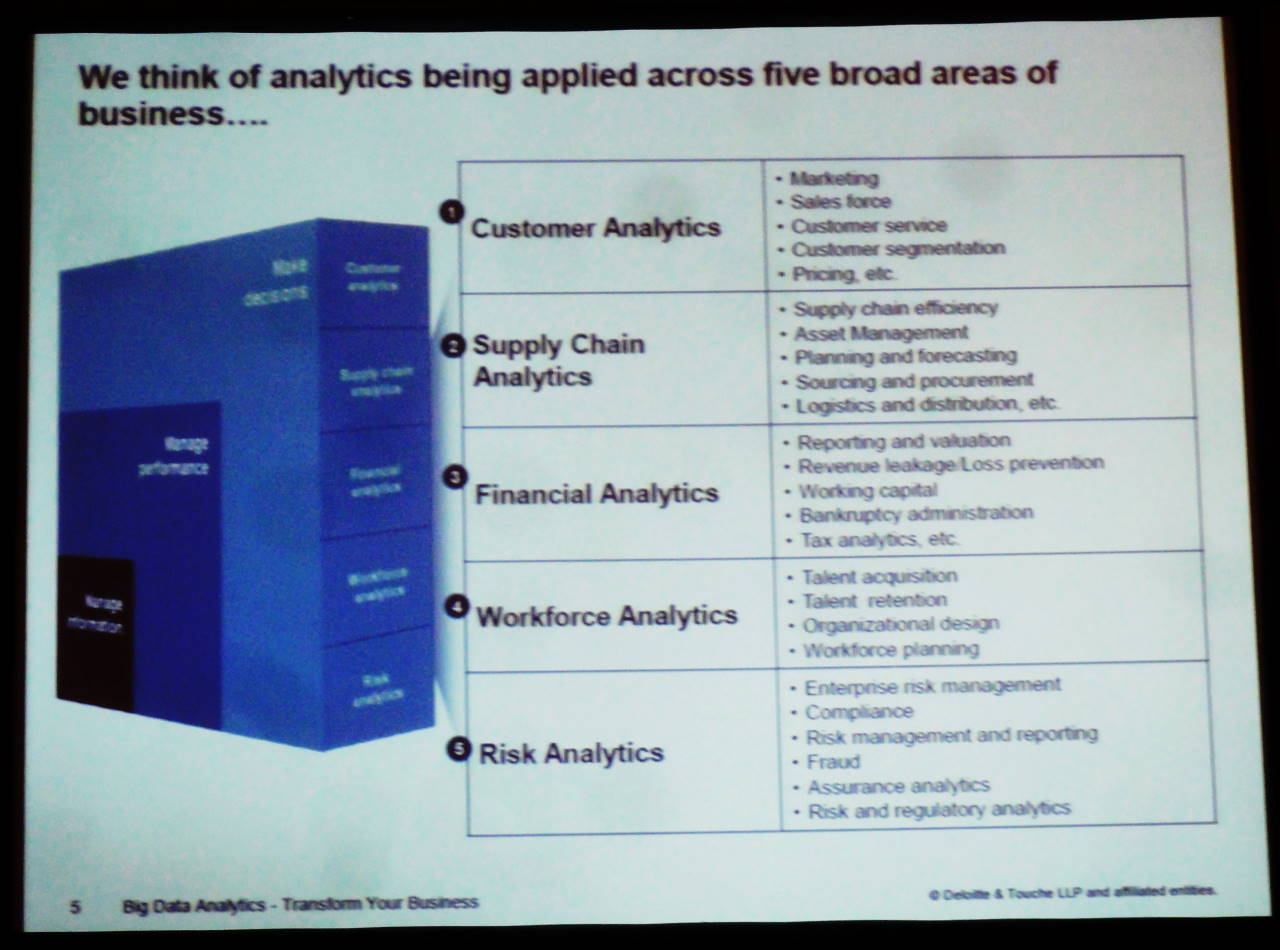 Deloitte sees five main areas where analytics are being applied in the utility industry, customer, supply chain, financial, workforce and risk.
Tom Peters oulined some of the trending application areas where analytics are being used by utilities.
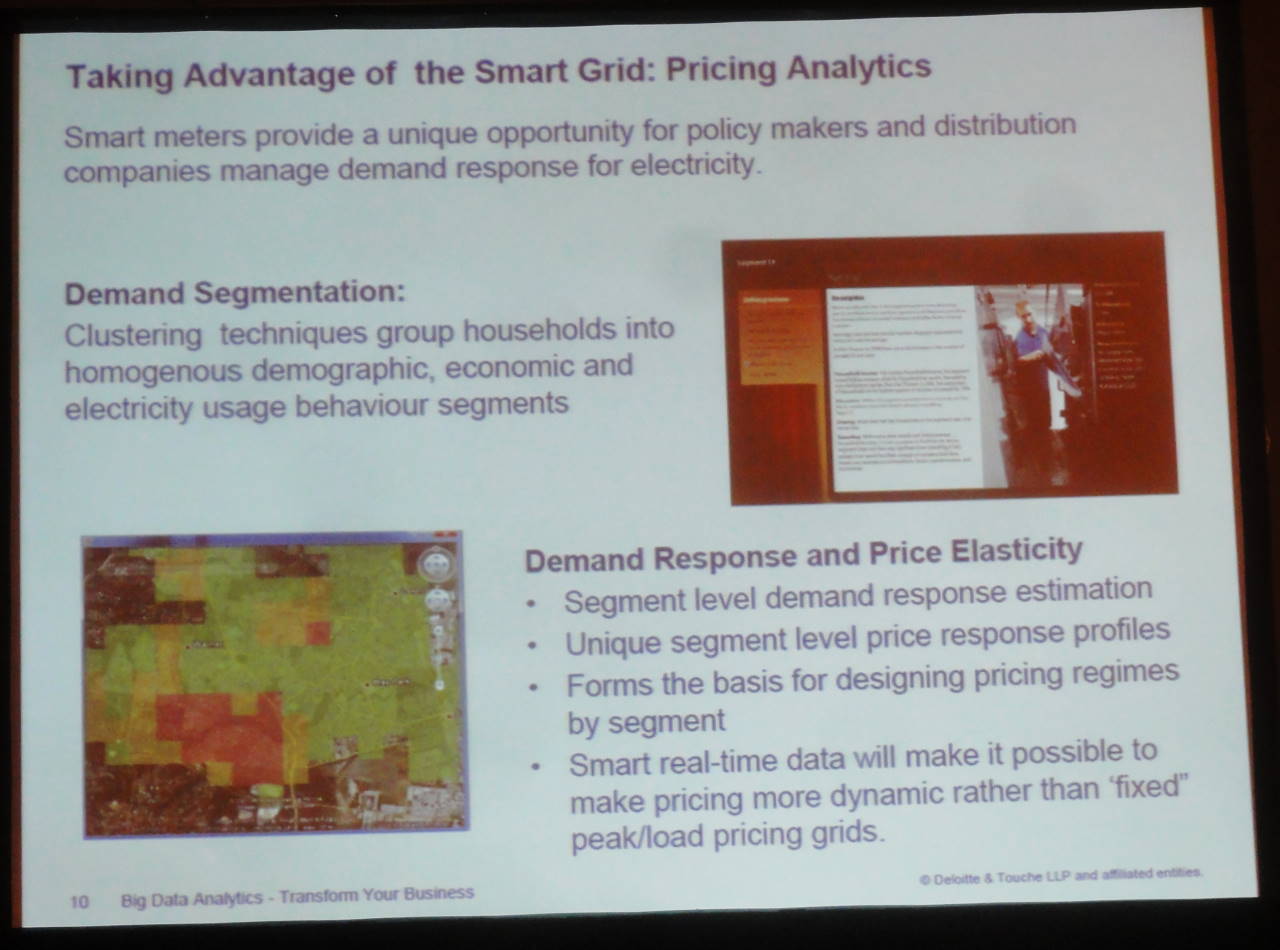 Pricing analytics
Segmenting demand using demographcs and looking at dynamic pricing to manage peak demand (demand response) in different sectors.
Marketing anlaytics
Monitoring the response to web-based marketing campaigns in real time.
Customer service analytics
Analyzing unstructured text data in social media looking for “bags of words” that identify topics in on-line discussions to monitor and assess how the on-line community is responding to utility programs and initiaitves.
Workplace injury analytics
Using analytics to identify high-cost work-related injuries that are preventable.
Fraud analytics
For example, analyzing a company’s general ledger for an entire year looking for duplicate invoices, invoices sent to the wrong company, billings for products and services never delivered, and so on. Tom Peters said that in the case of one large company this saved $11 million in a year.
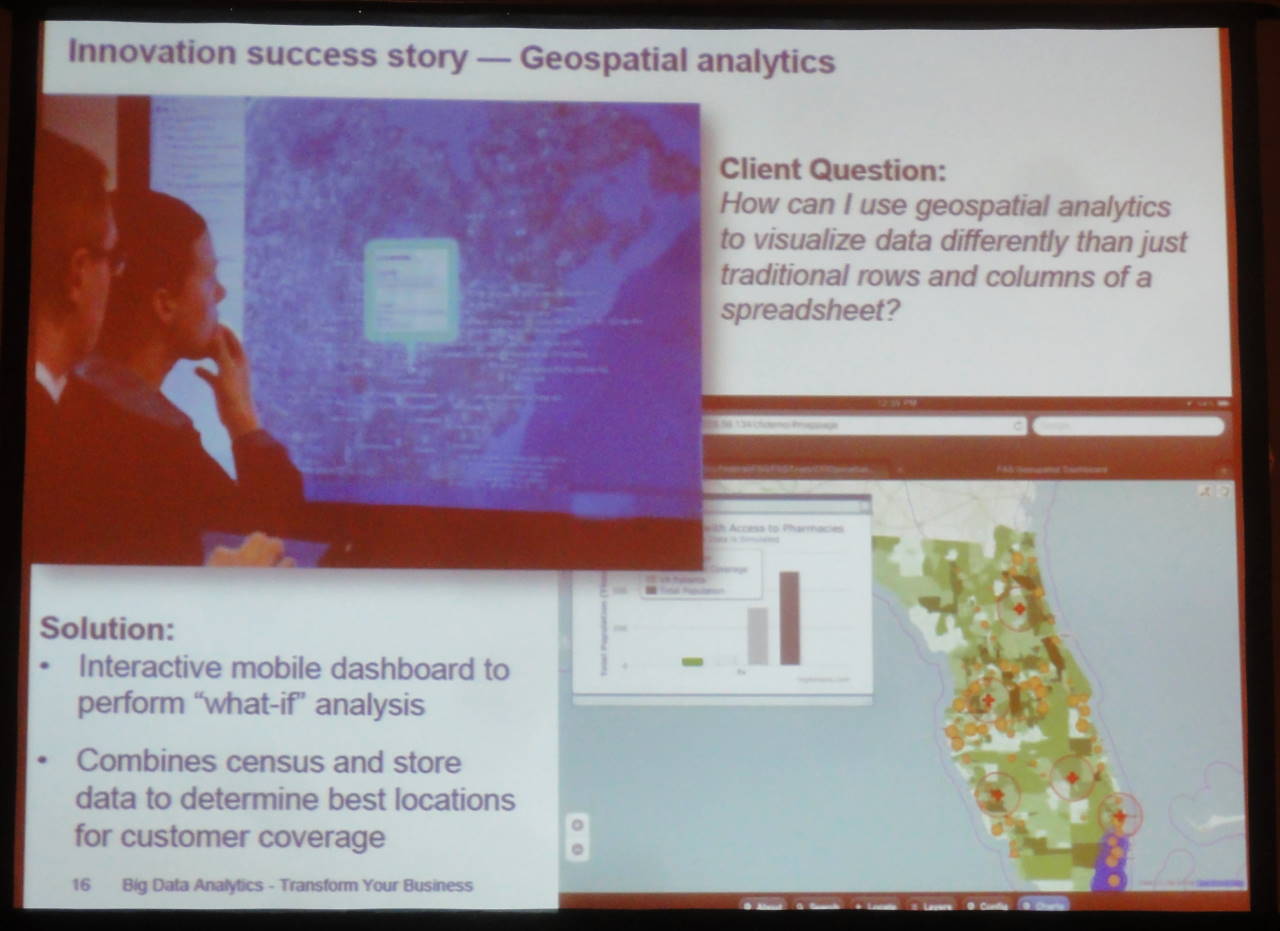 Geospatial analytics
Using location information to look at big data in a different way from a traditional spreadsheet makes it possible to see things from a much more interesting and enlightening perspective.
In summary utilities are having to deal with a lot more data. They need analytics to winnow the wheat from the chaff, to turn huge volumes of data into actionable information. The good news is that the software analytical tools available now that are designed specifically for big data are getting better and more affordable.

Be the first to comment