
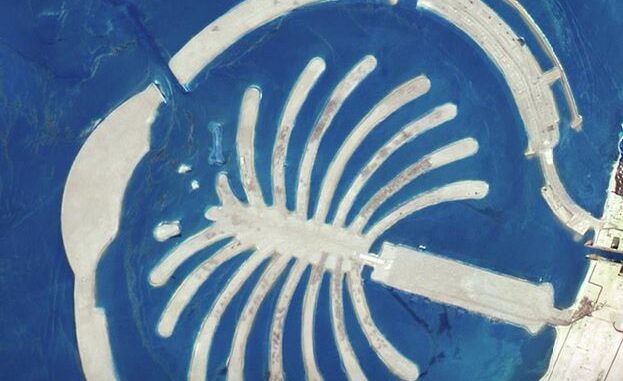
Earth observation is being revolutionized and democratized by UAVs, small and inexpensive nanosatellites (Planet Labs and Skybox Imaging– Skybox has just been acquired by Google), and by putting high resolution Earth observation cameras on the International Space Station (UrtheCast).
UrtheCast has just released its first imagery including a video of Dubai taken from the its cameras on the International Space Station (ISS).
There are two Earth observation cameras on the ISS that are constantly capturing imagery as the ISS circles the world, 16 times a day. 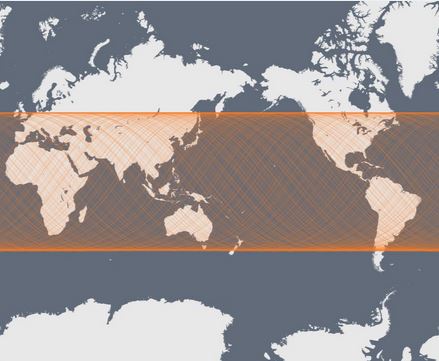 They capture video and imagery between 51° to -51° latitude, where approximately 90% of the world’s population lives. This includes all of continental US, all of India, all of Africa, most of South America, all of Japan, all of the Arabian Peninsula, virtually all of China, but not a lot of Canada.
UrtheCast’s two cameras stream imagery to anyone with an internet connection and allows you track specific locations in near real time.
- The 5-meter resolution camera can capture any location that the ISS passes over, generating large strips of 40km-wide imagery, 365 days a year.
- The one-meter resolution video camera can capture up to 150 videos of Earth in 4K-resolution (Ultra HD). Video length is typically 60-seconds long.
When logged in to UrtheCast’s near-live feed, you are able to view Earth through an interactive web application. All you need is an internet connection and a computer, tablet, or smart phone.
Applications
Examples of some of the processing capabilities provided by Urthecast in the cloud include mosaicing, orthocorrection, Normalized Difference Vegetation Index (NDVI), and change indicators.
- UrtheCast can create a large, single image by mosaicing many smaller images together.
- Orthocorrection removes distortions to create orthorectified imagery for accurate location and distance measurement.
- The Normalized Difference Vegetation Index (NDVI) is a simple graphical indicator that can be used to assess whether an observed area contains live green vegetation or not.
- Change Indicators processing identifies regions that have changed since they were last imaged by UrtheCast.
Developer APIs
UrtheCast is providing access to same APIs used internally to build the UrtheCast platform — everything from pulling orbit data to ordering new imagery and video. They started releasing access keys to their APIs this year. So far these include
Satellite Tracker
Allows you to track the real time location of the International Space Station and determine when the UrtheCast cameras will be imaging areas of interest.
Map Tiles
Enables you to include sections of recent satellite imagery into your own applications.

Be the first to comment