
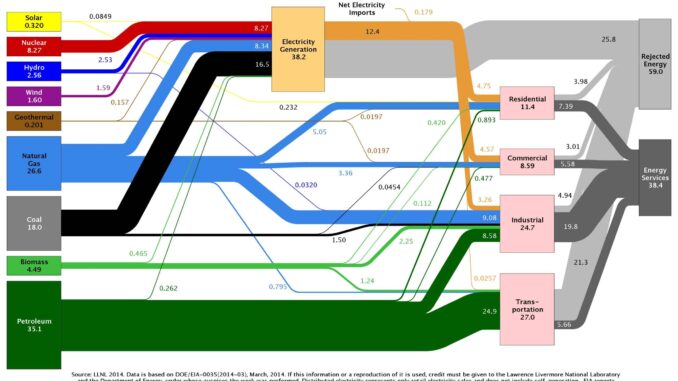
According to Lawrence Livermore National Labs’ annual energy report, U.S. energy consumption in 2013 increased by 2.3 quadrillion BTUs (quads) or 2.4% to 97.4 quads.
2008 99.2 quads
2009 94.6
2010 98.0
2011 97.3
2012 95.1
2013 97.4
Most energy in 2013 was used for electricity generation (38.2 quads), followed by transportation, industrial, residential and commercial.
Wind energy continued to grow strongly, increasing 18 percent from 1.36 quads in 2012 to 1.6 quads in 2013. Natural gas use increased by 0.6 quads. Higher gas prices resulted in lower consumption in the electricity sector, but these were more than offset by greater gas use in the residential, commercial and industrial sectors. Nuclear energy was greater in 2013 than in 2012 because fewer reactors were down for refueling than in previous years. Petroleum use increased in 2013 from the previous year. The increase isn’t as sharp as it might have been because Americans are replacing older, less efficient with more efficient cars.
The transportation sector is using more renewable energy, specifically biomass that is converted to ethanol.
U.S. net imports of energy declined in 2013 to their lowest level in more than two decades. Domestic production of oil and natural gas displaced imports and increased petroleum product exports. A large drop in energy imports together with a smaller increase in energy exports led to a 19% decrease in net energy imports from 2012 to 2013.
Rejected energy
Rejected energy increased to 59 quads in 2013 from 58.1 in 2012, rising in proportion to the total energy consumed. Comparing energy services to rejected energy gives a rough estimate of each sector’s energy efficiency.
 Emissions
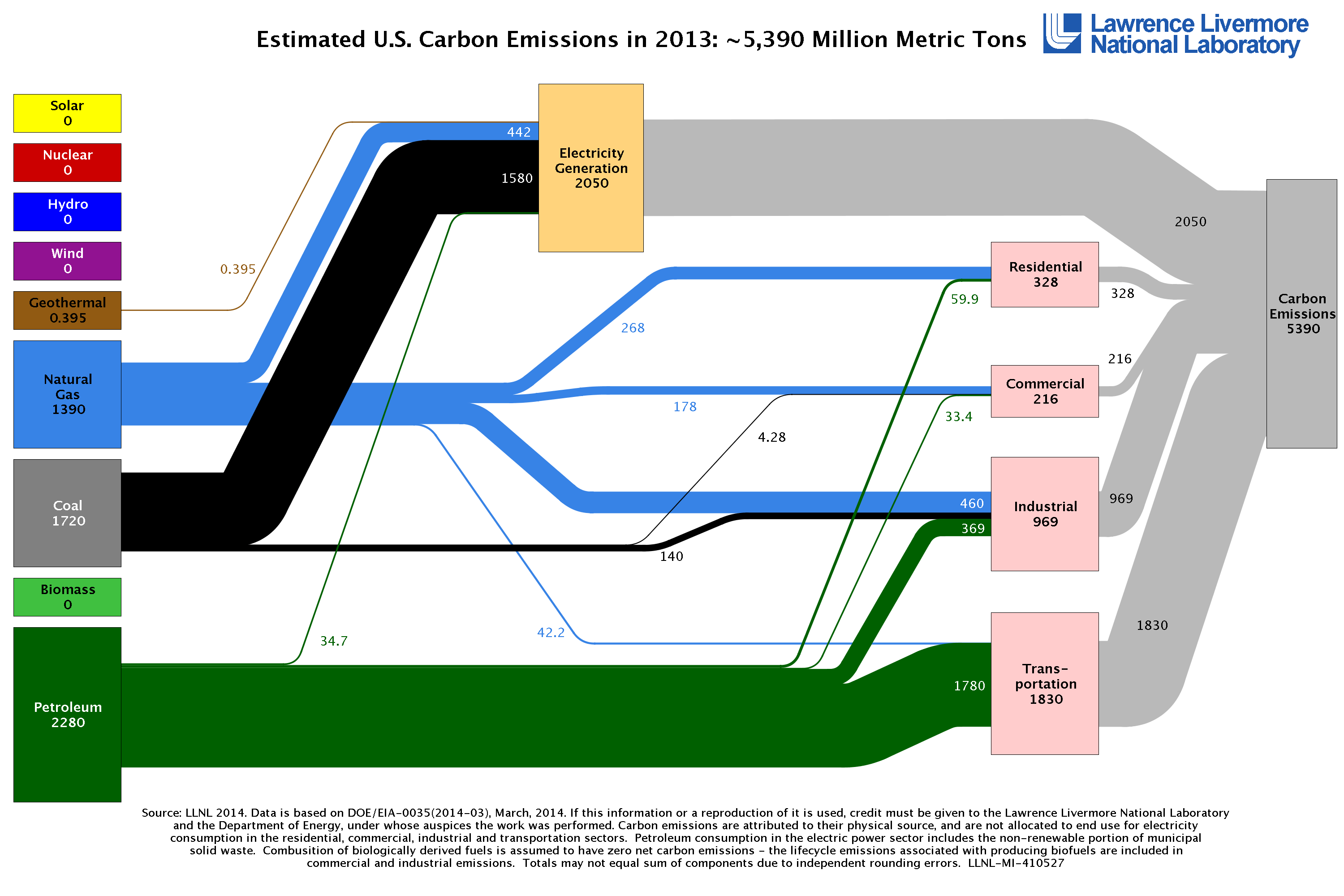
U.S. carbon dioxide emissions in 2013 increased 1.9% to 5,390 million tonnes. This is the first annual increase since 2010.
2008 5991 million tonnes
2009 5428
2010 5632
2011 5500
2012 5290
2013 5390

Be the first to comment