

The U.S. Administration has proposed a budget of $8.344 billion for the U.S. Environmental Protection Agency (EPA) for FY 2013, $105 million below the EPA’s budget for FY 2012.
 National Fuel Economy and Greenhouse Gas Standards Program – Increase
In November, 2011, the EPA and the National Highway Traffic Safety Administration (NHTSA) issued a joint proposal to extend the National Program of greenhouse gas and fuel economy standards to model year 2017 through 2025 passenger vehicles. The comment period for the proposal for the proposal ended February 13, 2012. In addition the EPA and the NHTSA have announced the first program to reduce greenhouse gas (GHG) emissions and improve fuel efficiency of heavy-duty trucks and buses for model years 2014-2018.
The budget contains a $10 million increase to the EPA’s National Vehicle and Fuel Emissions Laboratory for certification and compliance testing programs and to evaluate new biofuels technologies.
 Hydraulic fracturing – Increase
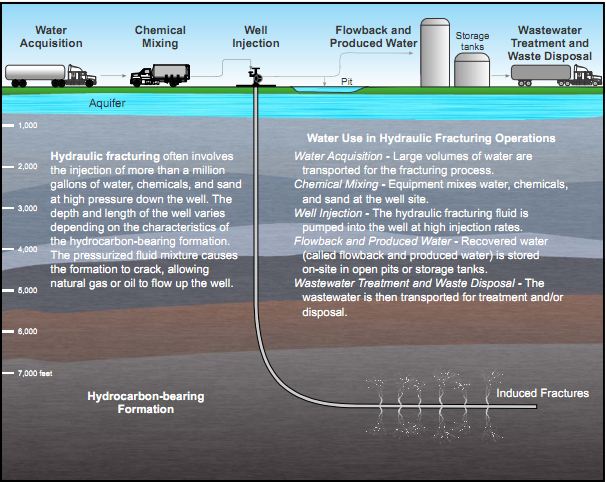
The impact of hydraulic fracturing on water quality is getting a lot of attention. In collaboration with the Department of Energy and the US Geological Survey, a total of $14 million investment will begin to assess potential impacts of hydraulic fracturing on air quality, water quality, and ecosystems. The EPA plans to release an Interim Report on the Impacts of Hydraulic Fracturing on Drinking Water Resources in 2012.
Harmful Chemicals – Increase
Late last year the EPA issues the Mercury and Air Toxics Standards (MATS) for thermal power plant emissions. EPA is proposing $68 million, an increase of $11 million over FY 2012, on chemical pollution, to reduce chemical risks, speedup chemical hazard assessments, and provide greater public access to toxic chemical information.
 Chesapeake Bay and the Great Lakes – Increase
EPA is proposing $73 million, a $15 million increase, to fund the Chesapeake Bay program’s implementation of the President’s Executive Order on Chesapeake Bay Protection and Restoration. Funding will support bay watershed states to implement plans to reduce nutrient and sediment pollution in an effort to restore this economically important ecosystem.
EPA is proposing $300 million for the Great Lakes Restoration Initiative continuing a three year initiative.
State Revolving loan Funds (SRFs) – Decrease
State Revolving Funds are a major source of funding for municipal water and wastewater projects, including funding the massive settlements (consent decrees) with the EPA to reduce combined sewer overflows (CSOs) and sanitary sewer overflows (SSOs) in cities like Cleveland, Atlanta, Chicago, and many others.
The FY2013 budget provides $2 billion for Clean Water and Drinking Water State Revolving funds (SRFs). The EPA says that this will allow the SRFs to finance over $6 billion in wastewater and drinking water infrastructure projects annually.
According to the American Water Works Association (AWWA), the proposed FY2013 budget would cut spending for the drinking water state revolving loan fund (SRF) program by 7 percent (from $918 million in 2012 to $850 million) and the clean water SRF program by 20 percent (from $1.46 billion in 2012 to $1.17 billion).
The budget also proposes some policy changes in administration of the SRFs. In 2012, not less than 10 percent of the drinking water SRF funds were to be used for green infrastructure, water or energy efficiency or other environmentally innovative activities, at the discretion of each state. For 2013, the Administration would make that 10 percent figure mandatory.
Also for 2012, not less than 20 percent but not more than 30 percent of drinking water SRF capitalization funds were to be used for additional loan subsidies, such as forgiveness of principal, negative-interest loans or grants. For 2013, that language would be removed. On the clean water side, the 2012 language said not less than 20 percent or more than 30 percent was to be used for such subsidies. For 2013, the “not less than 20 percent” floor would be removed.
STAR Grants
Science to Achieve Results (STAR) grants are funded at $81 million to conduct research in key areas such as hydraulic fracturing, potential endocrine disruptors, and green infrastructure.

Be the first to comment