
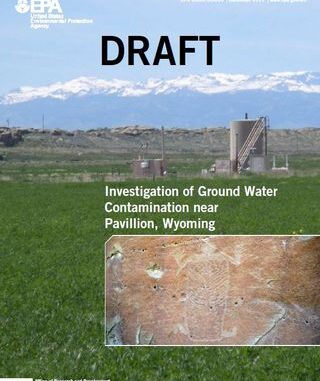
I blogged about a draft EPA report that linked groundwater contamination to fracking. In response to complaints by domestic well owners regarding objectionable taste and odor problems in wellwater, the U.S. Environmental Protection Agency (EPA) investigated ground water contamination near Pavillion, Wyoming. The
objective of the EPA’s investigation was to determine the presence of
ground water contamination and to differentiate shallow source sources
(pits, septic systems, agricultural and domestic practices) from deeper
sources (gasproduction wells using fracking).
EPA delayed convening the peer review panel on the
draft Pavillion report until a report containing USGS data collected from the EPA’s two wells is publicly
available. The USGS report is now available, but the USGS provided only the raw data and no interpretation. However, according to a preliminary analysisby the EPA, the results are consistent with the EPA’s draft report. An analysis of the USGS data commissioned by the Sierra Club also concluded that “the organic chemistry at MW01 [one of the EPA’s wells] has not changed substantially since the EPA sampled the well. The chemistry of MW01 found by the USGS is similar to that found by the EPA.”
The EPA plans to complete its own analysis of the water samples and then
turn over all of the data for an independent peer review later this
year.
Proving that ground water is contaminated is one thing. Proving that fracking is the cause is another. A major review of hydraulic fracturing by the University of Texas, Fact-Based Regulation for Environmental Protection in Shale Gas Development, found “no direct evidence that fracking itself has contaminated groundwater.” But it did find that contamination of groundwater can happen when
chemicals used in the fracking process escape into the water table
closer to the surface from poor well-bore casings and inadequately lined
storage ponds. However, there is now some question about the objectivity of the University of Texas report.

Be the first to comment