
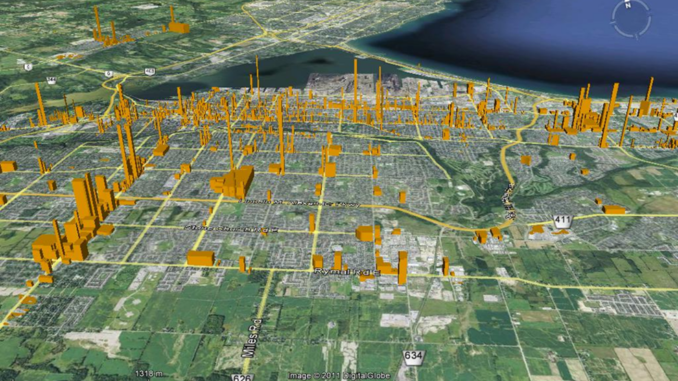
At the EDIST 2013 Conference in Toronto today, Cory Slinger of Horizon Utilities provided an update on Horizon’s energy mapping for conservation and demand management (CDM). I have blogged about Horizon’s energy density mapping initiative before. The objective of the initiative is to try to take the guesswork out of identifying
customers on whom to target conservation and demand management (CDM)
programs.
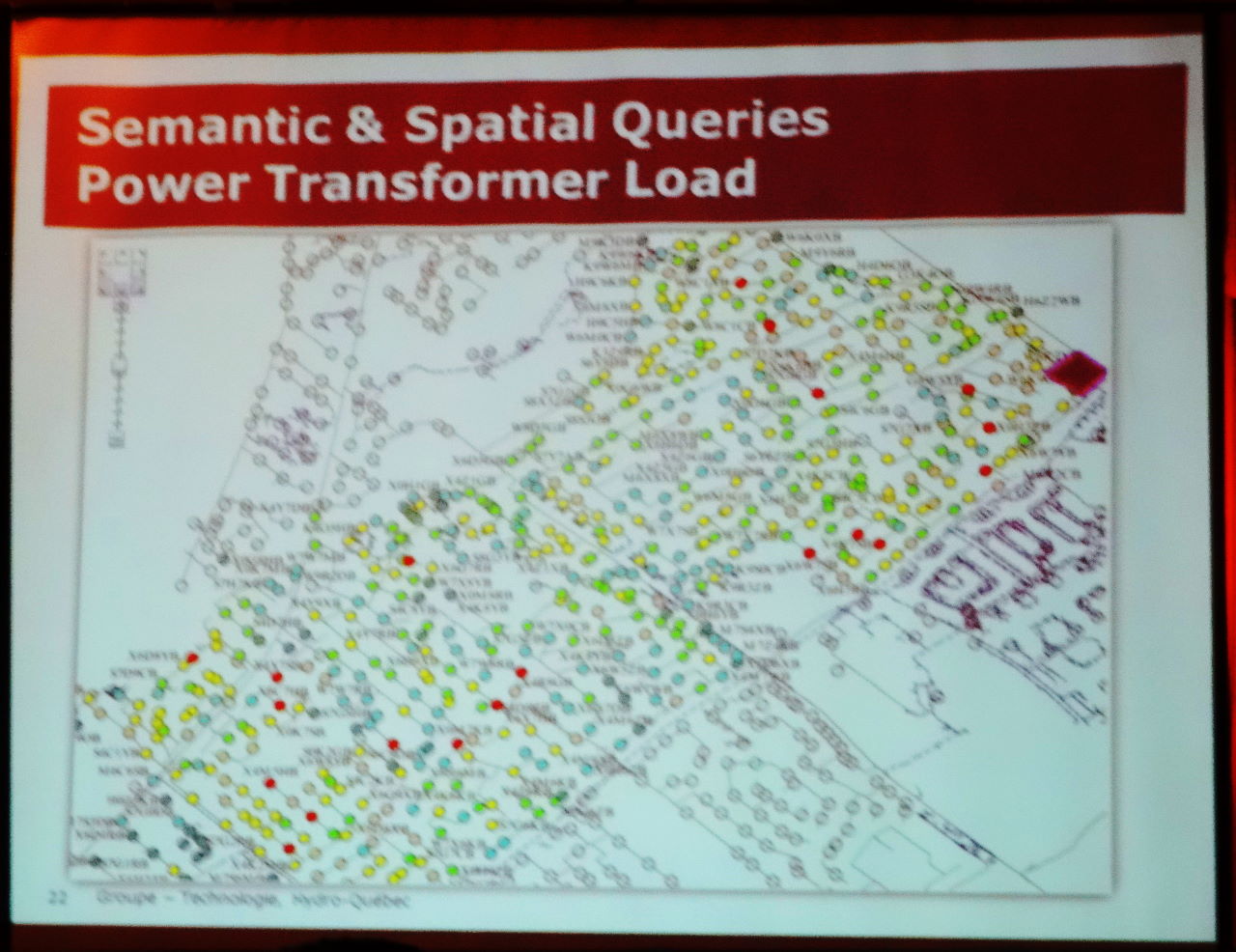 Horizon is required to meet CDM objectives mandated by the Ontario Energy Board (OEB).
The OEB has established hard targets for 2011-2014 for peak demand and
energy consumption for each electricity distribution company (LDC) in
Ontario. In the case of Horizon their objectives are to reduce peak
demand by 5.6% and consumption by 4.9%. The mandated targets are
aggressive and Horizon has found that it needs to look at new ways to
identify customers with high energy footprints and energy density mapping is one of the key technologies that they are looking to to help them meet their CDM goals. One of the distinguishing characteristics of Horizon’s approach to CDM is that they are treating it as a marketing challenge.
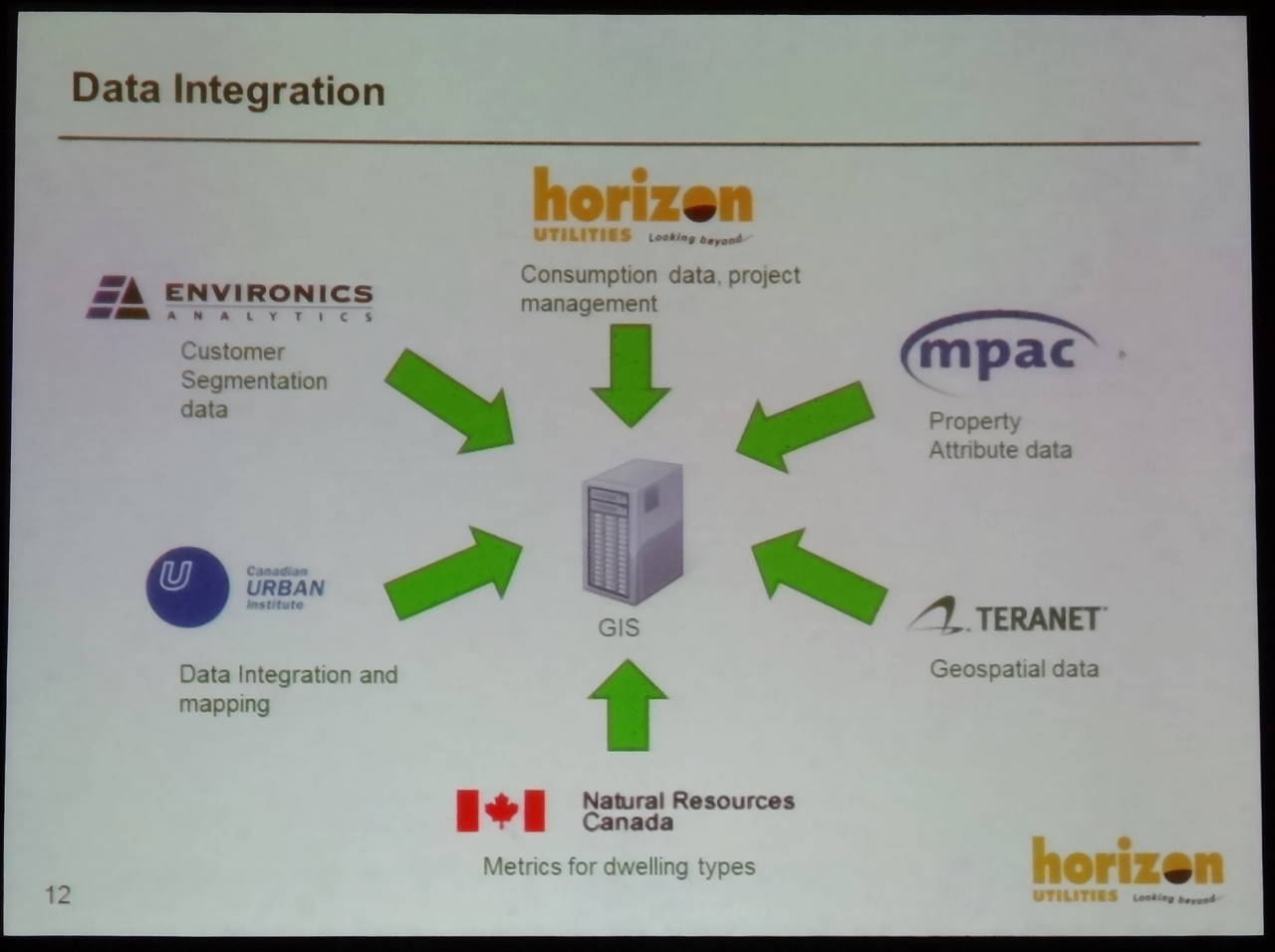 Horizon has partnered with public organizations including Municipal Property Assessment Corporation (MPAC), Teranet,
and others to provide them with detailed building and property
information such as building age, sun exposure, heating type, air
conditioning, and parcel data. They also partnered with NRCan/CanmetENERGY for standard metrics for different building types, with Environics for Prizm lifestyle profiles and data, and with Canadian Urban Institute who manage the GIS.
All of this data has been brought together and managed in a GIS. The GIS not only provides data management, but also has tools for linking different data sets using a common index. For example, in the raw data there was no common index that could link Horizon’s electricity usage data and Terranet’s parcel files. By using the GPS coordinates of each meter it was possible to link customer electricity usage data to specific parcels.
Another interesting aspect of Horizon’s approach related to privacy. Horizon’s energy density mapping is highly granular, at the building level, which means there is the risk of identifiable individual energy usage information. To ensure privacy, they have followed the Ontario Privacy Commissioner’s Privacy by Design guidelines to endure that no electricity usage information can be traced to individual customers.
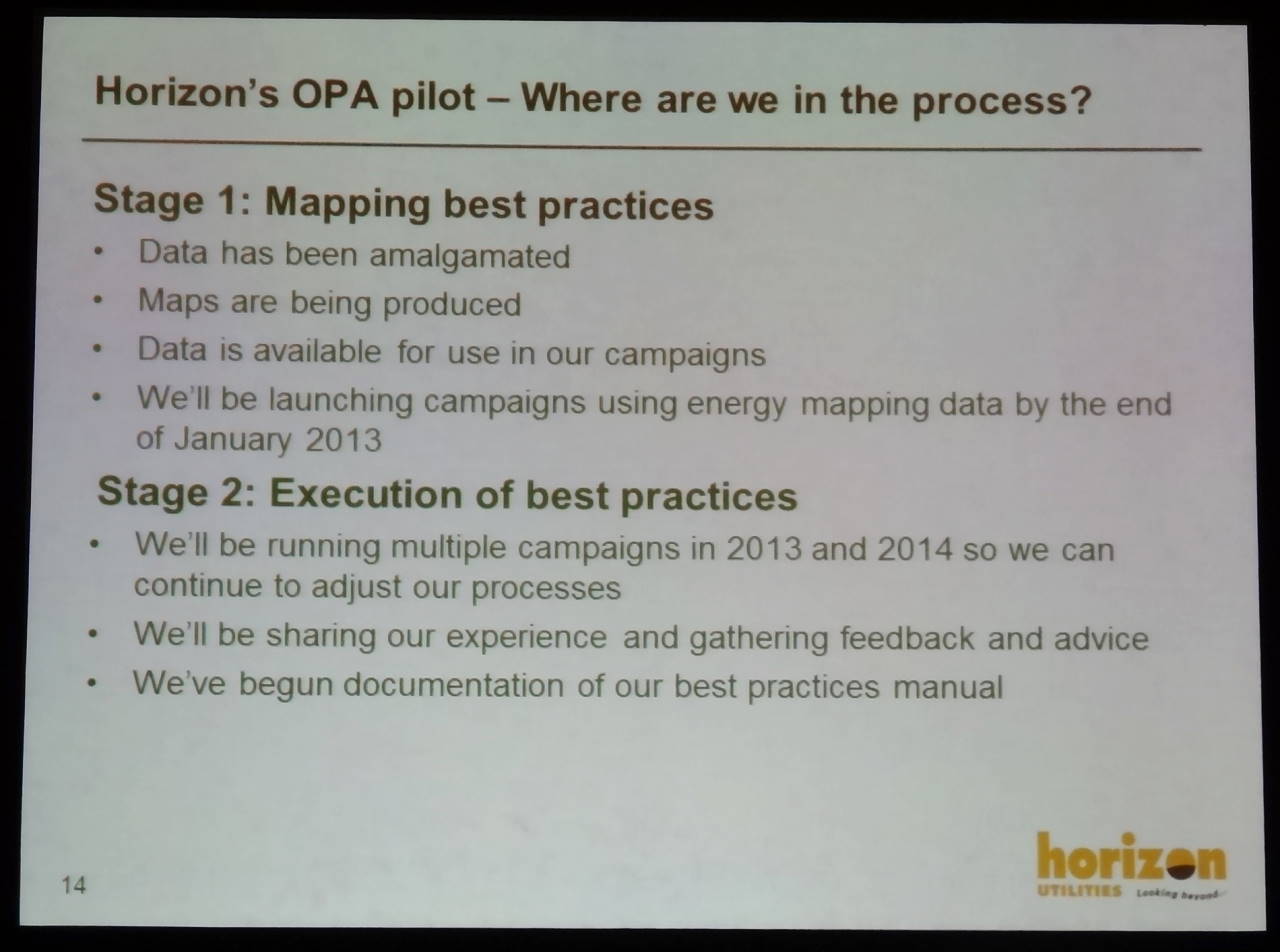 The intention is to roll out targeted campaigns in 2013 to identify customers who are likely to respond to CDM programs. Horizon have already piloted a campaign in which they sent letters to every customer with an air conditioner, alltogether about 90,000 customers. They found that the response was very poor, only about 3,800 signed up. [Correction: 331 responses were received on a mailout of about 90,000, which was much less than Horizon had hoped for. 3,800 is the total number of people who have signed
up since June of 2012. Thanks to Cory Slinger for the clarification.] They also expected that the group that would be most interested in the CDM program would be the younger, more enrvironmentally aware, affluent segment. But to their surprise when they looked at the data more closely using demographic profiles for different neighbourhoods, they found that people in the lower midde income and older age brackets were the most responsive to the CDM program and that the primary motivation for this group is financial, reducing their electrciity bills. The next CDM campaign will focus on this customer segment. Using paired campaigns is the approach they will follow throughout 2013 and 2014. The end goal is a set of best practices for CDM programs based on their experience in these campaigns.

Be the first to comment