
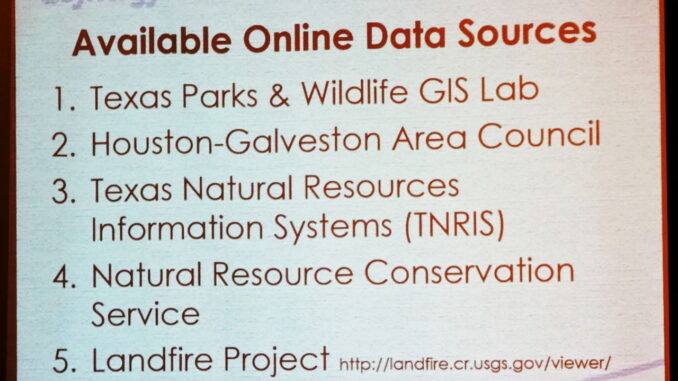
At the NRECA TechAdvantage conference Dr. Comfort Manyame, GIS Manager at Mid-South Synergy Electric Coop, gave a very interesting presentation demonstrating how freely available geospatial data can be applied to proactively to reduce outages.
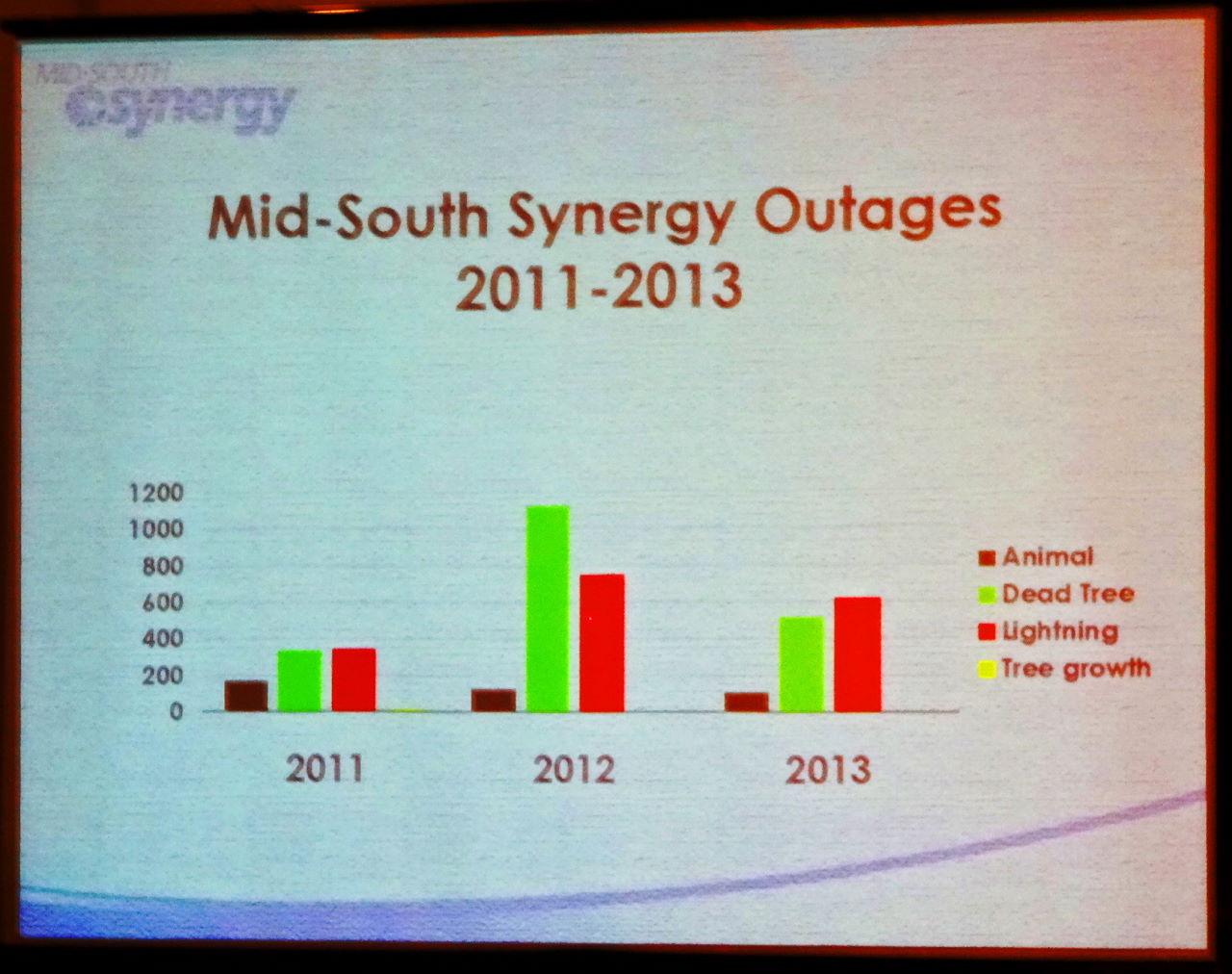
Mid-South Synergy is a utility with 25,000 customers in Texas. 20% of its annual budget is allocated to vegetation management. In 2011 40% of its outages were due to vegetation. In 2012 when drought affected their service territory, 52 % of their outages were vegetation-related. Hazard trees are trees that have a structural defect. Dead trees or diseased trees with significant dead wood comprise most of the hazard trees. In the past hazard trees were typically identified by several mechanisms: after they caused an outage, reported by customers, or field staff would identify them during right of way (ROW) maintenance and other activities. 80% of these trees are outside the ROW, so tree height is an important factor in determining whether a diseased or dead tree is a risk for a power line.
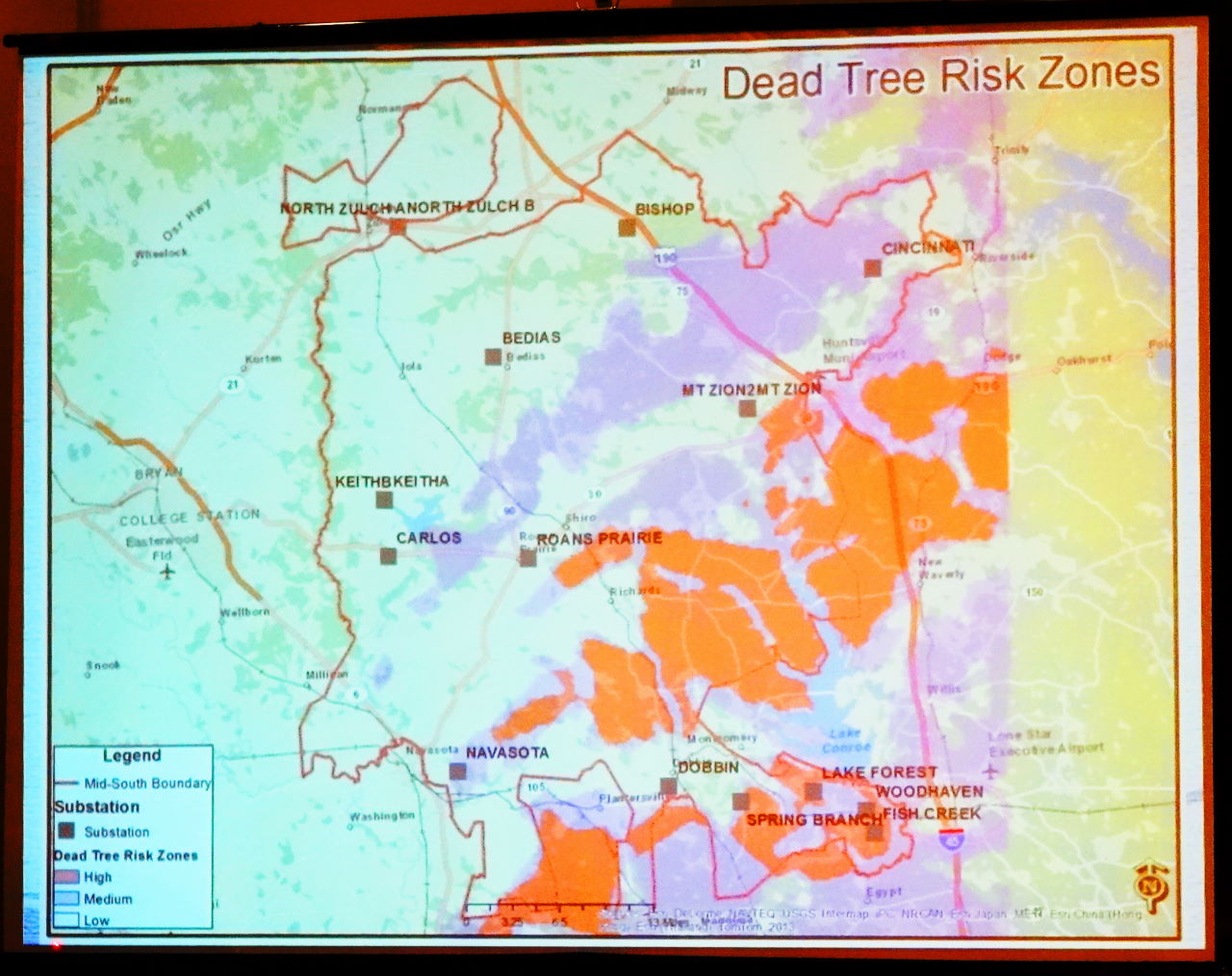 Concerned about the increased number of vegetation-induce outages during the drought in 2012, Mid-South Synergy decided to be proactive. Using freely available geospatial data about
- Vegetation types
- Land use/land cover
- Existing vegetation height
- Vegetation conditions
- Soils data
- Rainfall data
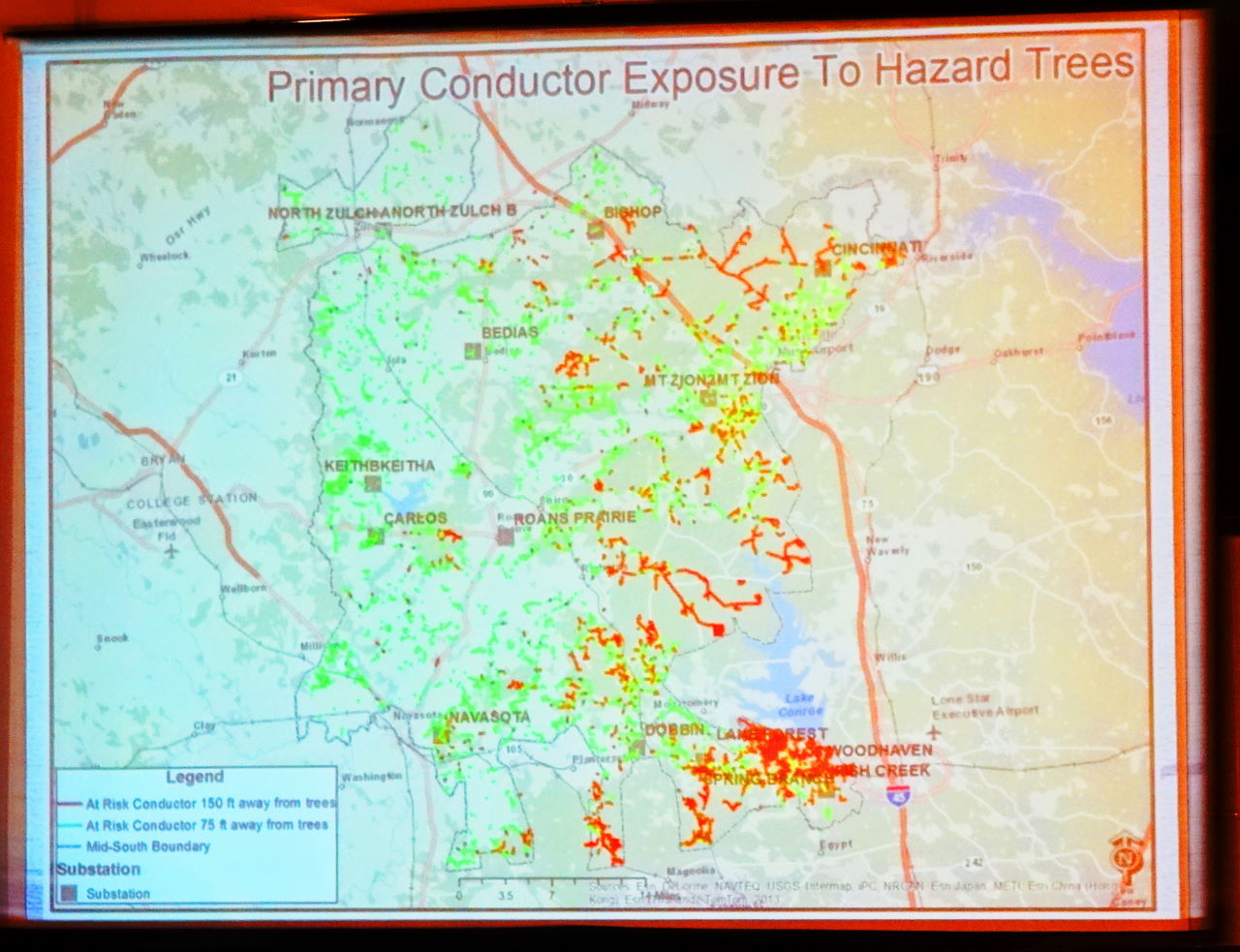 they used weighted overlay analysis to generate a map showing high, medium and low risk of hazard trees. They also classified all their conductors depending on whether they were in high, medium or low risk zones. They then intensified their hazard tree cutting activities near cables at high risk in high risk areas.
 The benefits they saw included
- Reduced outages due to vegetation.
- Tree cutting could be planned in advance, not when an outage occurred or when customers called. In addition they could make much more efficient use of their field resources, because instead of crews responding to customer calls which could come from anywhere in their total service territory, they could dispatch a crew to cut all the hazard trees in a contiguous area.
- Customer calls to remove hazard trees declined dramatically.
Vegetation-induced outages and vegetation management together represent one of the largest costs for many utiltiies. Dr. Comfort Manyame has shown that significant benefits in addressing this major challange can be realized from simply applying the available geodata, all of which was free in this case.

Be the first to comment