
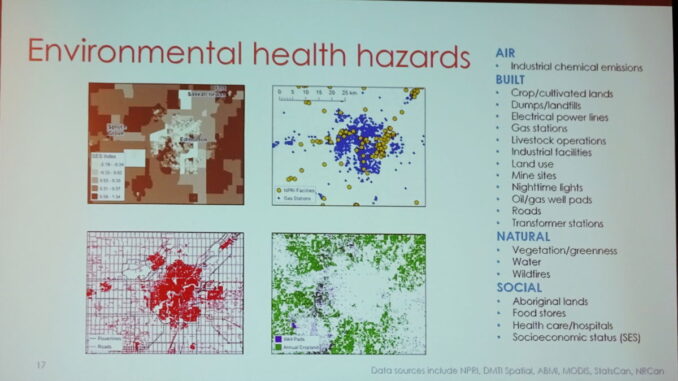
A spatial analysis of possible environmental factors contributing to the increase in the number of underweight babies born in Canada was presented by Charlene Nielsen at GeoAlberta 2018. Termed low birth weight at term (LBWT), this is the second most important cause of infant mortality in Canada and costs the medical systems hundreds of millions of dollars every year. It is also linked to childhood and adult diseases. Charlene’s hypothesis was that environmental factors including chemical pollution, the man made environment, and socioeconomic level were contributing factors to low birth weight babies in Canada. She used spatial analytics to study the problem which she used as the basis for her PhD thesis at the University of Alberta.
Using open, publicly available databases Charlene related the spatial distribution of low birth weight babies to geographical proximity to air-based chemical emissions or to land-based pollutants related to electrical power lines, dumps and solid waste sites, gas stations, mine sites and tailings, oil and gas well pads, transformer stations, and crop lands.
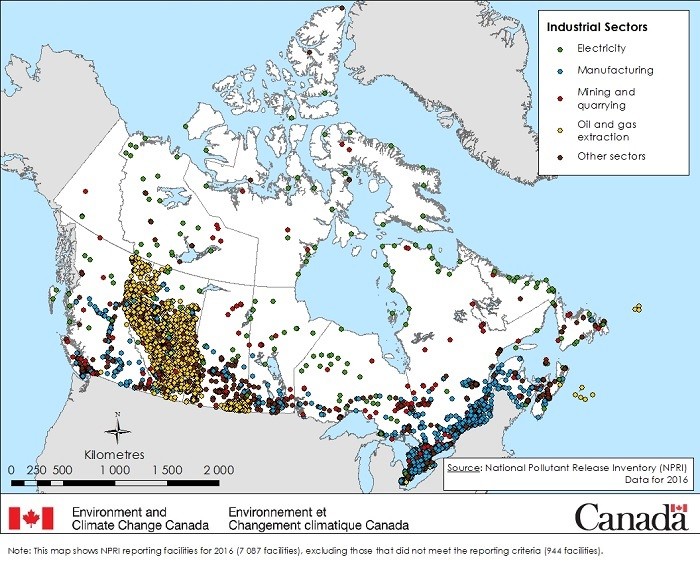 One of the publicly available data sources for chemical emissions that she used is the National Pollutant Release Inventory which has been maintained by Environment and Climate Change Canada since 1993. It currently monitors the emissions of 324 chemical substances.
Her study found that air-released or land-based pollutants may be more important depending on geographical location. There was a greater correlation of low birth weight babies with the environmental factors she studied in Ontario, Quebec, Alberta and British Columbia. While this study found that environmental factors did contribute to low birth weight babies, these are not the only factors. This study was particularly interesting because it used the geographical distribution of low weight births and the spatial distribution of environmental factors to try to determine some of the factors contributing to low weight births. Secondly it used publicly available environmental data which demonstrates that this type of spatial analysis can be easily applied in other studies.

Be the first to comment