
I have blogged previously about utility workforce challenges in Texas, Japan and Europe. I have been spending quite a bit of time in Europe recently and am impressed with some of the differences and similarities between Europe and North America in the utility sectior.
Like North America, the EU is facing massive development of new and renewed infrastructure, particularly in electric power and water.
Water
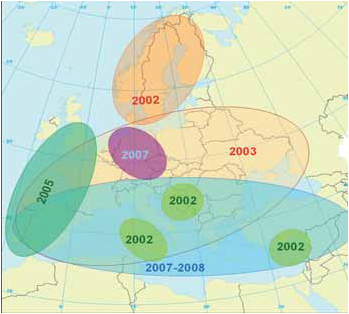
It is forecasted that at current rates water consumption by the public, industry and agriculture will increase by 16% by 2030. But water scarcity is increasingly in the EU and currently affects at least 11% of the European population and 17% of the EU territory. In 1998 the EU adopted the Drinking Water Directive (DWD), which sets standards for the most common substances that can be found in drinking water. In 2000, the EU introduced the Water Framework Directive,to safeguard ground and surface waters based on watersheds instead of national boundaris with a goal to achieving a good ecological status by 2015. A 2009 EU policy paper on adapting to climate change ideintified measures focussed on water efficiency and increasing resilience to climate change.
Electric Power
In the electric power sector electric power demand is projected to increase annually by 1.4%. This is similar to North America. But unlike North America where the US and Canada don’t have national emission reduction goals, the EU has a union goal for reduction in emissions by 2050 with a transitional objective for 2020. These are legally binding objectives on member states that motivates national renewable energy and smart grid programs.
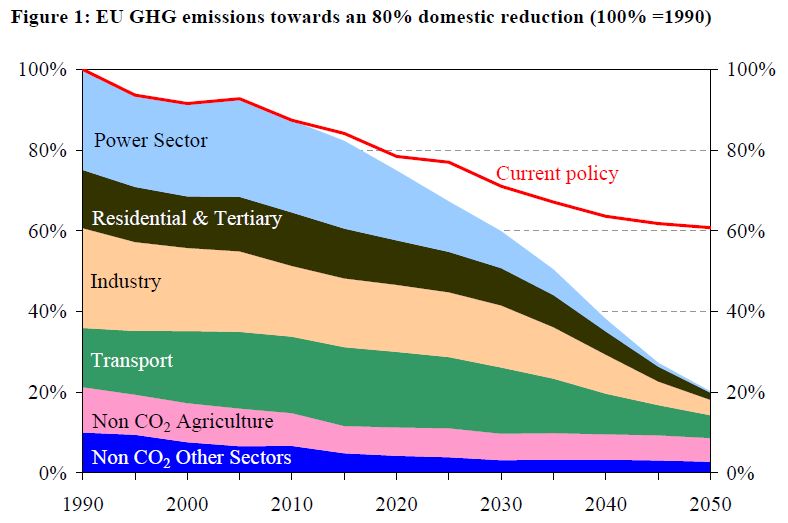 In 2009 the EU led the world in clean energy investment at $41.1 B, followed by China $34.6 B, and the U.S. $18.6 B. In March 2011 the EU’s Roadmap for a Low Carbon Economy in 2050 targeted 80% reduction in GHG emissions by 2050 from 1990 with a reduction of 20% by 2020. In Germany, where electric power is about 50% coal, 20% nuclear, and 17% renewables, the energy masterplan targets increasing renewables, expanded transmission, smart grid, and aggressive energy conservation. After Fukushima all German nuclear power plants are required to go off-line by 2022, accelerating renewable energy and smart grid development. The UK, where 80% of electric power generation is from fossil fuels, has committed to reaching 15% renewables including transmission buildout and smart grid development by 2020.
In 2009 the EU Parliament passed legislation setting a smart meter deployment goal of 80% of the EU population by 2020. In several countries smart meter deployment is happening faster than that. Italy was the first EU country to adopt smart grid technology installing 32 million residential smart meters. Sweden in July 2010 became the first EU nation to reach 100% smart meter rollout. In September 2010 the French government decreed smart meters in 95% of French homes by 2016. Berg Insight forecasts smart meters in 96.3 million EU households by 2014.
European Infrastructure Renewal and the Aging Workforce
To do all these things as well as other infrastructure improvements an additional investment in infrastructure over the next two decades estimated to be on the order of $200 billion/year with a concommittant expansion in the utility workforce will be required.
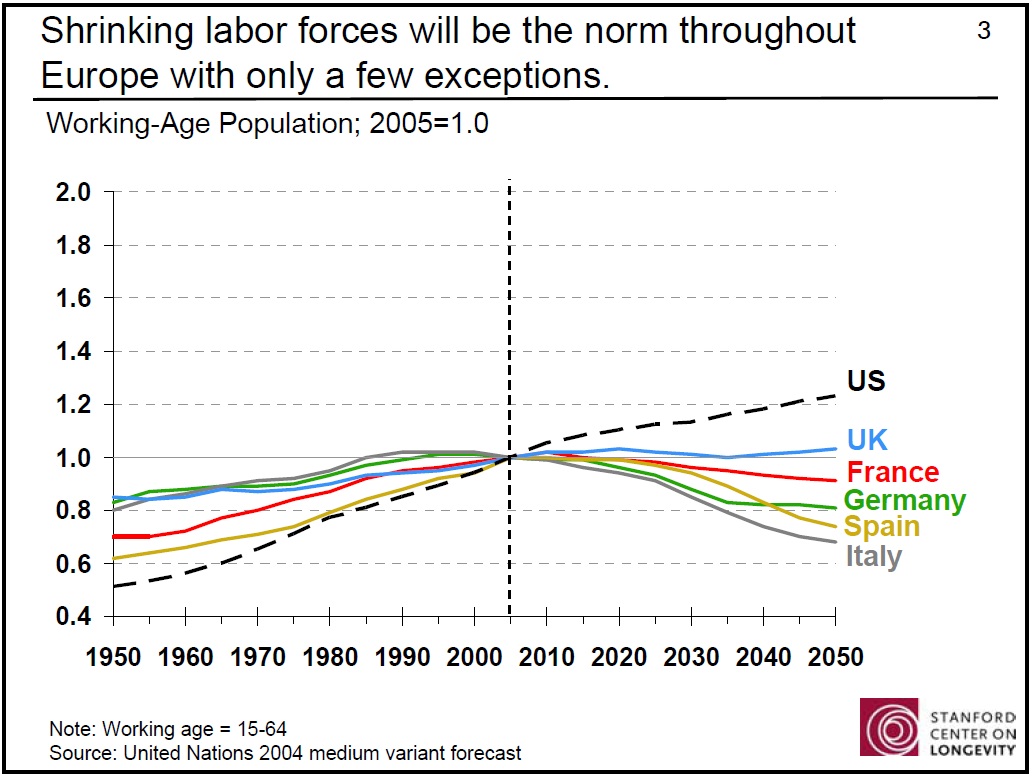 The populations of some EU member states such as Germany are decreasing, while in others populations may be stable or increasing, but in many cases workforces are decreasing because particpation rates especially among older workers are decreasing. According to research from Ovum, in many EU countries one third or more of the utility workforce is over 50, which with decreasing participation rates among older workers, means the utility industry is facing a crisis of decreasing headcount and less experienced workers. In Germany where the population has been decreasing since 2003, it is estimated that there will be 6.5 million fewer people available to work by 2025 and in professions in which there is already a shortage such as engineering the situation is becoming dire.
Utilities are looking at different approaches and developing programs to address the workforce issue including educational programs and investment in technology to improve productivity. But an additional area that utilities are pursuing is increasing the participation rate among older workers by bringing back retired workers on contract often at significantly higher rates of remuneration.
Increasing Participation Rates and Pension Plan Funding
But the benefit of increased particiaption rates accrues not only to utilities. Recently, Leila Kurki, president of the Section for Employment, Social Affairs and Citizenship of the European Economic and Social Committee, said that the decisive factor for future pension funding needs is trends in the economic dependency ratio (the ratio of people receiving benefits to people in employment). Kurki said that governments should work to increase labor market participation rates rather on making changes to pension systems. Kurki said that this would involve radical changes in working life, because “jobs must be designed so that people are able to work at least up to the statutory retirement age.”

Be the first to comment