
As I blogged before, there are about half a milllon gas wells in the US. To be more precise, in 2009 there were 493,000 active natural-gas wells, around 90 percent of which have used fracking to increase gas production, according to the drilling industry.
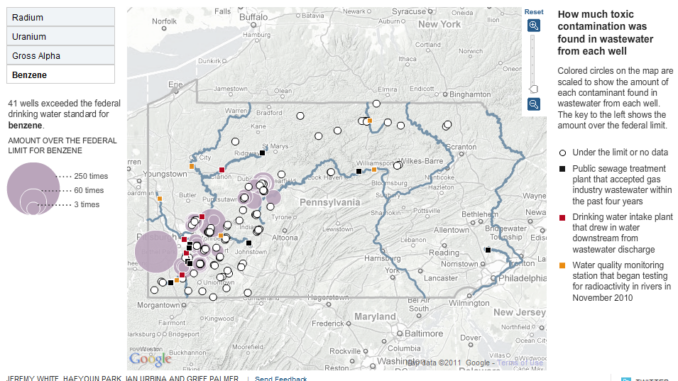
The New York Times collected data from more than 200 natural gas wells in Pennsylvania and was able to map 149 of the wells. It was found that drilling wastewater from these wells frequently exceeded federal drinking water standards,
- 42 wells exceeded the federal drinking water standard for radium
- 4 wells exceeded the federal drinking water standardfor uranium
- 128 wells exceeded the federal drinking water standard for alpha radiation
- 41 wells exceeded the federal drinking water standard for benzene
In 2009 and 2010, public sewage treatment plants directly upstream from drinking-water intake facilities accepted wastewater with radioactivity levels much higher than the drinking-water standard, but most of these sewage plants are not required to monitor for radioactive elements in the water they discharge.
A review of federal, state and company records relating to more than 200 gas wells in Pennsylvania, 40 in West Virginia and 20 public and private wastewater treatment plants found that
- More than 1.3 billion gallons of wastewater was produced by Pennsylvania gas wells over the past three years. Most of this was sent to treatment plants not equipped to remove toxic materials in drilling waste.
- At least 12 sewage treatment plants accepted drilling wastewater and discharged partially treated waste into surface waters.
Data from more than 65 intake plants downstream from some of the major drilling regions in Pennsylvania were reviewed. Not one had tested for radioactivity since 2008, and most had not tested since at least 2005.

Be the first to comment