
At the Data Analytics for Utilities conference in Toronto yesterday, several speakers explained what is driving utilities to invest in analytics programs, and gave some real world examples of how utilities are implementing analytics programs.
Why analytics ?
In a nutshell, as a number of speakers emphasized, the goal is to enable utilities to make decisions based on information derived from the increasing volume of reliable data that is available to utilities as a result of their smart grid activities, rather than “gut” intuition, which is what utilities had to rely on in the past because they had limited and out-of-date data.
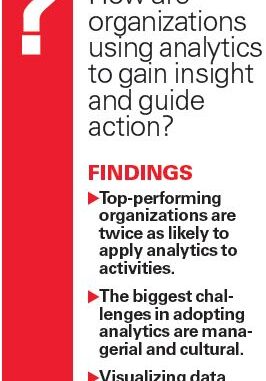
Lloyd Tokerud of Hudson Energy referenced a seminal paper, an MIT Sloan Management Review “Big Data, Analytics, and the Path from Insight to Value” that found that top performing organizations are twice as likely to apply analytics to activities.
The study also found that the biggest challenges in adopting analytics are managerial and cultural. Lloyd pointed out that to enable an analytics prorgam to be successful, it is necessary to educate people on the use of data and to promote a data-driven culture rather than intuition. The important benefit is that an anlytics program can enable the utility to make better decisions faster.
Lloyd also said that analytics requires people with different skills than traditional IT. He called them “purple people”. Purple people understand both IT (red) and the business (blue).
Guidelines for implementing an analytics program
Mary Rich, who was responsible for smart grid and analytics initiatives at Centerpoint Energy in Texas gave a very insightful overview of how Centerpoint implemented their first anaytics program subsequent to their rollout of smart meters and AMI.
Based on her experience at Centrepoint she made several points that are important for any utility planning to embark on an analytics program,
First of all, implementing an analytics initiaive is not a departmental exercise, it has to be company-wide. It needs top-level support and strong governance. Without these it will either fail or drag on for years. Seondly it is not cheap. It requires new tools and new people. The big payback will not be short term, but long term. Creating a data-driven culture is a cultural transformation that requires breaking down traditional data silos in engineering, operations, GIS, and across the company.
One of the most important objectives is ensuring that the data is accurate and comprehensive. Most importantly there can be only one authoritative source for each piece of data. Conflicting reports are not going to help management make decisions rapidly and even worse they will raise red flags with the regulator.
 How did Centerpoint Energy implement an analytics program
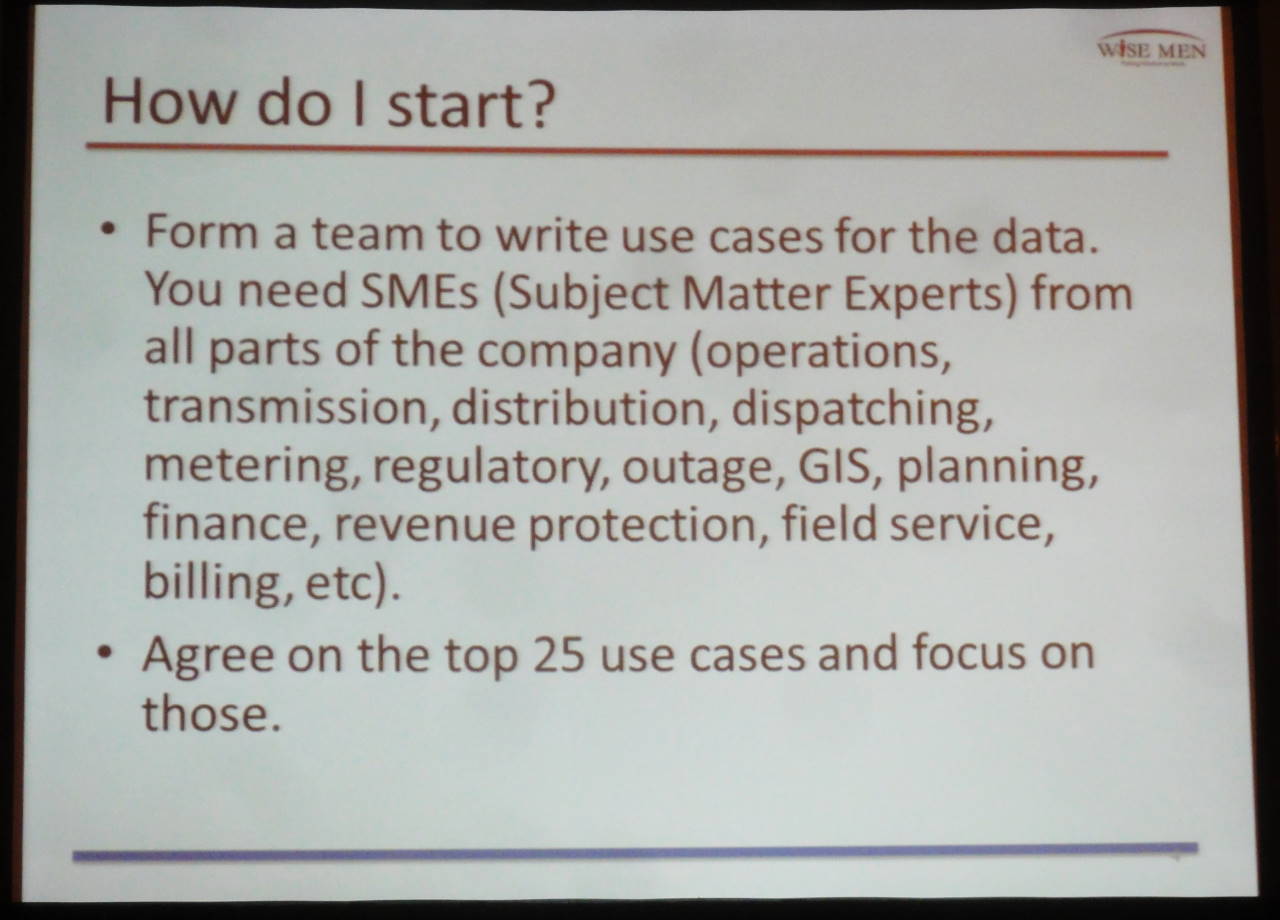
At Centerpoint they created a team comprised of subject matter experts (SMEs) from all divisions of the company. It was ensured that these people were relieved of some of their normal committments so they could devote quality time to the analytics initiative.
The team spent about a month and a half identifying areas which potentially could benefit significantly from the application of analytics. They then winnowed these down to the top 25.
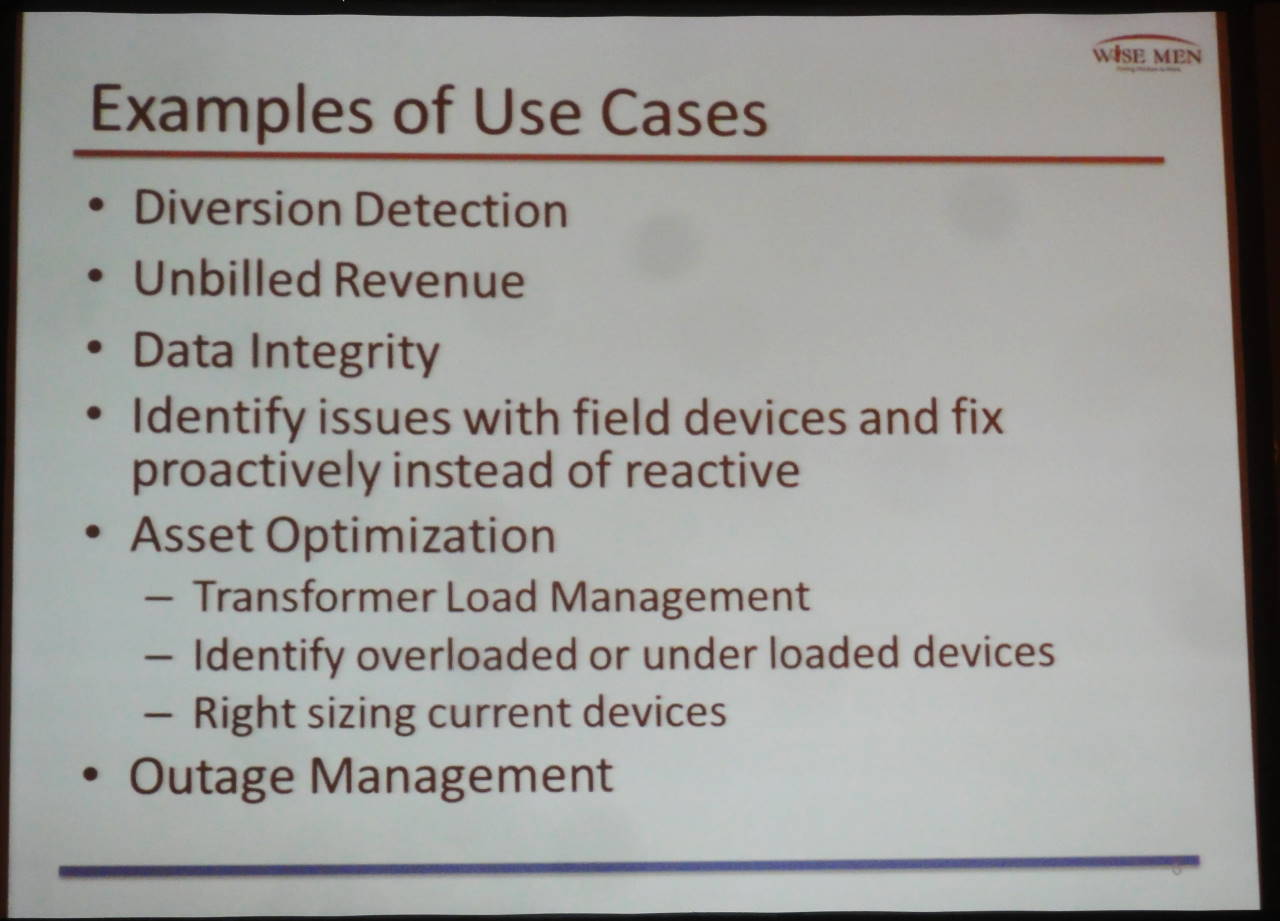 For each of these opportunities they wrote detailed use cases, Mary emphasized that this was not easy. It was time-consuming and often required external support people to help SMEs who were not familiar with writing use cases.
As a practical example of implementing a use case, ons of the uses cases related to what Centerpoint refers to as “diversion” and what others call non-revenue-generating, non-technical losses. With analog meters Centerpoint had to rely on the meter readers to note signs of tamperring with a meter and to report a possible diversion problem to Centerpoint. A crew would roll a truck and investigate,but in many cases it would turn out not to be a diversion probem. Wth smart meters meter tampering can be detected auomatically., but it is an involved process because it is necessary to make sure that there isn’t an outage or a crew working in the area, because these can trigger events that look like meter tampering. The SME team working on the use case estimated that by using autmated techniques they could increase detection by 20%.
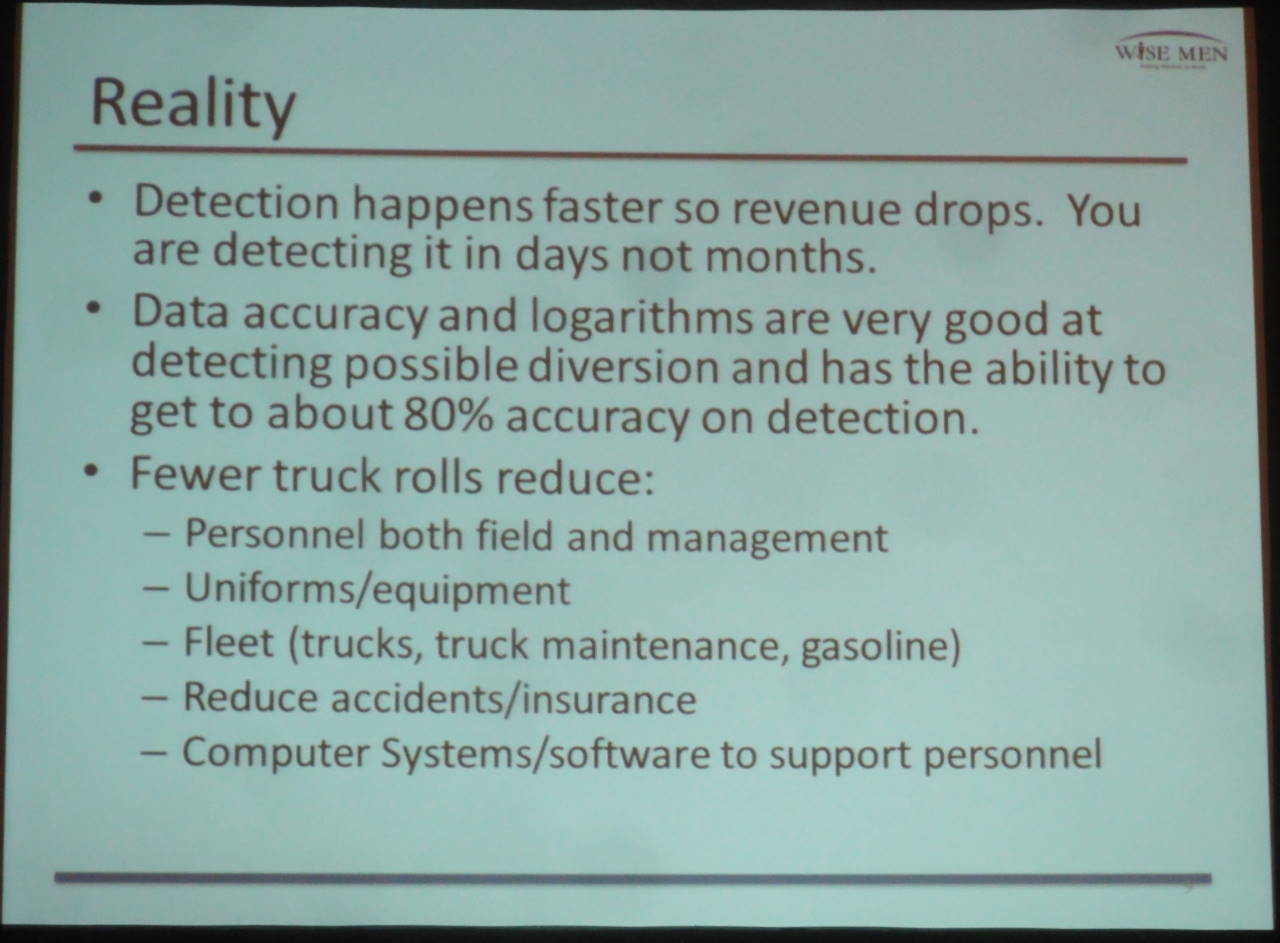 The reality was quite different. They found that their autmated algorithms were much more effective than expected, because they were able to identify real diversion events with 80% accuracy. They found that the big business benefit was fewer truck rolls. Mary strongly recommended that every utility should know the cost of a truck roll because reducing truck rolls is one of the most important areas where utiltiies can reduce costs, often dramatically. Mary said that in Houston alone, they were able to eliminate 4.5 million truck rolls.

Be the first to comment