
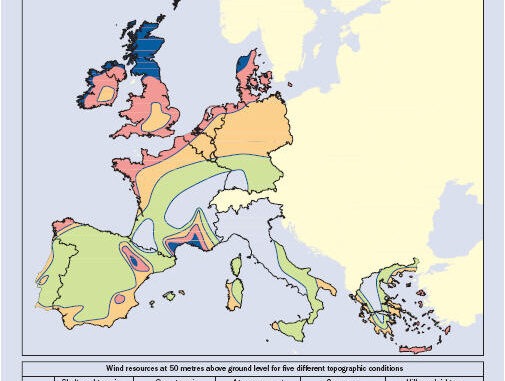
By the end of 2007, the EU had in excess of 56,000 MW of wind generation capacity, which represented 3.7 % of total EU electricity demand. It is estimated that this wind power generation avoided 91 million tonnes of CO2 emissions.
In 2007 the EU set a target of 20 per cent of its energy supply to come from renewable resources by 2020. Wind power is expected to deliver 12 to 14 per cent (180 GW) of the total demand. While wind energy covered around 4 per cent of electricity demand in 2008, EWEA targets for 2020 and 2030 are for wind generation levels of 12–14 per cent and 21–28 per cent, respectively.
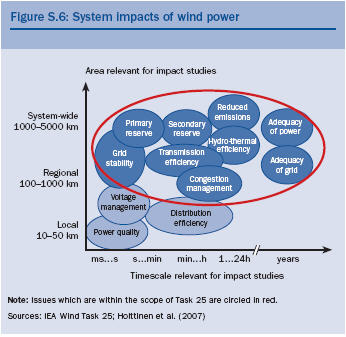 The EWEA has published a new verison of Wind Energy – the Facts which identifies some of the impacts of attaching a large proportion of wind energy to the existing European grid.
The report says that Europe is the global leader in wind energy technology. By the end of 2007, sixty per cent of the world’s capacity was installed in Europe and European companies had a global market share of 66 per cent.
Wind energy is reponsible for 21 percent of power generation in Denmark. In Schleswig-Holstein, in the north of Germany right next to Denmark, wind energy accounts for 36 per cent of the region’s total electricity demand. In Navarre, Spain, wind power provides 70 per cent of electric power. Navarre leads Europe in its use of renewable energy technology and is planning to reach 100% renewable electricity generation by 2010.
Grid Infrastructure Upgrade
Wind energy is a distributed and variable-output generation source and will require infrastructure investments.
Two main factors determine wind energy integration costs: balancing needs and grid infrastructure.
Balancing in a power system is due to the variable nature of wind power, requiring
changes for other generators to compensate unpredicted deviations between supply and demand.
Grid infrastructure upgrade is the result of the need to connect wind generation plants and from the extra capacity required to carry the increased power flows in the transmission and distribution networks. The large-scale integration of wind power requires an increase in transmission capacity in particular the construction of new transmission lines. Networks also need to be adapted to improve voltage management, and additional interconnection capacity between countries is required to optimally capture the benefits of the continental nature of the wind resource.

Be the first to comment