
A recent report projects that world construction output will grow 70% from its current level of US$ 7.5 trillion to $ 12.7 trillion by 2020, increasing from 13.5% of global GDP to 14.6% in 2020. According to Global Insight IHS currently less than 10 % of this is considered to be green construction, but this is projected to increase dramatically in the next ten years.
As an example, an increasing proportion of infrastructure spending is going to renewable energy including wind, solar, biomass, hydro and geothermal, which in turn in many countries is driving increased investment in smart grids. Significant investment is also going into electrifying transportation, including electric and hybrid automobiles, and into reducing emissions from buildings through electrification, co-generation, and energy conservation. All of these things involve design, construction, and maintenance of infrastructure including buildings, highways and roads, electric power plants, water treatment plants, and electric power, telecommunications, and water and wastewater networks.
One of the major challenges that the construction industry faces is how are we going to find the skilled workforce that is going to do all this ? A recent report Meeting Construction and Maintenance Workforce ChallengesConstruction Owners Strategy 2011 to 2016 discusses this issue in Canada.
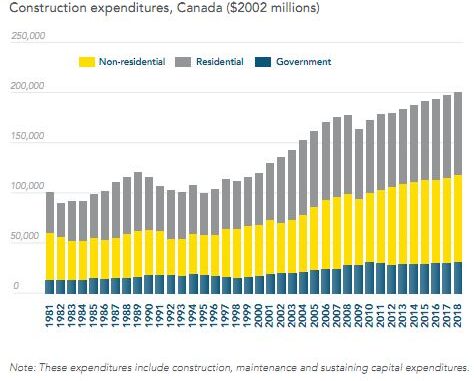
The total annual expenditure in Canada on construction and maintenance for government, commercial, and residential is more than $220 billion. This industry directly employs 1.2 million workers (6 percent of Canadian employment), and contributed more than 12 percent of the Canadian gross domestic product (GDP).
During the period 1996 to 2008 in Canada there was rapid expansion in all categories of construction, followed by a decline during the the latest recession. According to a Construction Sector Council (CSC) forecast, increasing construction expenditure is expected to resume and is expected to continue to increase through 2018.
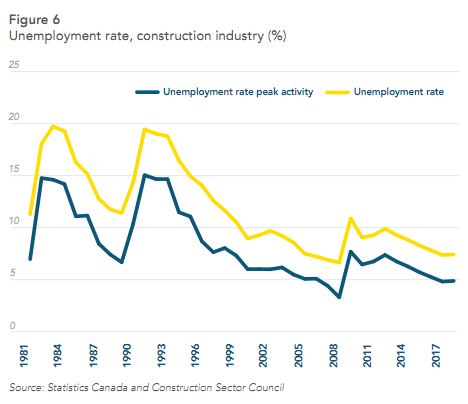
Employment in construction increased by 70 percent since the mid-1990s. Recently construction labour unemployment rates have fallen below the lowest levels recorded in Statistics Canada’s Labour Force Survey for 1981 to 2009, indicating increasing difficulty in finding skilled construction workers. The latest recession added some labour resources to the market, but available construction labour is still at a historical low. The CSC outlook suggests that the labour availability problem will get increasingly worse through 2018.
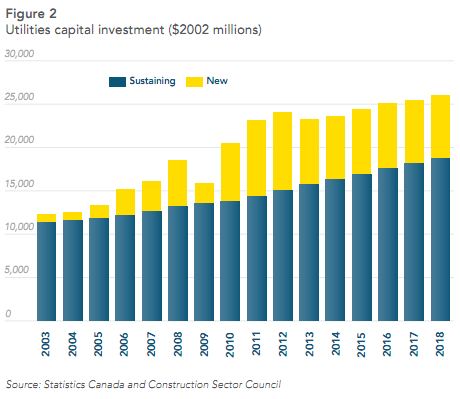 In addition there is a competing demand for maintenance workers. To meet this demand, the industry draws on the same pool of skilled labour as it does for new construction. In mature industry sectors such as utilities, over time the proportion of capital investment that goes to new construction declines while capital devoted to maintenance increases. More workers are required for maintenance, putting more pressure on the already limited availability of skilled tradespersons. The result is a sharp increase in demand for skilled tradespersons.
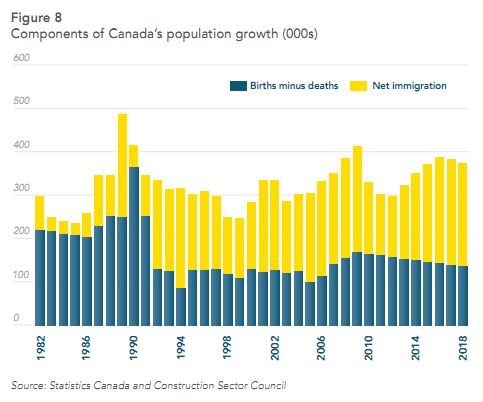
On the other hand the problem is exacerbated by an aging workforce. The ability of the construction industry to attract workers is determined by the availability of labour in the economy as a whole. But the aging of the Canadian population is slowing growth in the Canadian labour force. Construction is not the only industry experiencing this problem. Low fertility and aging continue to keep the domestic contribution to population change low. In the 1980s, net immigration accounted for about 25 percent of population change. In the last 10 years it accounted for 60 percent and it is expected to reach nearly 65 percent in 2018. According to the CSC outlook Canada’s immigration requirements in 2018 will be 320,000 people per year, up from around 245,000 a year now.
 According to the CSC forecast, growth in the construction and maintenance industry will increase the construction workforce by 111,000 new workers between 2011 and 2019. In addition, the industry will need to replace 208,000 workers who leave the industry for retirement. Based on the CSC data, there will not be enough people to meet the demand for 319 000 new construction and maintenance workers.
The major strategic priorities identified by owners to address these workforce challenges are increasing productivity and finding and training new sources of skilled labour.
Productivity
Enhancing workplace practices, promoting technological innovation and training in management/supervision and technical trades could greatly improve productivity and help reduce labour shortages.
 Youth/apprentices
Contractors and governments need to commit to supporting apprentices during economic upswings and downturns. It takes roughly five years to train a journeyperson. Three or four years of strong economic growth drains the pool of experienced workers. The shortage results in higher enrolment at vocational schools, but since training still takes five years, the shortage of skilled workers remains. This situation persists until the next downturn.
Owners feel there needs to be more work done to educate youth about the skilled trades and potential career paths in the industry and want to see further emphasis on high school apprenticeship programs.
Aboriginal people
The Aboriginal population is the fastest growing in Canada, nearly 50 percent of which is below the age of 25. This represents a significant pool of largely untapped labour
Immigrants
Targeted immigration is essential to address the need for skilled tradespersons in Canada. But there is competition from other countries for workers and within Canada there is competition from other industries. It will require cooperation between industry and government to attract foreign workers and then support their integration and successful employment.
Women
Women are under-represented in the construction industry. The challenges are first of all attracting more women into the trades, the second is retention.
Older workers
The industry must find ways to learn about and accommodate the needs of older workers. Some options for attracting and retaining experienced workers include less strenuous workloads, participation in “train the trainer” programs to share their experience, mentoring programs to promote youth-knowledge transfer, part-time and flexible work schedules, and job sharing.
Be the first to comment