
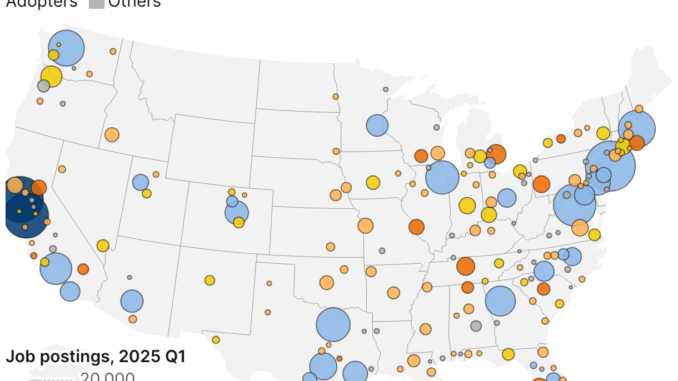
With the growing emergence and explosion of AI in the last few years we have seen some incredible developments that are quickly becoming part of many people’s lives. A key aspect of geospatial is the gathering and manipulation of data to identify patterns and trends. So why not apply this to AI and identify the fast-growing hubs where this AI revolution is taking shape?
That is exactly what researchers from Brookings have done with their latest report on the state of the AI industry. Instead of looking at the scope of the industry worldwide, where everyone is concerned about who will win the race to create AGI, they looked at how it is emerging within the United States, identifying the dominating hubs and those areas that are falling behind.
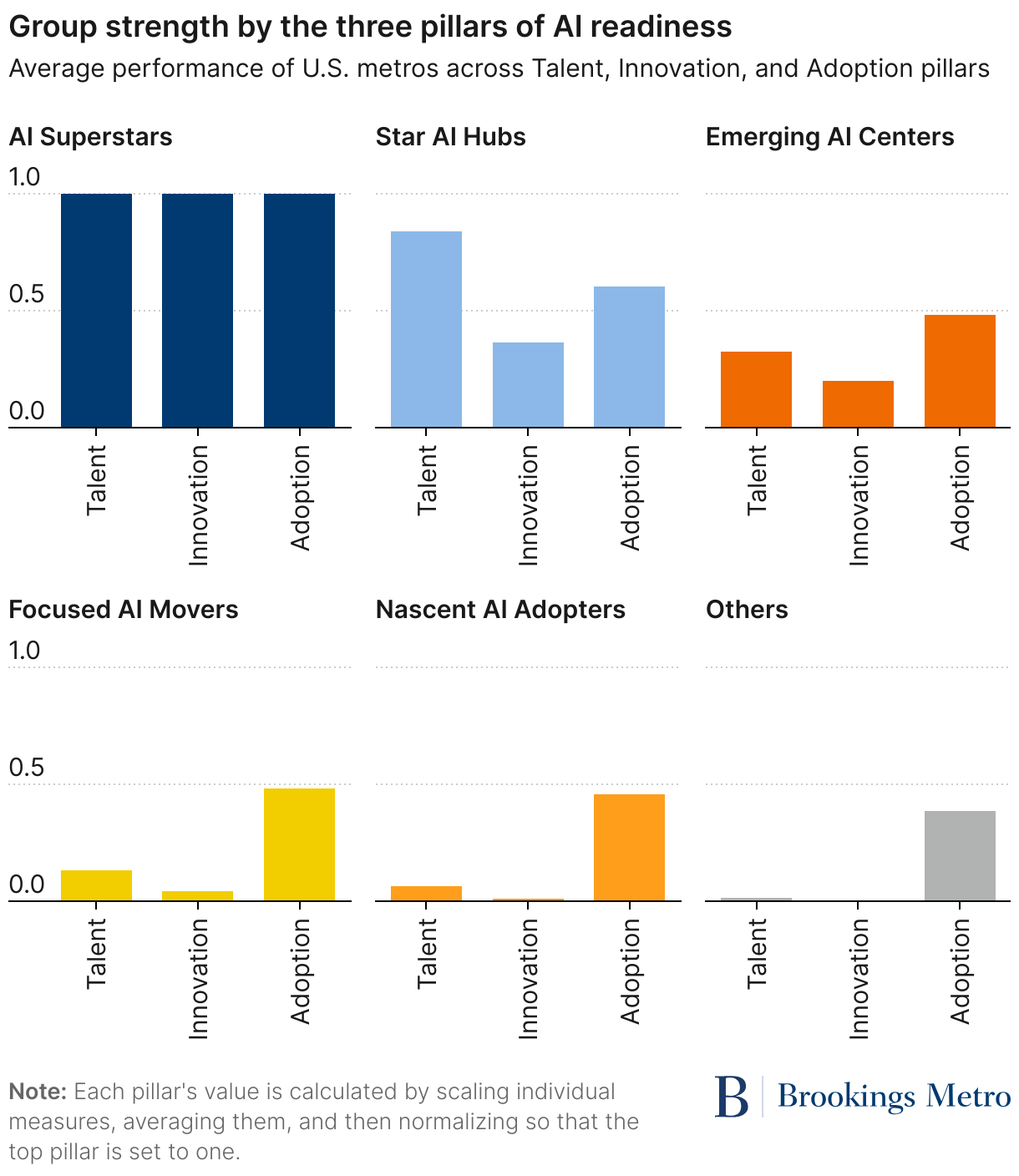
By focusing on three key factors to success;
- Local AI talent
- Local AI innovation and supporting infrastructure
- Local AI adoption
the team was able to identify geographic areas and sort them into categories indicating various levels of readiness:
- Superstars
- Star hubs
- Emerging centers
- Focused movers
- Nascent adopters
- Others
from which they were able to provide grouped priorities for each of the readiness types as well as recommendations to grow the AI ecosystem in each of the communities.
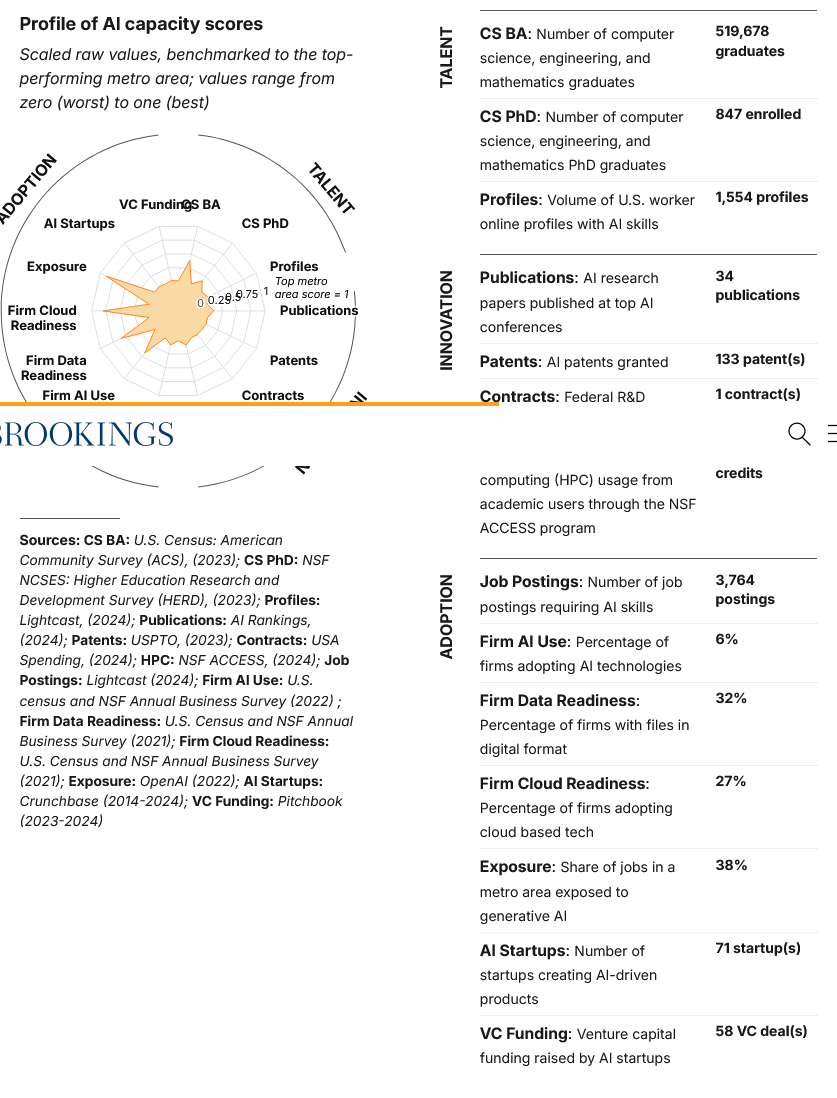
Brookings has also created an interactive dashboard that allows users to view the individual profiles of each metropolitan area and the data that contributed to their rankings, with specific data. This data includes Computer Science graduates from both Bachelor and PhD. programs, as well as online profiles in the talent pillar. It looks at publications, patents, federal contracts, and high performance computing usage in the Innovation pillar. The AI Adoption pillar looks at job postings, AI use, data and cloud readiness, exposure, startups, and VC funding into AI.
What about Canada?
With the exploding adoption of AI in the geospatial industry, and growing calls for the Canadian geospatial community to become more resilient and independent, is there a need to create a similar report for Canada? Can we identify our leaders and metro areas with room for growth in the ever-expanding AI marketplace.
Is there justification that with the resource-heavy demands of AI and its supporting infrastructure that it would make more sense for Canada to become a world-leader in AI? With our abundant water resources and comparatively clean electrical grid, we have the comparative advantage to be a place for AI to grow and thrive. There is a strong argument to be made in favour of this. Will the government and the industry support these efforts, and who will lead the way?




Be the first to comment