
A new GoGeomatics survey of professionals across Canada’s geomatics and geospatial community reinforces what we, and many across the sector, have been saying for some time: Canada’s procurement system is out of step with national priorities for innovation, sovereignty, and self-reliance.
The survey, “Geomatics, Procurement, and the New Canadian Economy,” collected over 250 responses from across the geomatics ecosystem, with respondents overwhelmingly Canadian and professionally active within the sector. It was encouraging to see the sample almost evenly split between the public sector (44.4%) and private sector (56%), reflecting that the concern over procurement isn’t just coming from private industry. Many within the government share the same concerns about structural problems and call for reform.
Leadership, visibility, and a unified voice
When asked how the geomatics sector can best position itself to benefit from Ottawa’s infrastructure investments, 37% of respondents said the community needs to engage senior political leadership more directly. Another 28% emphasized the importance of communicating the return on investment (ROI) of geospatial technologies, while 18% called for a more unified industry voice.
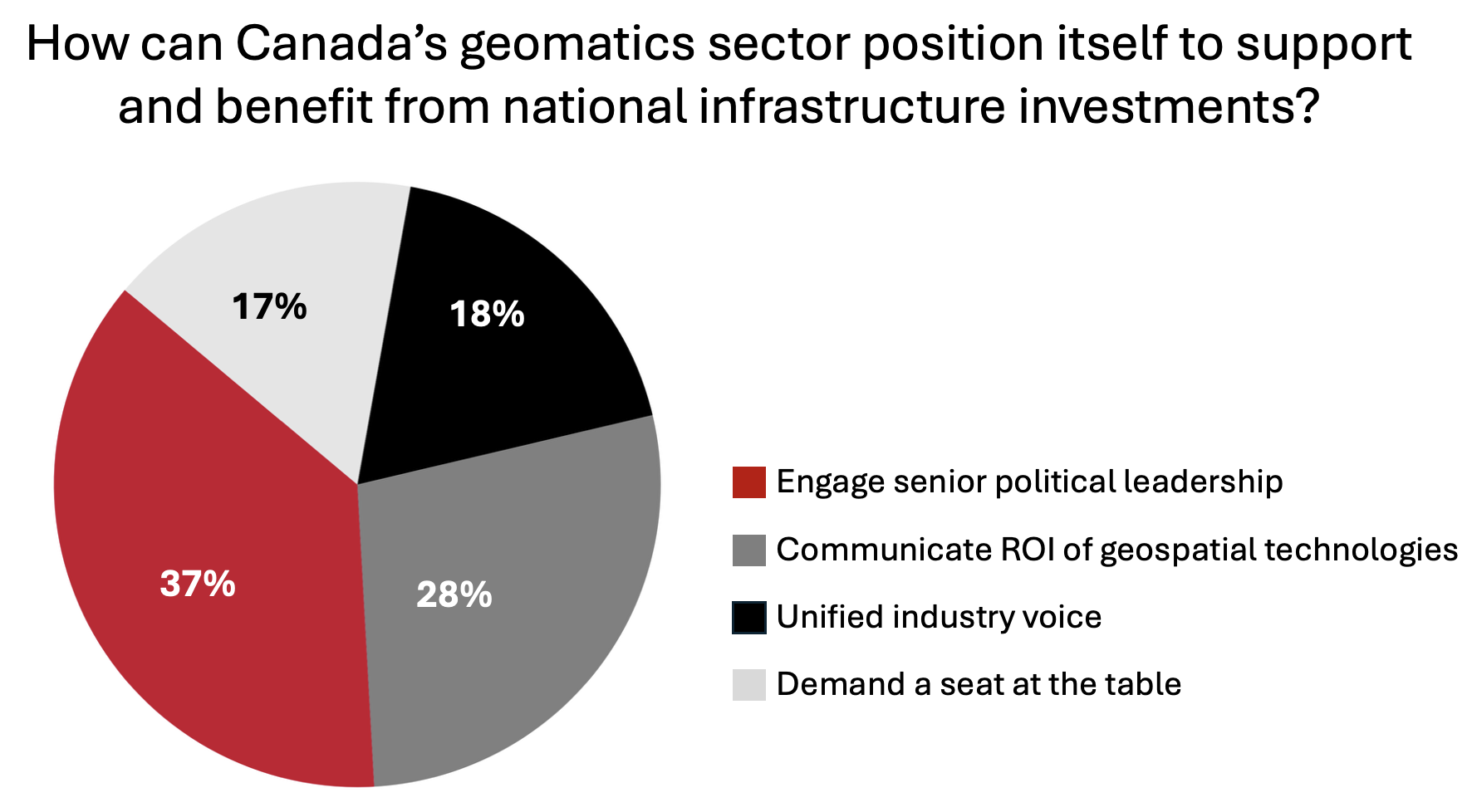 Takeaway: Respondents see visibility and advocacy — not just technical capability — as critical to ensuring geomatics plays a central role in Canada’s nation-building agenda.
Call for a national geospatial strategy
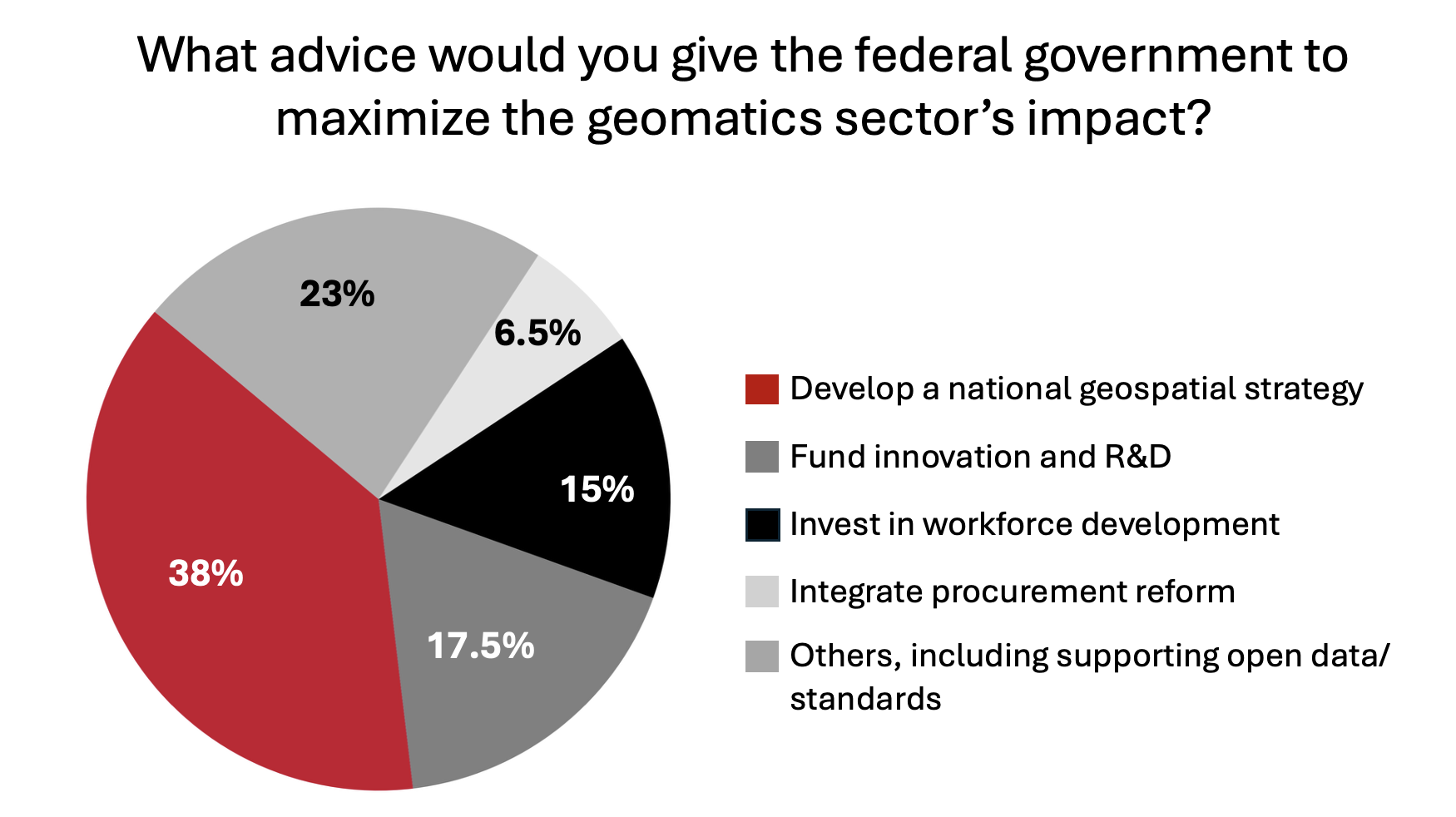
Asked what advice they would give the federal government to maximize the sector’s impact, the top response, selected by 38%, was to develop a national geospatial strategy. About 18% urged greater investment in R&D, while 15% prioritized workforce development. Only 6.5% pointed to procurement reform specifically, suggesting that respondents don’t see it as an isolated issue but rather as part of a larger ecosystem challenge that includes strategy, skills, and innovation.
 The fact that procurement is a significant issue was clear from responses to the next question — on system readiness — where only 8% believe Canada’s procurement systems are prepared for the scale and urgency of the upcoming infrastructure projects. One-third said the system is not ready, and another third said it is only partially ready in some sectors.
Takeaway: Respondents view procurement reform as one essential piece of a broader national framework — a foundation for success, but not the whole solution.
Procurement seen as biased toward foreign providers
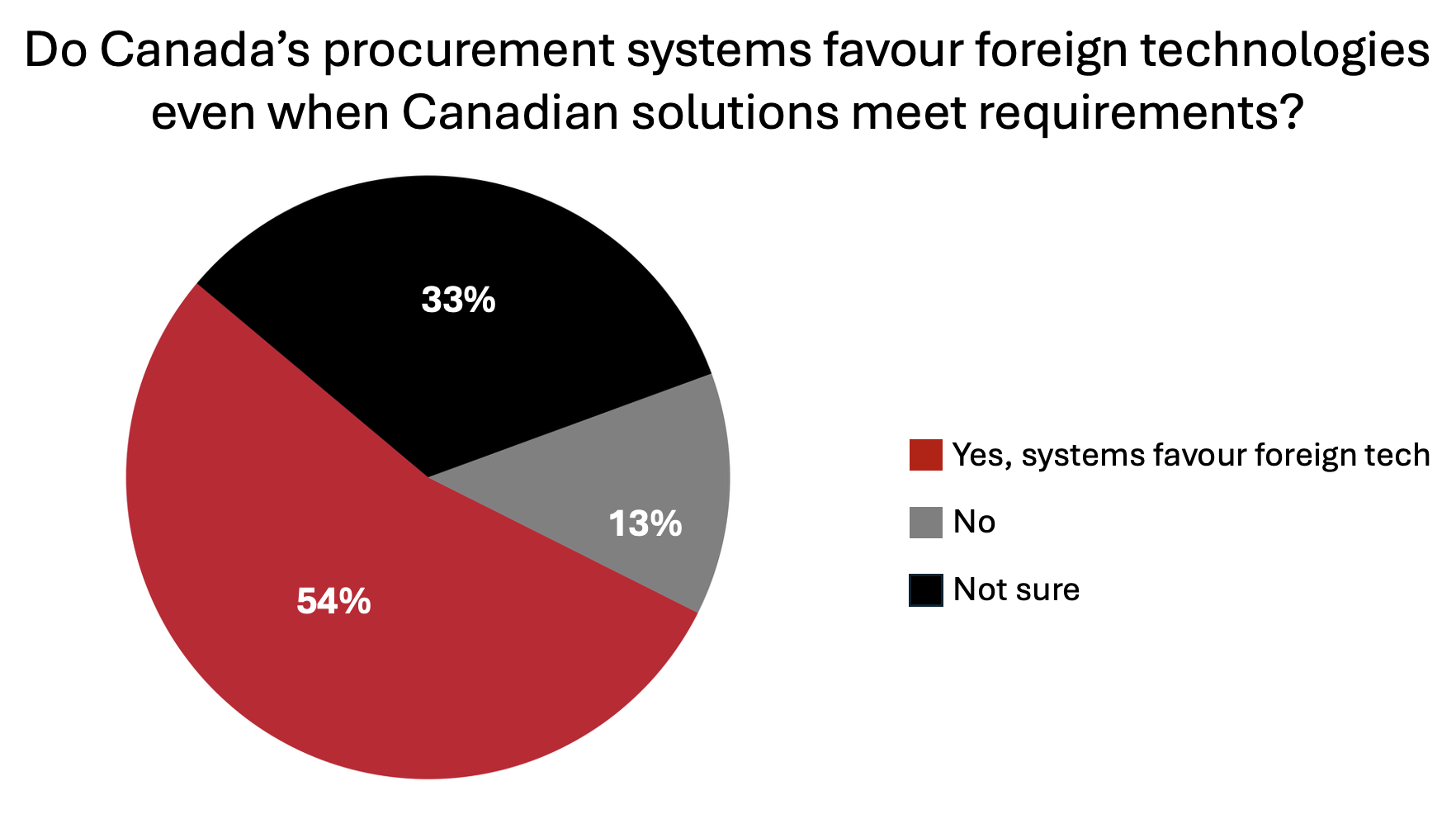
A majority of respondents believe Canadian innovation is being sidelined. More than 53% said the current procurement system favors foreign technologies even when Canadian alternatives meet or exceed requirements. Only 13% disagreed, while one-third were unsure.
 When asked why, the top reasons were a bureaucratic bias toward established foreign vendors (23%) and procurement processes too long or complex for SMEs (17.5%). Others cited a perceived lack of belief in Canadian technology or an assumption that domestic firms cannot scale. A large of respondents chose others which included risk aversion and focus on process over outcome.
Takeaway: Respondents see a confidence gap in how Canada evaluates its own innovation, and warn that outdated procurement practices risk reinforcing it.
Overwhelming support for Made-in-Canada solutions
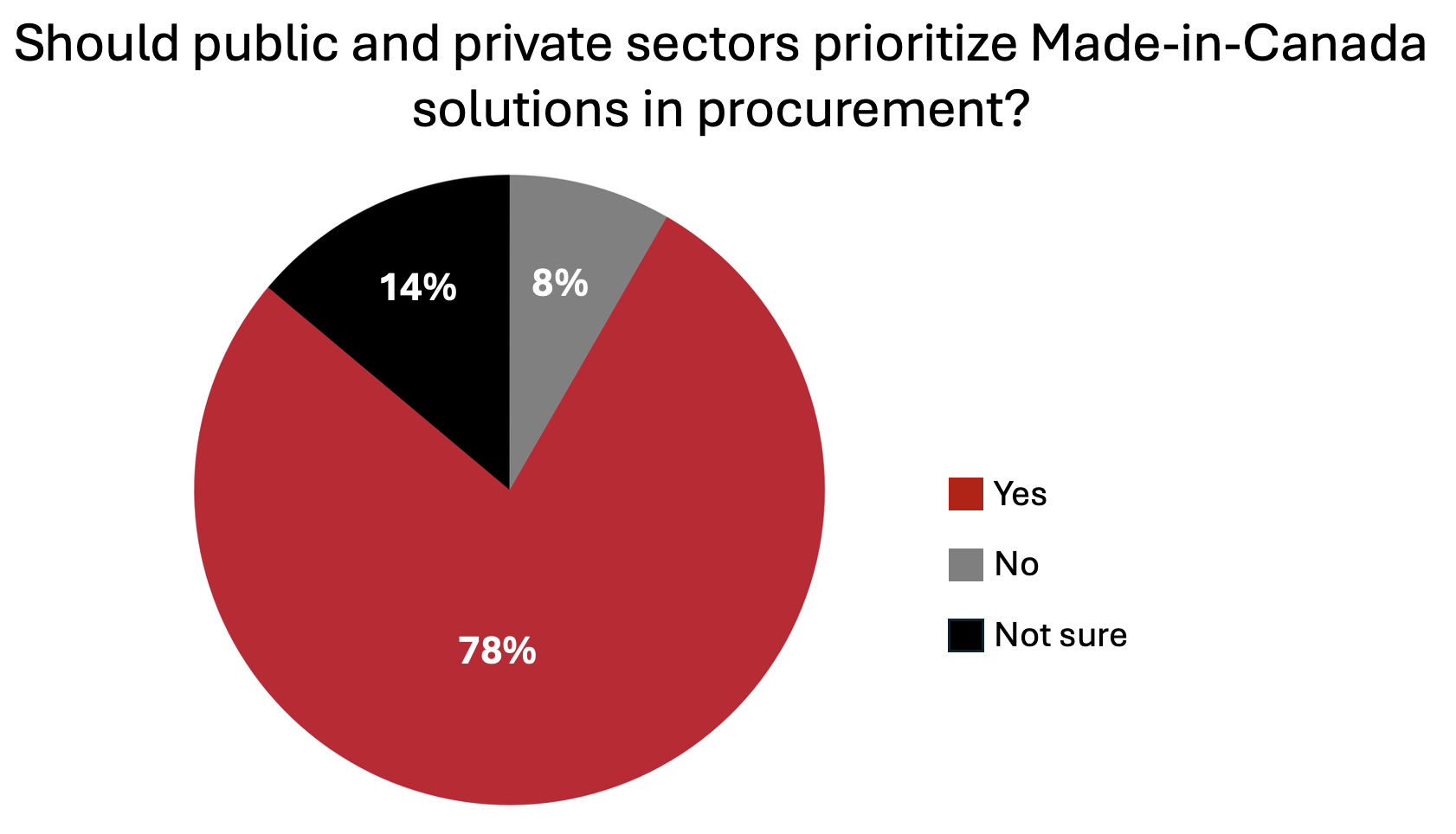
Support for domestic capability was nearly unanimous. 78% of respondents said public and private sectors should prioritize Made-in-Canada solutions in procurement, with fewer than 9% disagreeing.
 Respondents also linked procurement reform to faster innovation: 36% said an agile, innovation-friendly procurement system would most directly drive the growth of Canadian innovation, while another 22% pointed to economic security through buying Canadian. A significant percentage (20%) also cited faster deployment of innovative solutions as one of the reasons.
When asked what changes would best ensure accountability and fairness, the top answer was allowing more flexibility for pilot and proof-of-concept projects, with 31.5% favoring it. About the same number of people (22% and 21.5%) called for removing unnecessary administrative layers in decision-making, and simplifying contracting for smaller vendors
Takeaway: Together, these responses reinforce the broader call for the modernization of procurement systems that strengthen Canadian capacity, reward experimentation, and prioritize long-term value over lowest-bid compliance.
Buy Canadian, build sovereignty
Support for Made-in-Canada solutions echoed across much of the survey, reflecting a broad desire for procurement policies that strengthen domestic innovation and digital self-reliance.
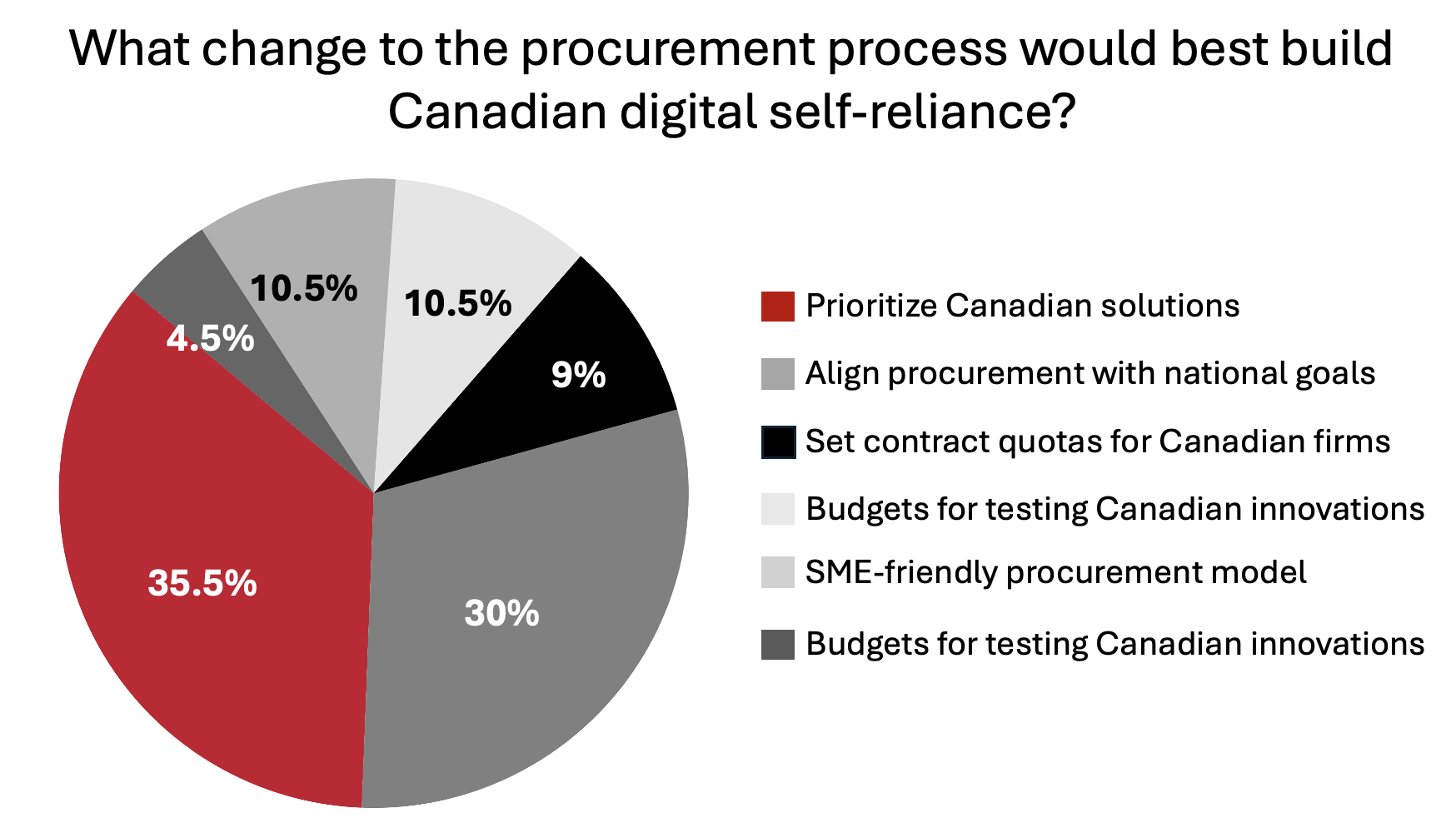
When asked how procurement could better support Canadian digital self-reliance, 35.5% responded that the government should prioritize Canadian-developed solutions when requirements are met, while 30% advocated for procurement to align with long-term national goals, such as resilience and sovereignty. Smaller shares advocated for contract quotas or models focused on SMEs.
 Respondents also identified practical steps for testing and scaling new technologies, with majority respondents supporting reserved budgets for Canadian innovation pilots and nearly half calling for better integration between innovation agencies and procurement units. Other common suggestions included smaller, regional pilots and simplified contracting.
Takeaway: Respondents view digital self-reliance as smart, forward-looking policy aligned with Canada’s innovation agenda, not protectionism.
Education and geo-literacy seen as critical enablers
Finally, when asked what single change they would make if they could “wave a magic wand”, one-third of respondents (33%) chose increasing geo-literacy among decision-makers. Another 25% each highlighted strengthening industry-government-academic partnerships and funding commercialization programs.
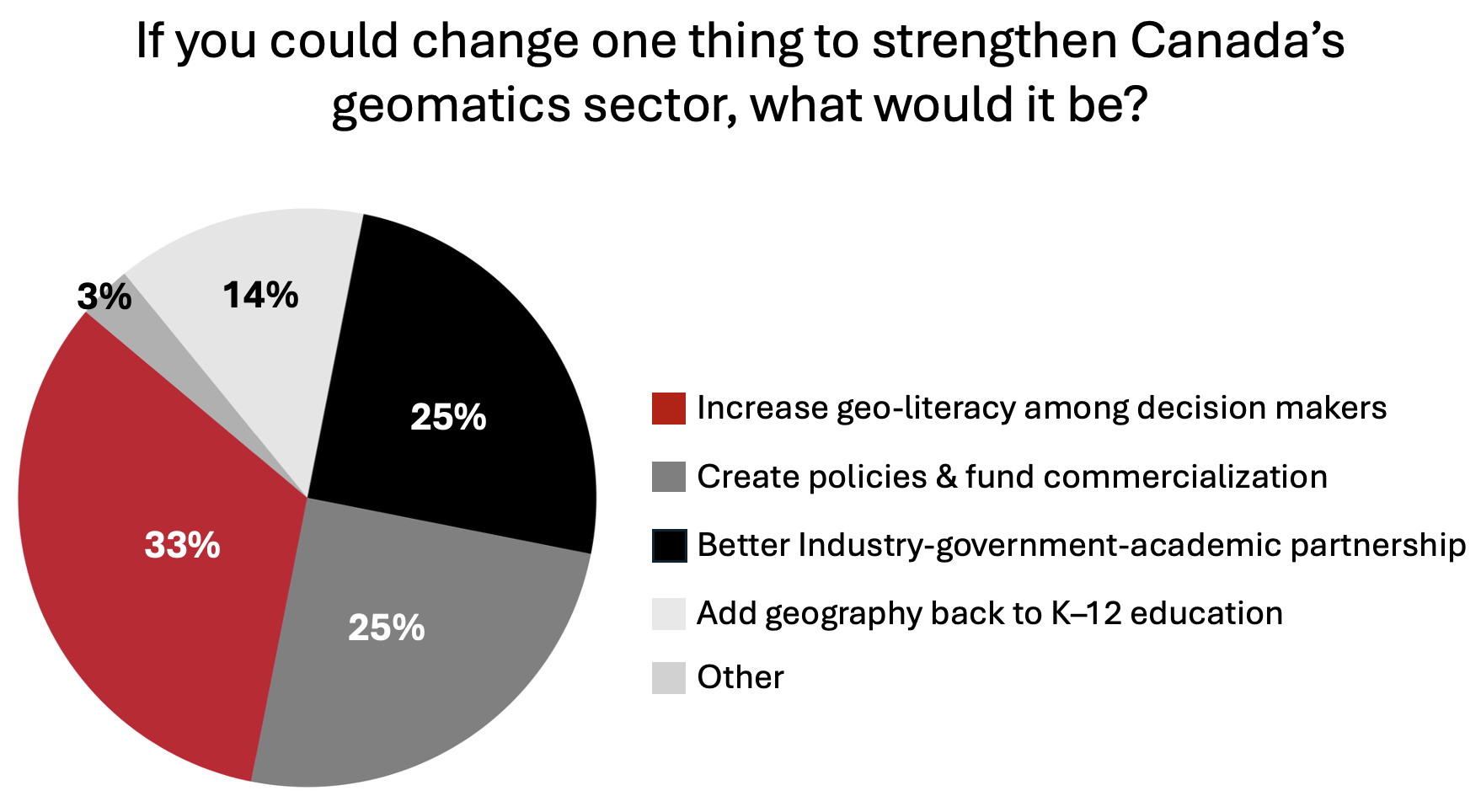 These answers show that awareness and understanding remain as crucial as policy change: without geo-literacy at the decision-making level, even the best reforms risk missing their mark.
The finding aligns closely with GoGeomatics’ parallel survey on education and workforce development, where respondents likewise cited visibility and classification issues as barriers to attracting new talent.
Takeaway: Respondents see geo-literacy as the missing link between policy ambition and implementation—the bridge that connects innovation, strategy, and public value.
A clear message for policymakers
The findings leave little room for doubt. Across government and industry alike, there is broad agreement that Canada’s procurement systems must evolve to match the country’s ambition. Respondents view reform not as an isolated fix, but as part of a broader national effort that links innovation, education, and sovereignty. Buy Canadian, build sovereignty.




Be the first to comment