
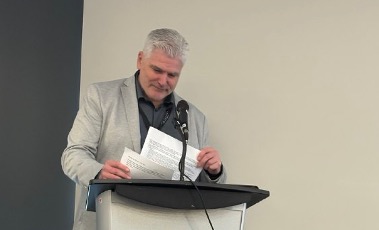
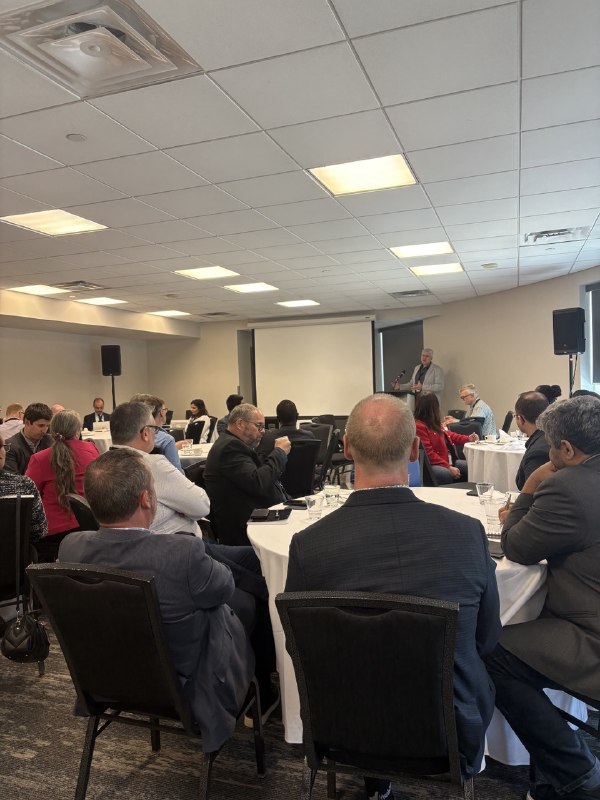
At GeoIgnite 2025 in Ottawa last week, Luc Vaillancourt (senior advisor and founder of BALIZ), delivered a compelling lunchtime discussion on the lingering divide between Quebec and the rest of Canada in the geospatial sector.
The concept of “two solitudes,” originally coined in a 1945 Canadian novel to describe the cultural and linguistic divide between English and French Canada, Vaillancourt explored how this historical tension continues to influence business, partnerships, and innovation in geomatics.
Beyond Technology: Culture and Language Still Matter
Vaillancourt, a French Québécois from Quebec City, emphasized that despite technological progress and national connectivity, the geospatial industry in Canada still suffers from communication silos rooted in language, culture, and outdated perceptions.
“It’s not about religion or economics anymore. it’s about language and cultural nuance,” he said, noting that many English-speaking firms still struggle to navigate Quebec’s unique business environment, while French-speaking companies often face difficulties when expanding nationally.
He proposed a practical and realistic solution: strategic partnerships.
Quebec-based firms can act as local representatives or resellers for larger Canadian or international organizations looking to access the Quebec market. This model, he noted from personal experience, has proven successful in the past and respects both linguistic accessibility and regional expertise.
Geomatics in a Comfort Zone
Vaillancourt added that the industry was overly focused on data acquisition. “We’re stuck in a comfort zone,” he said. “Too much emphasis is placed on satellites, LiDAR, and drones. But that’s only a third of the job.”
He broke down the lifecycle of geospatial data into three key phases:
- Acquisition – the hardware, sensors, and field data collection (which gets most of the attention and funding)
- Processing & Insight – turning raw data into meaningful information
- Diffusion & Findability – making the data accessible, discoverable, and usable by others
Vaillancourt emphasized that the geomatics field is underinvesting in the second and third phases, where the real value to communities, governments, and citizens emerges. He pointed to the lack of metadata, poor cataloging of layers, and low visibility of existing datasets as barriers to impact.
A Call for Self-Reflection and Better Marketing
Vaillancourt pointed out the geomatics community has struggled to market its value effectively. He suggested that the field’s lack of visibility may be due to weak storytelling, limited outreach, and an overemphasis on tools and technology rather than on the real-world outcomes they enable.
“If the public doesn’t know what we do, and if we can’t show the impact of the data we’ve already collected, how can we justify asking for more funding?”
He encouraged professionals to rethink how they communicate their work. whether in English or French and to adopt a more public-facing, inclusive approach that highlights how geospatial solutions help solve real-world problems.
Bridging the Solitudes
Vaillancourt’s talk ended on a hopeful note. He acknowledged that while language and regional divides still exist, they are not impossible to overcome. Through partnerships, cultural intelligence, and more intentional communication, Canada’s geospatial community can become more cohesive, impactful, and nationally aligned.
Just as the chef-curated lunch came to a close, his candid reflections and bold ideas added the perfect kick of spice to the day’s menu. The food may have satisfied the appetite, but Luc’s message left the audience with plenty to chew on. A call to communicate better, collaborate deeper, and rethink how we serve the geospatial community across Canada.
His presentation was not just about language. it was a broader call for deeper collaboration, meaningful innovation, and a more reflective geomatics culture across Canada. One where we measure success not by how much data we collect, but by how well we use it, share it, and make it matter.



Be the first to comment