
A recent report on the European State of the Climate issued by the Copernicus Climate Change Service and the World Meteorological Organization highlights that Europe experienced its warmest year on record in 2024, which was marked by severe and widespread climate extremes. A pronounced east-west climate divide led to record-breaking heatwaves and droughts in eastern Europe, while the west experienced intense storms and floods, resulting in at least 335 deaths and affecting over 400,000 people.

Maps showing a contrast in climate extremes between eastern and western Europe. Source: WMO
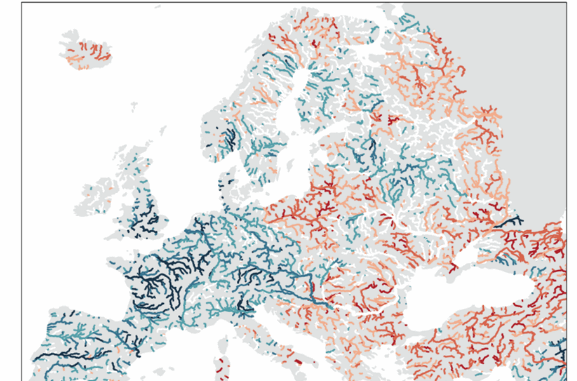
The summer of 2024 brought southeastern Europe’s longest heatwave on record, and glacier mass loss reached a new high. In western Europe, persistent rainfall caused major flooding, with 30% of Europe’s rivers exceeding flood alert levels. Wildfires, heat stress, and disrupted food production also underscored the growing risks of climate change.
 Anomalies and extremes in annual average river flow in 2024. Source: WMO
Progress in Renewable Energy and Climate Resilience
Despite these challenges, there were some positive developments. The EU recorded a record high of 45% of its electricity from renewable sources, reflecting progress in the green energy transition. Additionally, 51% of European cities now have climate adaptation plans, a critical step toward building resilience. The report emphasizes the urgent need for data-driven adaptation strategies and improved early warning systems to reduce vulnerability to extreme weather events.

European climate resilience and adaptation initiatives 2024. Source: WMO
Overall, the findings reinforce that Europe is warming faster than any other continent, making climate adaptation and mitigation efforts increasingly urgent. Policymakers and scientists are calling for immediate action to strengthen infrastructure, protect ecosystems, and support vulnerable populations as climate extremes become the new normal. To find the report and see the original article, click here.




Be the first to comment