
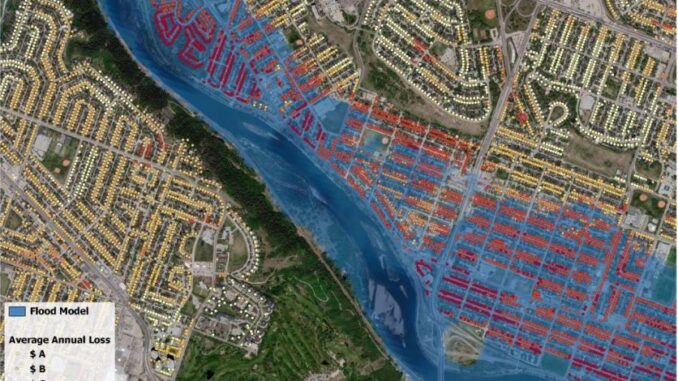
In June 2025, the Government of Canada announced a $6.8 million investment in 20 new flood-mapping and adaptation projects under the Flood Hazard Identification and Mapping Program (FHIMP). These initiatives promise to revolutionize how we understand and mitigate flood risk using powerful new technologies like AI-enhanced hydrodynamic models, remote sensing, and 3D mapping. But how do these tools translate into resilience on the ground?
AI-Powered Flood Modeling
Flood modeling has historically been limited by computational demands and the challenge of balancing speed with spatial accuracy. However, recent advancements have significantly changed the game:
- The Geospatially Augmented Standard Step (GASS) Method: This hybrid approach combines dynamic Height Above Nearest Drainage (HAND) techniques with one-dimensional hydraulic models. It offers near-2D simulation accuracy while operating up to 10,000 times faster than conventional 2D hydrodynamic models. By significantly reducing computation time, GASS enables faster, scalable, and cost-effective flood risk analysis, even for regions with limited technical infrastructure.
- Deep Learning Forecasts with DL Hydro-FRAN: DL Hydro-FRAN uses deep neural networks trained to simulate flood inundation and depth. The model has demonstrated median depth errors of less than 2 mm and delivers results 30–70 times faster than traditional simulations. Its ability to generalize across regions with minimal tuning makes it a powerful tool for real-time disaster response planning.
- 3D Deep Learning for Flood Mapping: A 2025 survey of 3D deep learning techniques reveals how combining satellite imagery, digital elevation models (DEMs), and flood history allows for accurate modeling of both water extent and depth. These models are increasingly being used in urban planning, insurance risk assessments, and infrastructure resilience planning.
ALSO READ:
- The Crucial Role of Geospatial Data and AI in Building a National Flood Strategy for Canada
- How FHIMP is Strengthening Canada’s Flood Resilience Amid Rising Climate Threats
Data-Driven Insights at City and National Levels
The true potential of these technologies lies in their deployment across varied terrains and urban systems:
- CaMa-Flood for National Risk Mapping: This global-scale hydrodynamic model has been used to produce 1:100 and 1:200-year flood risk maps for major Canadian cities like Toronto, Montreal, and Edmonton. It integrates satellite altimetry, river discharge data, and land-use layers to simulate how water moves across vast river basins. These maps are instrumental in visualizing the rising exposure levels driven by climate change and rapid urbanization.
- Vancouver’s Integrated Flood Scenarios: The City of Vancouver has pioneered a high-resolution (5-meter) integrated flood model that combines fluvial (riverine), pluvial (rainfall), and coastal surge hazards. The model overlays historical flood records with projected climate scenarios, offering a more dynamic understanding of risk. This has directly informed updates to zoning laws, green infrastructure investments, and stormwater system upgrades.
Why Are We Still at Risk?
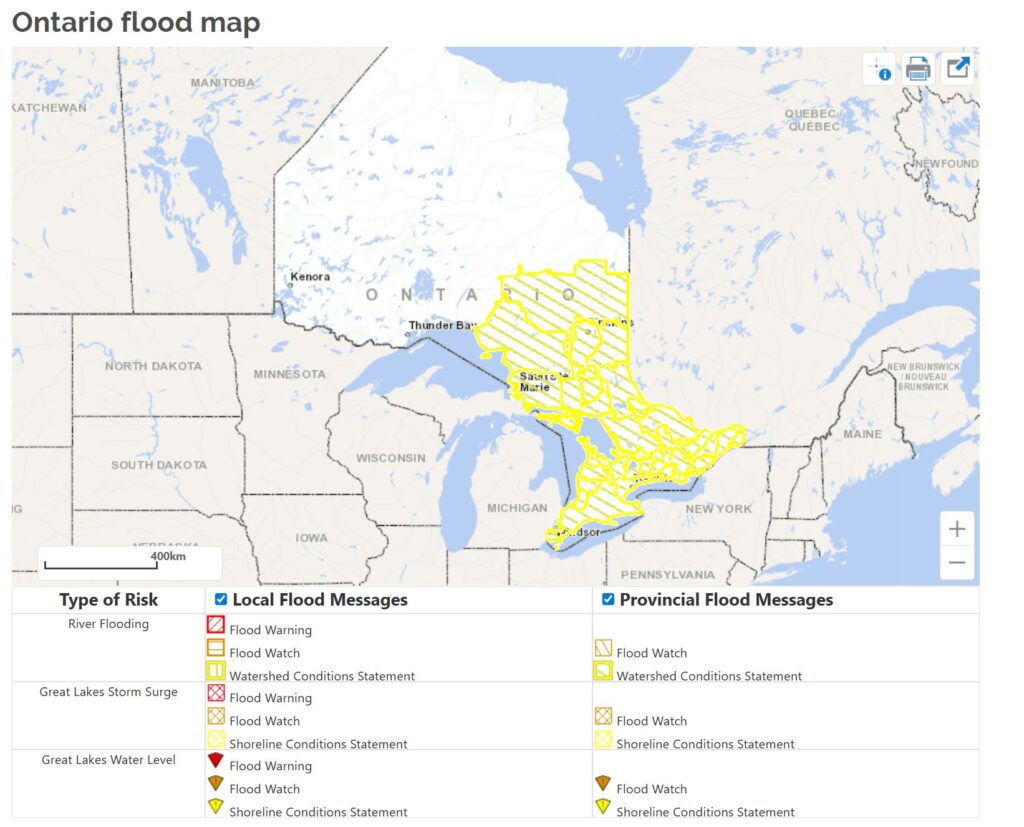
Despite the sophistication of these tools, Canada’s flood preparedness remains uneven. As highlighted by a CBC feature recently, many communities still lack access to updated flood hazard maps. Even where maps exist, barriers like outdated infrastructure, zoning loopholes, and inconsistent regulation leave cities and towns exposed.
Furthermore, while some regions embed climate projections into planning, others rely on historic flood patterns, leaving them blind to future flood extremes. The result? Critical decisions about development, insurance, and emergency response are made without the most current data.
Canada’s FHIMP Response
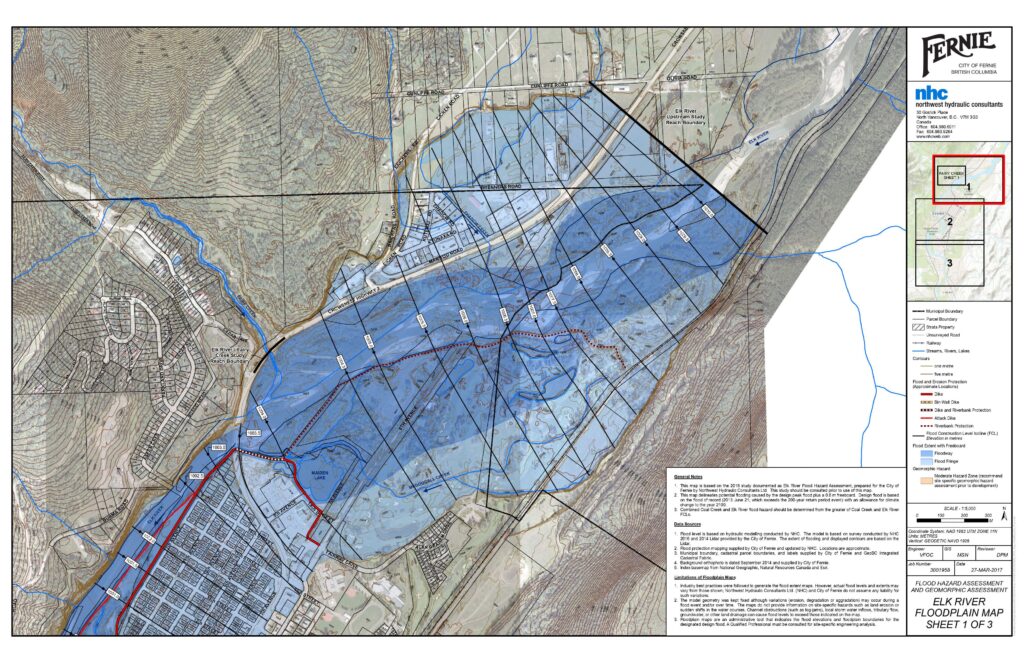
Canada’s Flood Hazard Identification and Mapping Program (FHIMP) aims to close these gaps. With over $164 million committed between 2024–2028, FHIMP funds everything from advanced modeling to Indigenous engagement strategies. The latest funding round, announced in June 2025, supports projects that integrate AI, regional modeling, and climate adaptation tools.
These investments support not only map creation, but also public outreach, data sharing portals, and emergency preparedness planning. FHIMP projects are helping communities visualize risk more clearly and act more decisively.
National Standards & Lidar Data Quality
In summer 2025, the Canada Centre for Mapping and Earth Observation (CCMEO), in collaboration with the Standards Council of Canada (SCC) and CSA Group, released two new National Standards of Canada to support the next generation of high-quality flood hazard mapping.
Lidar expert Guillaume Légaré-Couture explained that these standards formalize years of effort to bring consistency and technical excellence to airborne lidar data acquisition. The newly published standards include:
- CSA W229.1:25 – Airborne Lidar Data Acquisition (English, French)
- A complementary geomatics standard for flood mapping, covering spatial data integration, coordinate systems, and hydrologic-hydraulic modeling.
“It addresses complex considerations related to lidar data acquisition, processing, and validation… including recommendations for specific applications, such as flood mapping and forest inventories.” Guillaume Légaré-Couture, NRCan
NRCan emphasized that these standards, derived from the Federal Flood Mapping Guidelines, offer technical guidance on how to enhance accuracy, consistency, and efficiency.
Together, these tools provide a stronger backbone for FHIMP and provincial/municipal flood initiatives, helping ensure that models are built on precise, interoperable, and climate-resilient data.
Insights from Experts
At GeoIgnite 2025, Maxim Fortin, a federal geomatics expert involved in FHIMP, reminded attendees that the success of flood mapping hinges not just on technology, but on governance:
“Producing maps isn’t the end. We need those maps to guide policies, development, and emergency preparedness.”
Fortin’s presentation emphasized that effective mapping requires multidisciplinary collaboration, equity-centered design, and continuous engagement especially with Indigenous communities and local governments.
Another GoGeomatics interview, “How FHIMP Is Strengthening Canada’s Flood Resilience Amid Rising Climate Threats,” offers additional expert commentary. Senior Policy Analyst Marie‑Josée Valiquette (NRCan) underscores that FHIMP’s success hinges on a national-scale strategy combining AI, regional modeling, and Indigenous knowledge integration. She notes:
“FHIMP is not only about hazard data, it’s about equipping communities to act.”
The Way Forward
To turn smart maps into safer communities, Canada’s flood mapping efforts must:
- Embed climate change modeling into all new flood hazard maps.
- Fund implementation, not just map production including zoning reforms, public education, and infrastructure upgrades.
- Expand Indigenous leadership and knowledge integration, ensuring maps reflect local realities.
- Create consistent update cycles for flood maps and modeling tools.
- Enable open access to flood data for communities, researchers, and emergency responders.
The technology is here. The challenge now is to ensure that maps don’t sit on shelves. They must become tools for everyday decision-making, community empowerment, and future-proof planning.

Be the first to comment