

1.) Tcarta advances coastal safety with satellite data
2.) Why there’s a rush of African Satellite Launches?
3.) Geospatial Tech Improves Outdoor Fitness Progression
4.) The Impacts of Climate Change on Coastal Communities
5.) U.S. investigating apparent leak of ‘top secret’ U.S. document about Israel
Tcarta advances coastal safety with satellite data
Tcarta Marine is a firm based in Denver, Colorado providing satellite derived bathymetric (SDB) data for nearshore coastal areas. Outside of major shipping lanes, there is often a lack of bathymetric data, which can prove dangerous for vessels. By measuring the reflection of light from the ocean floor using SDB, Tcarta can quickly capture data, including areas that are difficult to capture using boats or planes. Tcarta has mapped roughly one third of the ocean’s coastlines – providing standard and custom packages of information up to 1m in resolution for coastlines in areas such as the South China Sea and the Mediterranean Sea. Read more here

Why there’s a rush of African Satellite Launches?
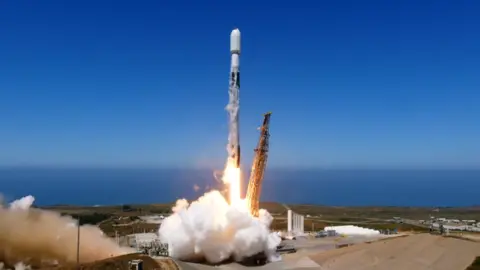
There is an increasing demand for satellites in African nations. Currently, there are 17 African countries with a total of 60 satellites in orbit – with a further 80 in development on the continent. While Africans possess the technical skills necessary for satellite technology, many countries still must rely on foreign technology and specialized expertise to complete the full cycle of satellite development. It is important for Africans to be able to both develop and launch their own satellites, as it allows them to manage local priorities and the impacts of climate change. Additionally, due to the close proximity of many countries to the equator and the associated savings, Africa is a prime destination for future satellite launches. Read more here:
Geospatial Tech Improves Outdoor Fitness Progression
Geospatial technology can serve to make outdoor activities easier and more accessible. Through the combination of geospatial information and health data, fitness technology can optimize workout routines. By incorporating geospatial data, it can be easier to locate optimal exercise areas and by including data such as crime and lighting statistics, it can make the would-be individual feel safer exercising outside. In the future, there may be further advances in geospatial and geospatial adjacent technology such as AI, virtual reality and crowd-sourced data which can further benefit fitness technology. Read more here

The Impacts of Climate Change on Coastal Communities
Dr. Will Kochititzky is an assistant professor at the University of New England studying the impacts of climate change on the Camp Ellis Jetty in Saco, Maine. Dr. Kochititzky, alongside a team of students, utilizes tools such as lidar, photogrammetry and the GIS software Global Mapper to understand the state of the coastline, which was devastated by a large storm last year. The storm destroyed around 40 homes in the community and torn away roughly 50% of the nearby sand dunes. The government is planning to build a spur jetty to help reduce damage to the coast – it is important to understand the state of coastal areas to manage the impacts of climate change. Read more here:

U.S. investigating apparent leak of ‘top secret’ U.S. document about Israel
The U.S. government has recently announced the apparent leak of two ‘Top Secret’ documents relating to a possible Israeli missile strike on Iran. Among the document leaked was a document titled “Israel: Air Force Continues Preparations for Strike on Iran and Conducts a Second Large-Force Employment Exercise 15-16 October 2024”, which was created by the National Geospatial Intelligence Agency – the American intelligence agency responsible for analyzing information such as satellite imagery. Read more here




Be the first to comment