
In this blog last month, Geoff introduced the Canadian Underground Infrastructure Register (CUIR) initiative to his readers and outlined the basic intent and reasoning for the CUIR (rhymes with “cure”) initiative and other similar initiatives underway or already in service in jurisdictions outside of North America. Although the intent of each of these initiatives is essentially the same, to reduce the risk and cost associated with working on or near buried infrastructure by providing better information to the stakeholders, each one has its own set of variables that will impact or have impacted the functional design of the delivered solution.
This article intends to update the CUIR Team’s progress and to provide details on the proposed process and its similarities with aspects of other current international initiatives including how the data is managed, and how system access and database security concerns are addressed.
The CUIR project started in earnest at the beginning of the year, and we currently have over forty individuals on the team representing various stakeholder groups at the Federal, Provincial, and Municipal levels, non-government organizations, and various industries and service providers. Our primary focus areas are continued stakeholder identification and engagement, research activities related to like initiatives, business requirements gathering, and preliminary architectural and process design work.
Focus area findings and opportunities
The project team is growing each month, however, we still need to ensure that every group in the stakeholder community is represented. If you work for a firm with underground assets and you are involved in damage prevention or other EHS activities in your company, we would like to hear from you so that we can ensure that your industry group is adequately represented in the project.
As mentioned above, there are like initiatives either underway or deployed in other countries. We are reviewing each of these initiatives with the view of engaging with them to work together to exchange design ideas and functionality, and to support each other by working on elements that are common in nature such as the data exchange agreements, formats, and processes.
For example, the National Underground Asset Register project in the UK, the Cable and Pipeline Information Portal (KLIP) in Flanders (Belgium), and others are using the Open Geospatial Organization’s (OGC) Model for Underground Data Definition and Integration (MUDDI) as the basis for the integration of datasets from different models. The OGC MUDDI is the model that we propose to use for the exchange of data in the CUIR initiative. 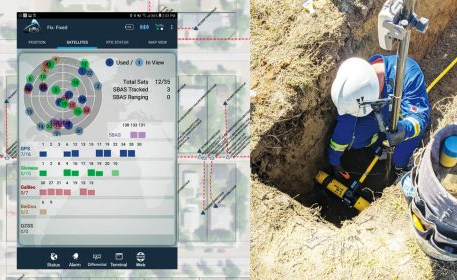
We intend to provide registered users the asset location information, but due to data security concerns, we will not be providing users access to a separate database or access to a system of record. Very much like the Belgian KLIP initiative, we will employ a process where the registered user draws the area of interest on a map to initiate the information request. Below is an excerpt from the article “Nobody Knows What Lies Beneath New York City” written by Bloomberg’s Greg Milner, and provided to us by Alan Leidner currently working on the New York University’s Underground Resilience Measures (UNUM) project in New York City.
Not just anyone can gain access to the Belgian map. A contractor who wishes to dig underground must submit the coordinates of the work area via a computer portal called KLIP. The request goes out to all stakeholders with infrastructure running beneath the area, which is required to turn over their data. The information is then synthesized and sent to the requester as a single document.
“We have a decentralized architecture concept,” says Jef Daems, a KLIP official. “All network utility companies have their master database, and it is only a very small part of the network that is provided to the contractor.”
State and Provincial One Call Centers
We are hoping to engage with the One Call Centers and have them become the backbone of the system and employ their “Click before you dig” process to create a ticket showing a polygon of the area of interest and when each affected member receives the notification, they would use the extents of the polygon as a spatial filter to identify the infrastructure, if any, that they have in the area identified in the ticket. As each utility owner sends the requested data, much like the NUAR and KLIP systems, the information from each asset owner would be imported as a layer and conflated onto a common base map that the requestor can then view by selecting the One Call ticket on a computer or mobile device as a set of layers that can be switched on or off.
For Designers, using this information will provide them with a basic appreciation of the location of existing buried infrastructure to help them make better design decisions. Capturing accurate infrastructure location data to ASCE 38:22 Standards during subsequent pre-construction site investigation in support of the design work and providing it back to the asset owners will provide Owner’s a great opportunity to improve the accuracy of their records at virtually no cost. 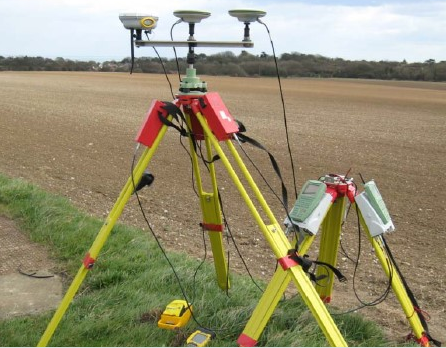
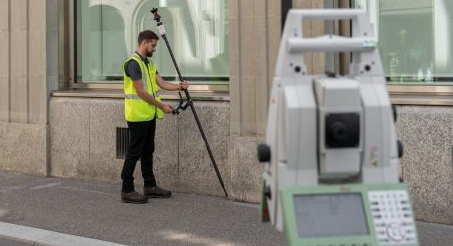
For Locate Service Providers, receiving a locate request containing a showing the extent of the excavation site, and the location of each utility by the owner will allow them to ensure that during the mark-outs using stakes or paint, nothing is missed. By capturing the precise location of each infrastructure item electronically using GPS, the locate technician will also be able to provide an “as-found” file back to each asset owner to improve the accuracy of their records at little to no additional cost.
In both of the above scenarios, the information captured electronically prior to the start of construction can be made available to the contractor as a map showing the work site and an overlay of the various layers depicting the existing utilities. The provision of an electronic map to the contractor showing the location of each facility on the work site will improve the situational awareness and safety of personnel. As Geoff mentioned in a post last August, a contractor on a Colorado DOT Highways project estimated that the ability of their excavation crews to see an electronic map showing the accurate location and nature of buried facilities on a job site has translated into an over 90% reduction in the number of lines strikes, cost of damages, schedule delays, and risk of injury to personnel. Every project that involves soil disturbance not only presents an element of risk for excavators, but also provides an opportunity for asset owners to benefit from that work in the form of data gathered that can be utilized to improve the records in their database.
We continue to reach out to other like initiatives underway to engage with them and see if there are opportunities to collaborate to learn from, and support, each other.

Submitted by: SteveSlusarenko,Process Design Consultant
“I am working with some like-minded individuals that are proposing a major improvement to the damage prevention process here in Canada. Our intent is to virtually eliminate line strikes on buried infrastructure during any type of excavation or other ground breaking activity.

Be the first to comment