
At the SPAR3D 2017 conference in Houston, one of the interesting questions posed to a panel comprised of Greg Bentley (CEO of Bentley), Burkhard Boeckem (CTO of Hexagon Geosystems), and Shabtay Negry (Senior VP at Mantis Vision) is whether point clouds, whether from digital photography or LiDAR, will effectively disappear, being replaced by meshes for most reality modeling applications. Meshes are mathematical constructs, typically 3D triangular networks, that are smaller and much easier to manipulate than point clouds, which are typically huge and a challenge to edit.
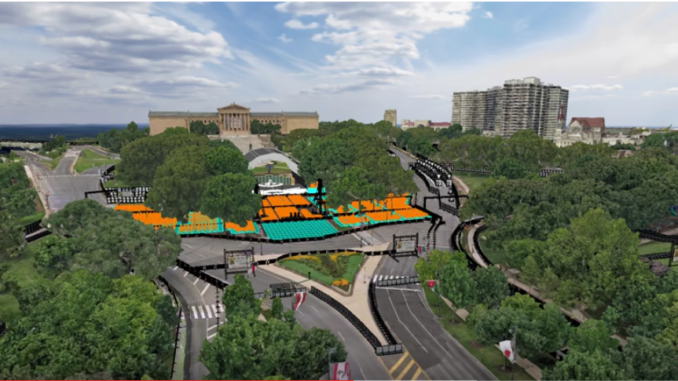
I blogged previously about a digital model comprised of meshes of downtown Philadelphia that was used to orchestrate and secure the Papal visit. All the data was collected as photographs which were then used to create a single reality mesh using Bentley ContextCapture. At SPAR3D there are presentations on two other projects which used a similar approach to create models of the city of Helsinki and the Cologne Cathedral.
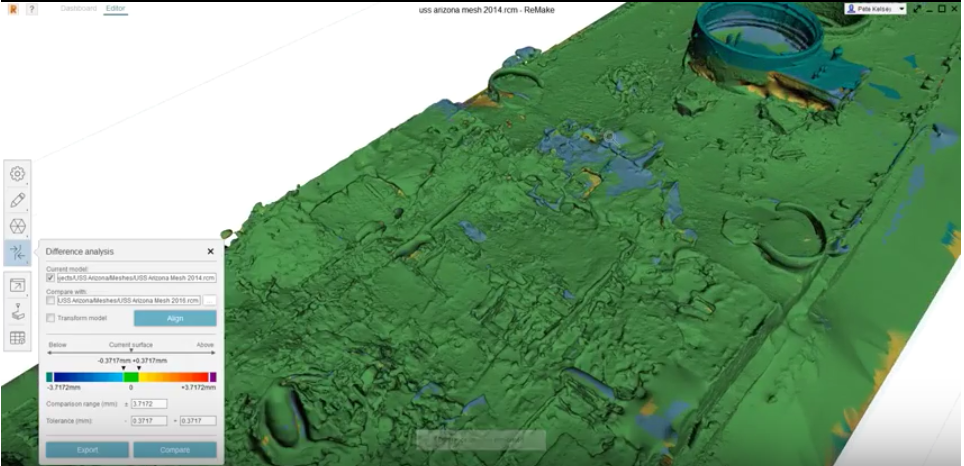 Another fascinating example is the USS Arizona digital project which combined underwater lidar, sonar, aerial imaging, and existing photography and surveys to produce a survey-grade 3D model of the USS Arizona in the form of a mesh using Autodesk Remake. Surveys were conducted in 2014 and 2016. Just recently the two digital mesh models of the ship were compared to create a difference mesh to show areas where there has been change in the two years since 2014.
At SPAR3D there was a consensus among the panelists that meshes are replacing point clouds for most applications. Point clouds are just too big and have too little intelligence. They will remain as an intermediate data type because most scanners generate point clouds. Replacing point clouds for many applications meshes will grow in importance in the future. But realizing their full potential will require interactive, editable meshes that allow small bits to be changed or replaced without having to regenerate the entire mesh (which is often the case with triangulated surfaces). Easy to use analytic tools like those used to create the difference map of the Arizona will also be required. The panelists thought that with the appropriate edit and analytic tools people will be able to manipulate surfaces easily and may not even be aware of what the form of the underlying data structures is. Smaller files will also make cloud processing easier because in the future huge point cloud files won’t have to be uploaded to the cloud.

Be the first to comment