
In November, 2012 Navigant Research released a report on building optimization and commissioning services in which it estimated that the global market for these services amounted to $2.2 billion annually in 2012. Navigant predicted that the market would double to $4.4 billion by 2020.
I have blogged several times about the growing importance of energy performance modeling based on BIM for new buildings or from scan to BIM models for existing buildings. Navigant Research has just released a new report, Building Optimization and Commissioning Services, that updates the previous estimates and suggests that the market for these services (which include energy performance analysis) is increasing more rapidly than the initial report from Navigant suggested.
Building commissioning services
Buildings are becoming more complicated to build, maintain and operate. Navigant points out that the actual performance of the building is often poorer than was intended during design. Building optimization and commissioning services, which were developed in the United States and United Kingdom in the 1960s and 1970s as a quality assurance measure for new buildings, are now being used as a tool to ensure operational and energy efficiency. According to Navigant commissioning has grown rapidly driven by the wide spread adoption of green building certification programs over the past decade as well as by government regulations and incentives. In addition owners are beginning to realize that “green building” practices can actually generate substantial savings during the operations and maintenance phase of a building.
The Navigant report focuses on three types of commissioning services;
- Initial commissioning – This happens as part of handover over a new building and focuses on the building’s actual performance compared to what was intended in the design and constrcution phases.
- Retrocommissioning- This applies to existing buildings. It targets optimization of heating, ventilation, and air conditioning (HVAC), lighting, and other mechanical or electrical systems to identify areas of investment to improve the building’s performance.
- Monitoring-based commissioning – This is a process that was developed by the Energy Systems Laboratory at Texas A&M University. It tracks the actual performance of an existing building to ensure that performance goals are being me and to identify new areas for investment to improve building performance.
Market drivers
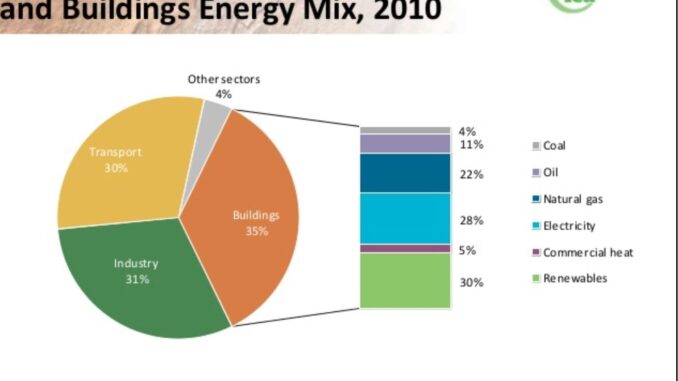
The market driver for these building optimization and commissioning services is the fact that in many parts of the world 40% of energy is consumed by buildings. In the U.S. 70 % of electric power demand is due to buildings. Currently the primary motivation for energy performance modeling are aggressive building codes that push energy efficiency, for example, the 2013 California Green Building Standards Code (Title 24). Other motivations are customer driven certification such as LEED and other “green” certification programs and financial incentives from local governments and power utilities to reduce energy consumption and peak load.
Measures aimed at improving the efficiency of buildings have been introduced in Europe, the U.S. and Japan. A major area of focus in the EU is “nearly zero energy” buildings. For new buildings, the European Commission has mandated 2020/2021 as the deadline when all new buildings will have to be designed to be “nearly zero energy”. For public buildings the deadline is even sooner, by 2018/2019. The Government of Japan put forward its “zero emissions buildings” target in April, 2009. The announced objective mandates that all new public buildings will be “zero emissions” by 2030. The U.S. Energy Independence and Security Act of 2007 (EISA 2007) requires that by 2030 all new Federal facilities must be “zero net energy” (ZNE) buildings. In 2007, the California Public Utilities Commission (CPUC) adopted aggressive targets for ZNE – all new residential construction in California to be zero net energy by 2020, all new commercial construction in California to be zero net energy by 2030, and 50% of existing commercial buildings will be retrofit to ZNE by 2030. According to a report from Navigant Research, global ZEB revenue is expected to grow from $629.3 million in 2014 to $1.4 trillion by 2035.
Technology drivers
Navigant says that increased use of monitoring-based commissioning, integration into building information
modeling (BIM), and cloud-based organization and distribution of commissioning documents have the potential to improve both the commissioning process and building efficiency. But according to Navigant the industry has not yet made adoption of these technologies a priority. In contrast the lower costs of data loggers and control equipment has provided the most important technological impact on the market.
 Market forecast
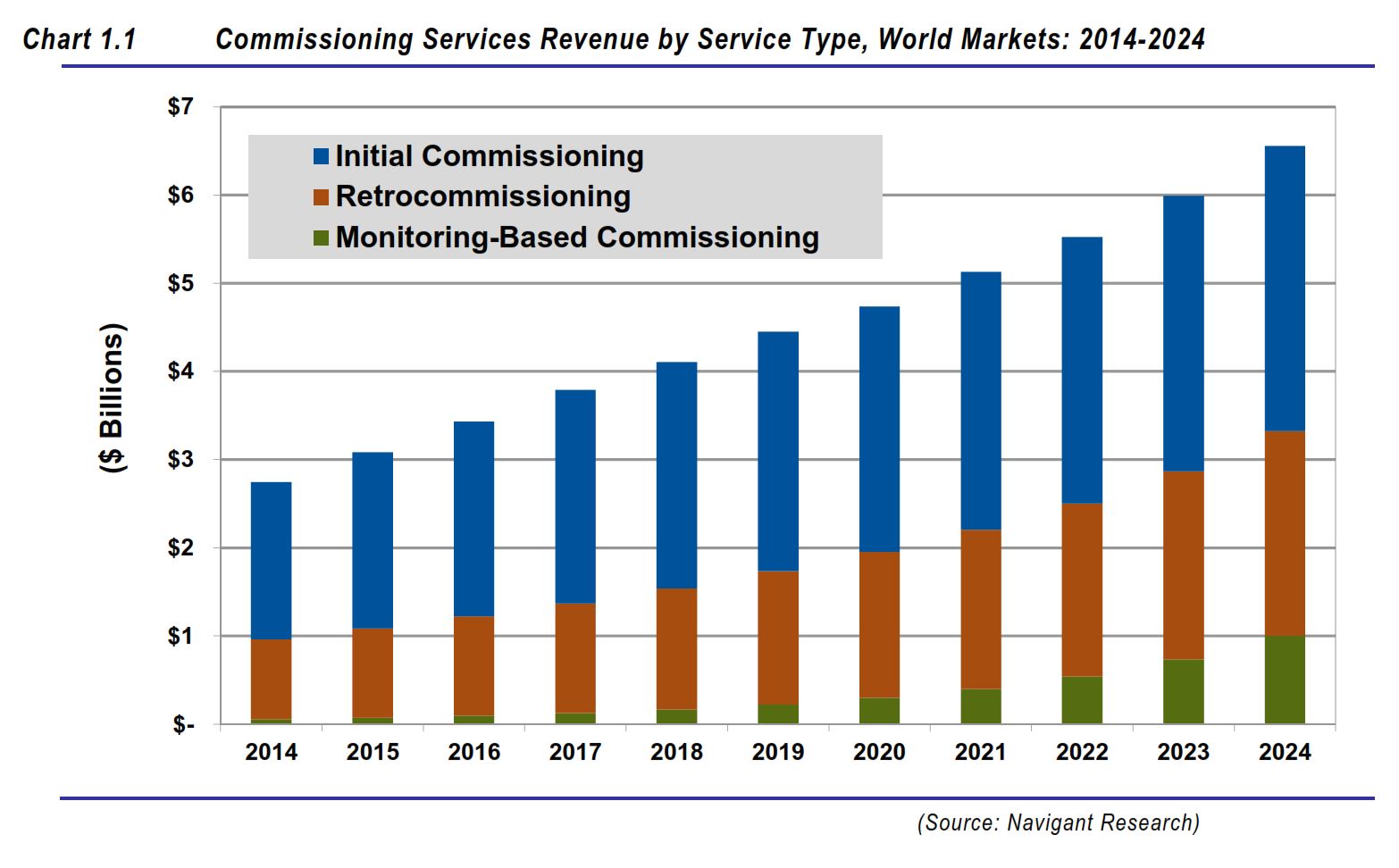
Navigant estimates that global revenue in 2014 amounted to about $2.7 billion, of which the majority of the revenue went to initial commissioning. It projects that the market will grow to about $4.7 billion in 2020 (compared to an estimate of $4.4 billion in the earlier Navigant report), and about $6.6 billion in 2024. It expects that revenue for building optimization and commissioning services will grow at a compound annual growth rate (CAGR) of 9.1% from 2014 to 2024.
Navigant predicts that retrocommissioning presents a large market potential over the forecast period because existing buildings are generally not very efficient and because the stock of existing buildings is so much larger than the new buildings that will be built in the next decade. In addition there are new regulatory requirements. Navigant mentions New York’s Local Law 87 and California’s CALGreen.
Currently monitoring-based commissioning is a smalll, niche market, because there are “few building owners with enough knowledge to demand it.” Navigant expects that technological improvements in building automation systems and building energy management systems will drive more demand for this type of performance monitoring and improvement so that by 2024 revenue will exceed $1 billion.

Be the first to comment