
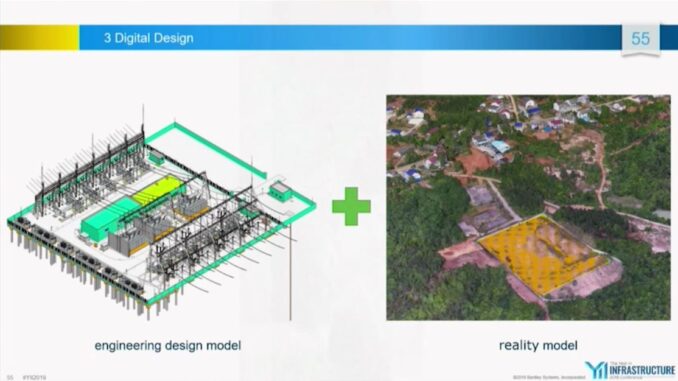
Hubei Electric Engineering Corporation (HEEC) was this year’s winner of the Bentley Year in Infrastructure Communications and Utilities award. One of the key objectives of the ground-breaking CNY 120 million (US$16.8 million) Miluo Western 220kV substation project was to reuse the design BIM model and data during construction and to provide a virtual reality BIM model to the owner on completion of the project to improve operations and maintenance procedures. As a result of the application of digital technology including reality modeling using UAVs, full life-cycle building information modeling (BIM), integrated BIM and geospatial, construction monitoring, and construction simulation, construction was completed 30 days ahead of schedule saving CNY 6.3 million (US$ 895,000).
Hubei Electric Engineering Corporation (HEEC) began applying 3D design to projects beginning in 2013. In 2017 the State Grid Corp began to promote 3D design and held a competition to select the best design companies to carry out 3D demonstration projects. HEEC came in first in this competition and was awarded the Miluo Western 220kV substation project. In addition 3D design standards for China’s electric power industry had been developed and HEEC was a leading contributor to six of these standards. On this project HEEC strictly implemented these standards during design.
The Miluo Western 220kV substation supplies power to 160,000 customers in a 16 km2 area. The total investment in the 10 month project was CNY 120 million ($16.8 million).
Digital technology including reality modeling using UAVs, building information modeling (BIM), integrated BIM+geospatial, construction monitoring, and construction simulation, enabled collaboration between site preparation, mechanical design, electrical design, protection, and communications design teams. The challenges that HEEC targeted on this project were several.
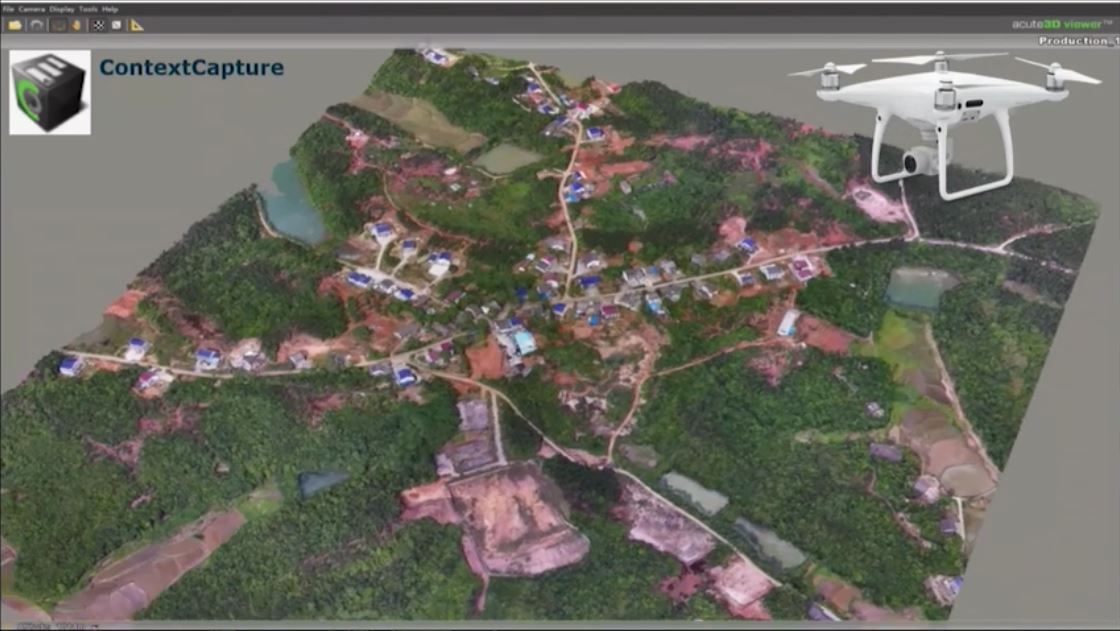 First of all, the site was constricted because of existing houses and a key objective was to minimize impact on the existing buildings. By scanning the area and using geospatial reality modeling techniques, the area occupied by the substation was reduced by 22% saving CNY 2.5 million and avoiding the demolition of six houses.
Secondly, the project was the first to apply the 3D standards mandated for the entire Chinese utility industry. The Miluo Western 220kV substation is among the first batch of 3D demonstration projects based on 3D standards. This is the first of the 3D demonstration projects to go into operation, in June 2019.
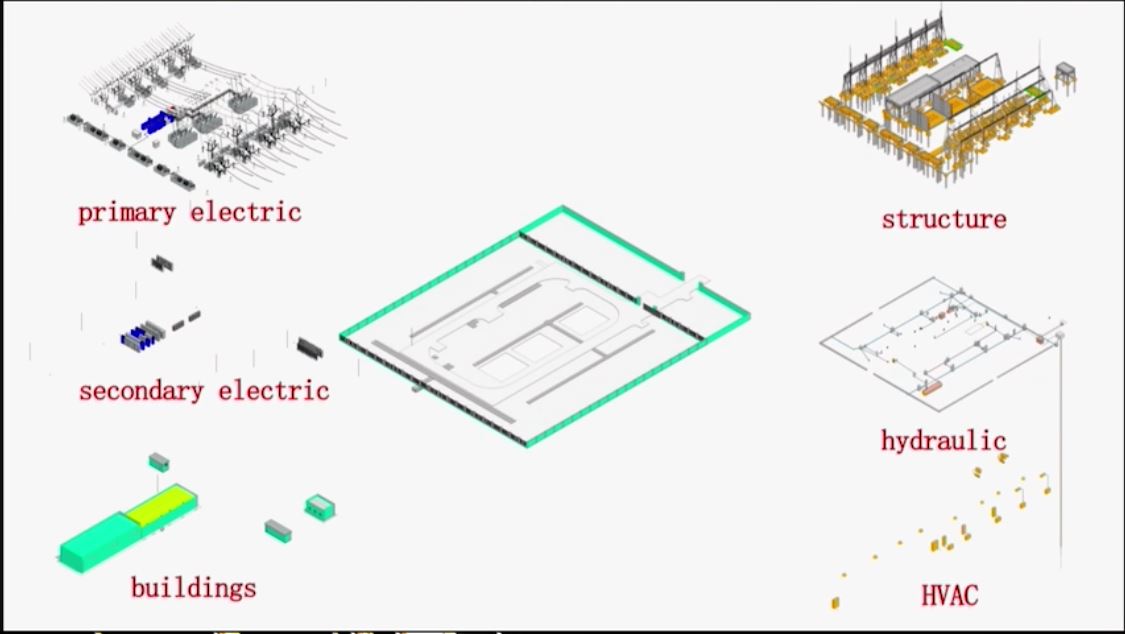 Third, because the site chosen for the substation was constricted, cables and equipment were closed together than in other substations. HEEC reengineered the design process and developed a series of system processes to ensure the quality of 3D design by collaborative design between mechanical, electrical, protection, communication, and site preparation teams. During design, clash detection between these different elements avoided 30 instances of rework during construction saving CNY 800,000.
Fourthly, from the beginning the objective was to find a way to reuse the design BIM model during construction. Typically a separate BIM model is developed by construction contractors to be used during construction. HEEC investigated ways that 3D pdfs, mobile handhelds, cloud storage, and other technologies could be used to enable the 3D design BIM to be used to schedule construction.
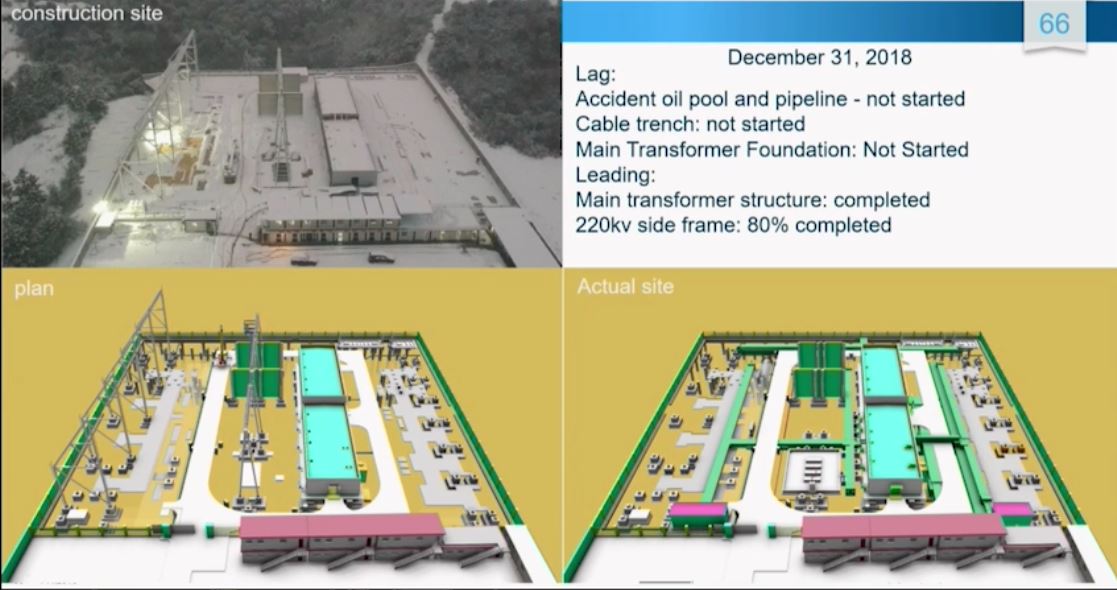 Fifth, HEEC used reality capture techniques including UAVs to monitor construction progress on a daily basis. Due to uncertain factors factors in the construction process, there will necessarily be deviations between planned and actual construction. By monitoring these on a daily basis ensured that these do not hold up the project. At YII2019 HEEC showed an amazing video with actual and planned construction side by side where each frame represented a day.
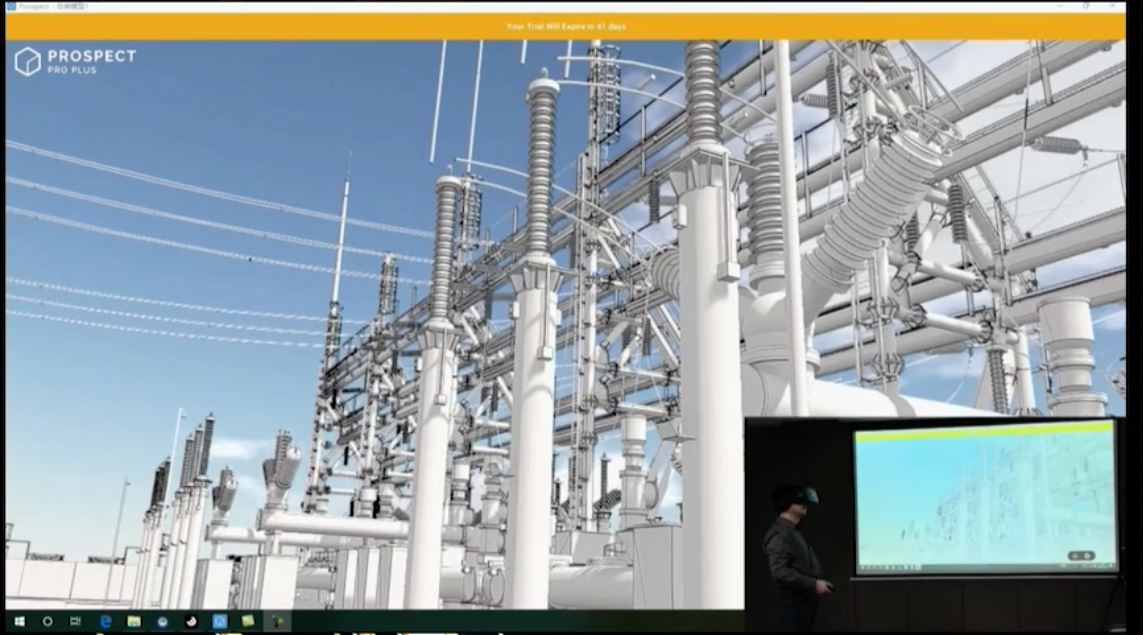 Finally, an important goal was to use digital technology to improve operations and maintenance procedures. At the end of the project HEEC was able to hand over to the State Grid a virtual reality BIM+geospatial model designed to improve operations and maintenance procedures.
In summary digital technology including reality capture, construction simulation, and full-lifecycle BIM resulted in tangible benefits; avoiding the demolition of 6 houses and reducing the area required for the substation by 22% for a saving of CNY 2.5 million; significant savings in materials saving CNY 210,000; avoided rework saving CNY 800,000; reducing design time by 65 days; and completing construction 30 days ahead of schedule generating economic benefits of CNY 1.5 million. Taken together the total investment was reduced by CNY 6.3 million (US$ 895,000). In addition by providing a virtual reality model to the owner on completion of the project it is expected that substantive savings will be achieved during operations and maintenance.

Be the first to comment